
Fogo (Cape Verde) — volcanic island dominated by Pico do Fogo
Fogo is a volcanic island in the Sotavento group of Cape Verde, noted for the active Pico do Fogo, an inhabited caldera, fertile soils, and a history of eruptions that shaped local life and agriculture.
Fogo is one of the Sotavento islands of Cape Verde. Its Portuguese name, rendered as "fire", reflects the island's volcanic nature. Fogo stands out within the archipelago for the height and activity of its central volcano and for the dramatic landscapes created by repeated eruptions.
Image gallery
10 Images






Geology and landscape
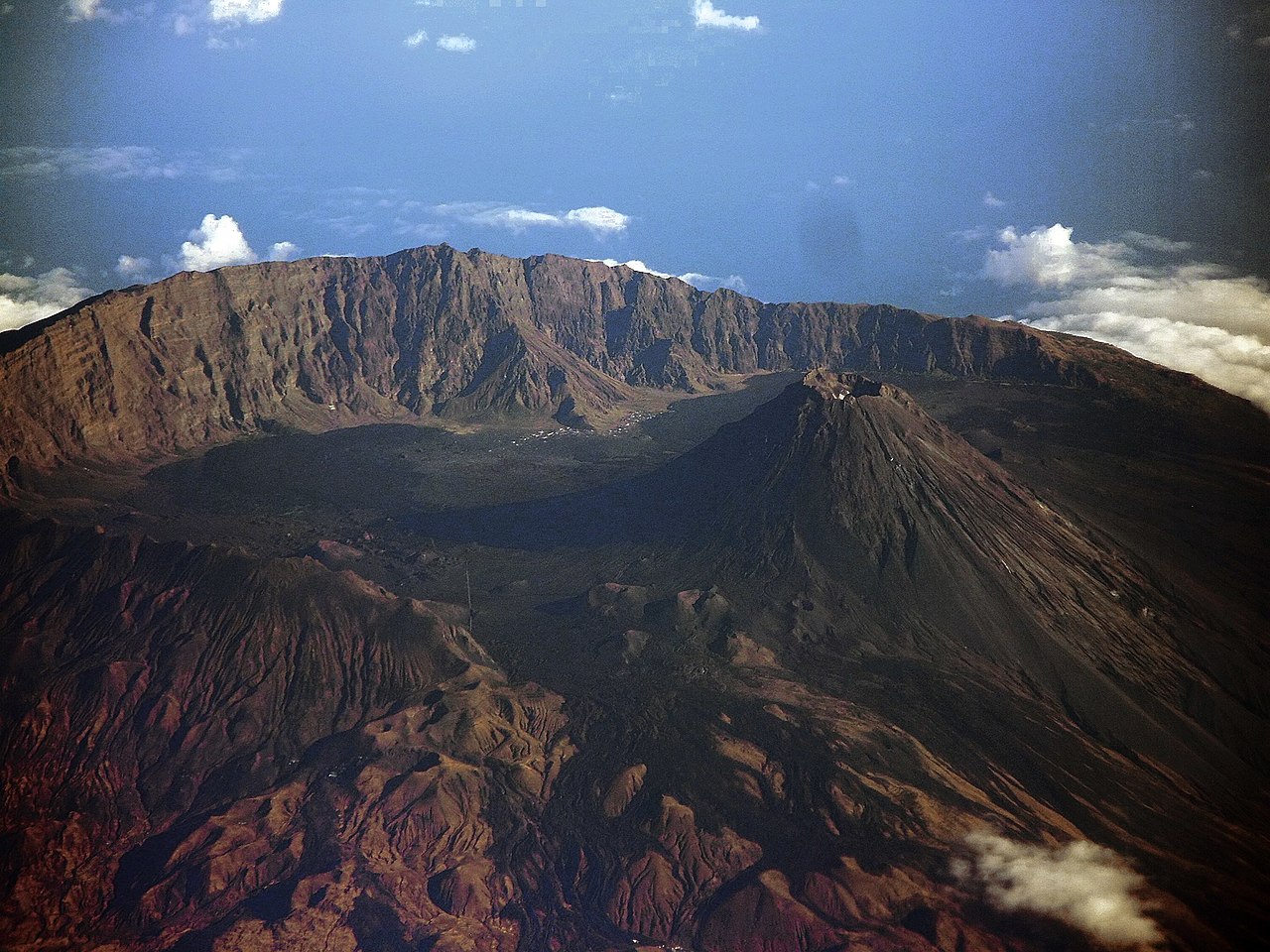
The island is dominated by a large stratovolcano crowned by Pico do Fogo, which rises to nearly 3,000 metres above sea level. A central caldera — known locally as Chã das Caldeiras — contains lava fields, ash deposits and steep-walled ridges. Parts of the caldera floor are unusually fertile, supporting agriculture amid raw volcanic rock.
Volcanic activity and impacts
Fogo has experienced several significant eruptions in modern times, including notable events in the late 20th and early 21st centuries. Eruptions produce lava flows and ashfall that periodically require evacuations, but they also renew soils and create new landforms. Communities on Fogo have adapted building practices and land use to the island's intermittent hazards.
Because of the volcanic soils and microclimates within sheltered valleys and the caldera, farmers cultivate grapes, coffee and other crops at elevations that differ from much of the country. Local viniculture and small-scale agriculture remain important sources of income and identity.
Human geography and culture
Main settlements include coastal towns and villages on the volcano’s slopes; São Filipe is the island's principal urban centre, with historic streets and colonial-era architecture. The inhabited caldera supports a distinct rural community whose livelihoods combine farming and services for visitors. Traditional crafts and culinary products reflect the island’s volcanic terroir.
Notable facts and visitor information
- Pico do Fogo is the highest point in Cape Verde and the defining feature of the island.
- Chã das Caldeiras is one of the more unusual inhabited calderas in the world, with villages set amid lava fields.
- Visitors commonly come for guided hikes, volcanic scenery and tasting local wine and coffee; trekking routes and viewpoints are established around the central peak and coastal cliffs.
Fogo illustrates the close link between volcanic processes and human settlement: eruptions shape risks and opportunities, and the island’s communities continue to manage both, preserving agricultural practices and cultural traditions adapted to a volcanic environment.
Related articles
Author
AlegsaOnline.com Fogo (Cape Verde) — volcanic island dominated by Pico do Fogo Leandro Alegsa
URL: https://en.alegsaonline.com/art/35338