
US Airways — history, operations, and legacy
US Airways was a major U.S. airline (originally USAir) that operated a large domestic and international network before merging with American Airlines in 2013.
US Airways was a major United States airline that operated scheduled passenger service under the names USAir and later US Airways. The letters "US" stood for United States. At its height it was counted among the country’s largest carriers and maintained headquarters in the Phoenix area; the company had grown through several earlier consolidations and brand changes before its final merger into another carrier. Corporate ownership and marketplace position shifted over time; at one point it was described as the sixth largest airline in the U.S. size ranking and had its corporate offices in the Tempe, Arizona area headquarters, Tempe, Arizona.
Image gallery
10 Images

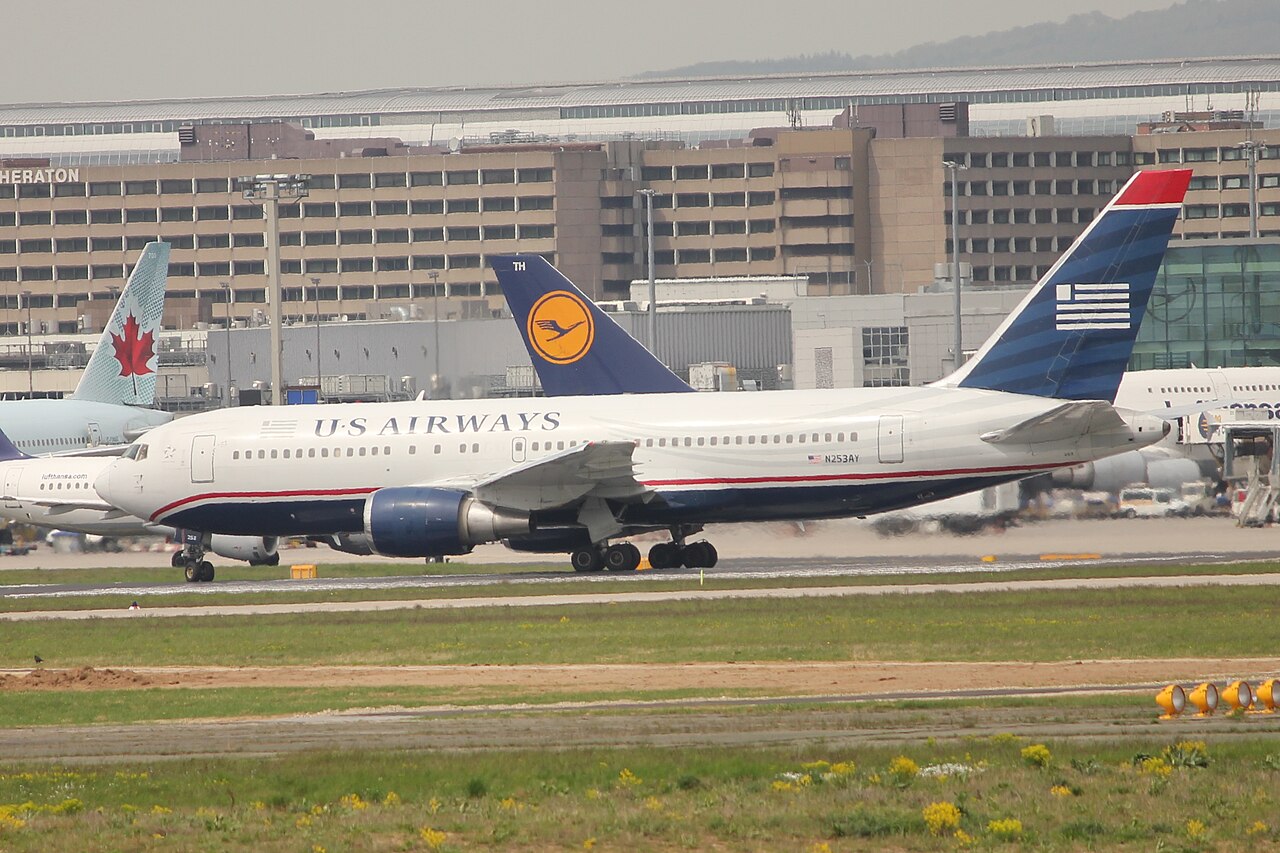


Operations and fleet
US Airways operated a mixed fleet of narrow- and wide-body jets that served domestic and international routes. Public figures reported the airline operated roughly several hundred larger jet aircraft alongside many smaller regional planes: for example, company sources listed 357 large jet aircraft (wide and mainline narrow-body) and about 329 smaller regional aircraft. The airline served about 240 destinations across North America and beyond, including markets in Central America Central America, the Caribbean Caribbean, Hawaii Hawaii, and Europe Europe. In a representative year the carrier employed tens of thousands of workers and operated several thousand daily flights.
Network and hubs
US Airways built a route network focused on both domestic trunk routes and international services. It maintained multiple hub cities and a dense presence on the U.S. east coast as well as a significant west‑of‑the‑Mississippi footprint after merger activity in the 2000s. This hub-and-spoke structure supported frequent short-haul flights as well as transcontinental and transatlantic services.
History and consolidation
The airline’s identity evolved through decades of industry consolidation. It began under an earlier name and became USAir before adopting the US Airways brand. In the mid‑2000s the carrier underwent a notable merger that reshaped its route map and corporate base. Ultimately, in 2013 US Airways agreed to combine with another major U.S. carrier; the transaction created a single larger company and led to the retirement of the US Airways brand as flights, systems and employee groups were integrated under the surviving airline’s name over the following years.
Legacy and notable facts
US Airways left a legacy as a large, networked carrier that helped define service on many U.S. domestic and international routes. Its mix of mainline and regional operations, its workforce size, and its fleet composition were typical of legacy carriers of its era. For reference, corporate statements once reported about 36,632 employees and around 3,512 daily flights in a given month in the late 2000s. The brand remains part of airline industry history as consolidation reshaped the U.S. market.
- Former name: USAir
- Notable figures (historical): ~357 large jets, ~329 regional aircraft
- Destinations: ~240 cities across several regions
Related articles
Author
AlegsaOnline.com US Airways — history, operations, and legacy Leandro Alegsa
URL: https://en.alegsaonline.com/art/103648
Sources
- av-info.faa.gov : "Airline Certificate Information – Detail View"
- thestreet.com : "US Airways Declares National Airport a Hub at Senate Hearing"
- online.wsj.com : "US Airways to join oneworld on March 31, 2014"
- usairways.com : "US Airways - Phone/email"
- frequentbusinesstraveler.com : "American Airlines and US Airways Announce Post-Merger Management Team"
- bts.gov : "January 2008 Passenger Airline Employment Up 3.4 Percent from January 2007, [[Bureau of Transportation Statistics]], March 16, 2008"
- press.uillinois.edu : Lean Production in the Air: Low-cost Competition Taking Off in the Global Airline Industry and Implications for Employment Relations
- businessweek.com : "The Ups and Downs at US Airways"
- usairways.com : US Airways System Fact Sheet
- money.cnn.com : "US Airways-American Airlines to merge"
- wfaa.com : wfaa.com/story/news/local/2015/04/08/american-airlines-granted-single-operating-certifica…
- smarteranalyst.com : "Stock Update (NASDAQ:AAL): American Airlines Group Inc Announces Air Operations Leadership Appointments"
- usatoday.com : "US Airways' final flight closes curtain on another major airline"