
Fleming (lunar crater)
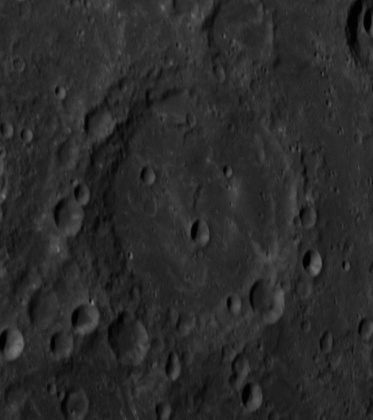
Fleming is a large, heavily degraded impact crater on the Moon's far side, named for astronomer Williamina Fleming. It lies near Hertz and Lobachevskiy and shows a worn rim and a pockmarked floor.
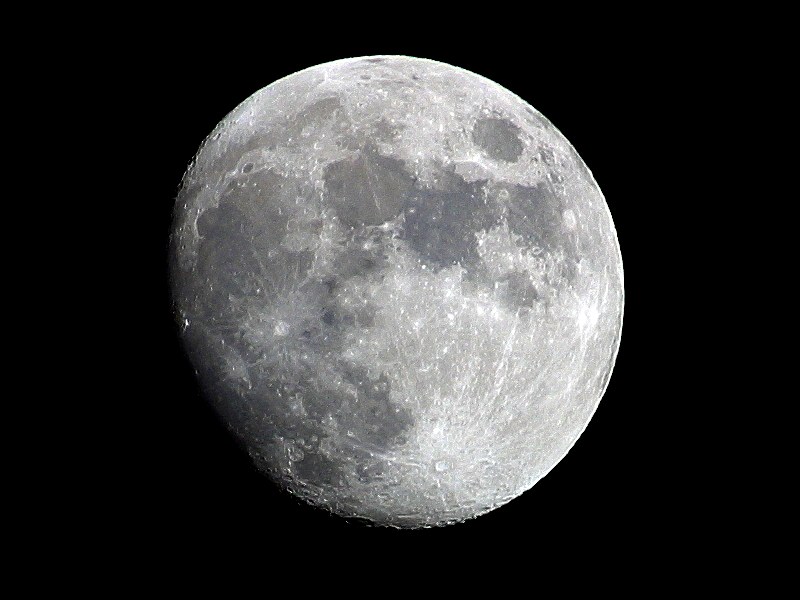
Fleming is a large impact crater on the Moon's far side; it cannot be seen directly from Earth because the Moon keeps one face toward our planet. Modern lunar orbiters mapped Fleming and its surroundings, making study of its degraded form and secondary impacts possible. For a general overview of the lunar far side see far-side lunar features, and for the basic geology of impact craters consult impact crater morphology.
Image gallery
5 Images


Location and surroundings
Fleming lies east-northeast of the crater Hertz and northwest of Lobachevskiy, occupying a portion of the highlands on the far side. Its position relative to named neighbors helps lunar cartographers place it on modern maps and coordinate data from different missions. The proximity to Hertz is often used as a reference point in descriptions of the area; see Hertz and consult maps at lunar atlases for spatial context.
Physical characteristics
The crater has a low, irregular rim and a floor marked by numerous smaller impacts. Rather than sharp, well-preserved walls, Fleming's rim shows signs of long-term bombardment and overlap by later craters. The interior lacks large central peaks or a smooth mare fill, instead exhibiting a pockmarked surface typical of older, heavily cratered lunar terrain.
- Rim: low and heavily eroded, with multiple breaches and overlain by later impacts.
- Floor: scattered small craters and uneven topography.
- Preservation: degraded, indicating an older relative age compared with crisp, young craters.
Origin, modification, and study
Like most lunar craters, Fleming formed by a high-velocity impact. Subsequent meteorite strikes and the constant rain of ejecta on the Moon's surface have worn its rim and peppered the floor. Because the Moon lacks an atmosphere and weather, "erosion" here refers to mechanical degradation from later impacts and seismic shaking (from large impacts elsewhere), rather than to wind or water. Detailed imaging from orbiters and analyses of crater densities are used to assess its relative age and the sequence of nearby impacts; additional resources on crater degradation are available at studies of lunar erosion.
Naming and historical notes
The crater is named for Williamina Fleming (1857–1911), a Scottish-born astronomer noted for her service at the Harvard College Observatory and for contributions to stellar classification and cataloging. Her life and work are summarized in biographical resources and historical accounts; see Williamina Fleming and a short biography for further reading. Fleming crater is one of many lunar features commemorating scientists whose work advanced astronomical knowledge.
Importance
Although not remarkable for unusual internal structures, Fleming is representative of older far-side craters and thus contributes to understanding lunar bombardment history. Its worn state, the pattern of superposed craters, and its neighborhood relationships make it useful in comparative studies of crater degradation and stratigraphy across the lunar far side.
Related articles
Author
AlegsaOnline.com Fleming (lunar crater) Leandro Alegsa
URL: https://en.alegsaonline.com/art/35076
Sources
- brighthub.com : "Famous Craters and the People They Are Named After"