
Flag of Estonia
A horizontal tricolor of blue, black and white representing Estonia’s national identity, origins, symbolism and usage from its 19th-century student roots to modern flag protocol.
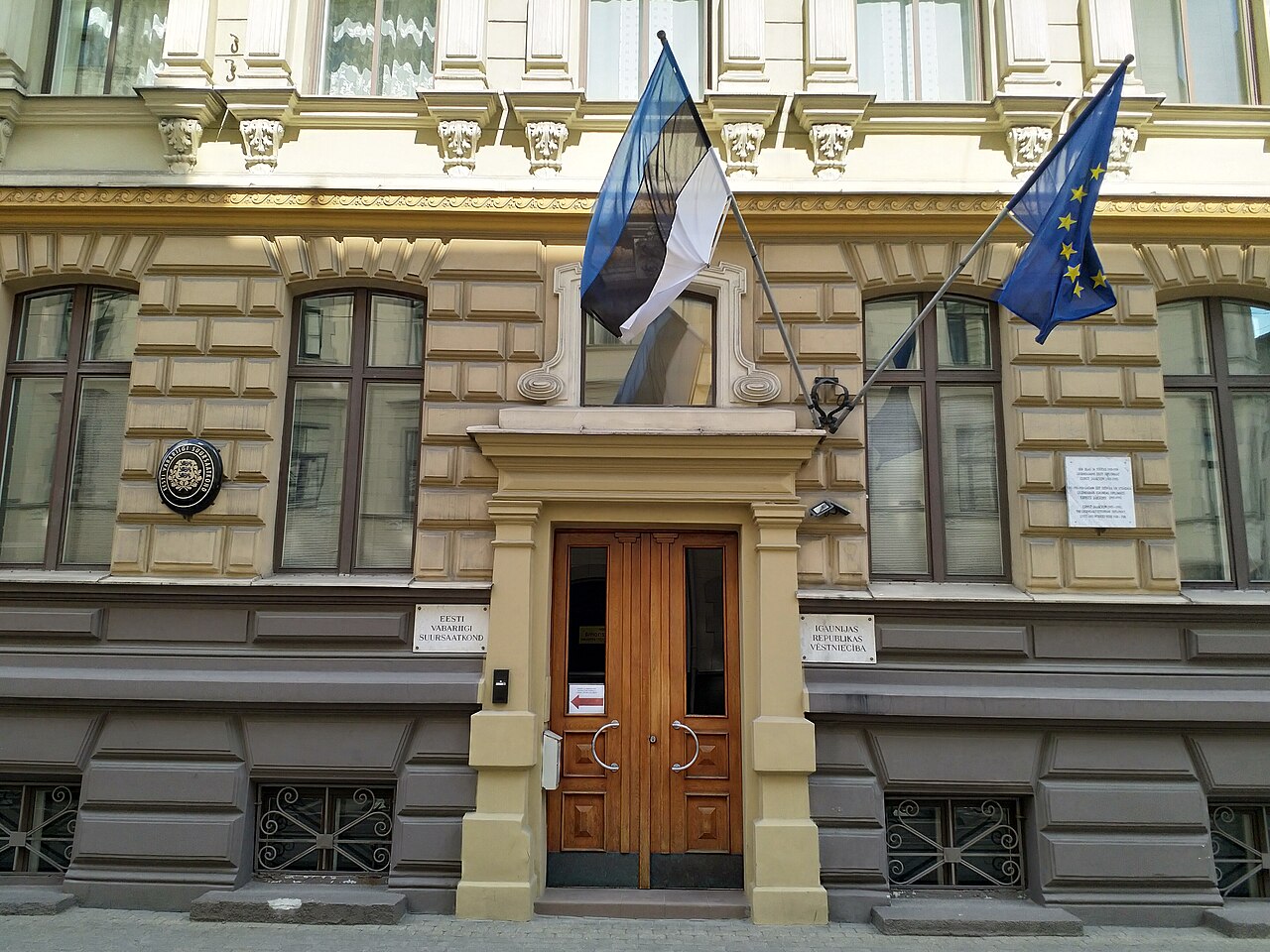
The national flag of Estonia is a horizontal tricolor consisting of three equal bands: blue on top, black in the middle and white at the bottom. In the Estonian language this banner is known as the sinimustvalge (literally "blue-black-white"). The simple, three-band layout has made the flag a widely recognized symbol of Estonian national identity. See also general references to the flag in national material.
Image gallery
8 Images




Design and symbolism
The three colours are commonly interpreted as carrying symbolic meaning: the top blue is associated with the sky and lakes and is often linked to national aspirations and freedom; the middle black is traditionally related to the soil, the hardships of the people and elements of historical costume; the lower white evokes light, purity and hope. The association of the top band with the sky is frequently mentioned in descriptions of the flag's symbolism, though individuals and groups sometimes offer personal or poetic interpretations.
History and development
The flag's origins date to the late 19th century when Estonian student societies and cultural movements adopted the tricolour as an emblem of awakening national sentiment. The banner gained official status when Estonia declared independence in 1918. During the 20th century the flag's official standing changed with political events: it was suppressed under foreign occupation and later restored as the national flag when independence returned in the early 1990s.
Usage and protocols
Estonia observes established conventions for use, display and respect for the flag. While details are specified in national statutes and guidance, common practices include designated flag days, rules for raising and lowering the flag, and established procedures for half‑mast observances. There are also distinct banners for state institutions and maritime service, with variations used for official and civilian contexts.
- Public display: flown on national holidays and government buildings.
- Respect: treated with prescribed dignity; improper use is discouraged.
- Variants: state and municipal versions exist alongside the civil flag.
Beyond legal and ceremonial uses, the tricolour has strong cultural resonance in Estonia. It appears in commemorations, civic events and as a marker of identity among Estonians at home and abroad. The flag’s clear, economical design and its roots in a 19th-century national movement help explain why it remains a central and enduring national symbol.
For further reference on specific dimensions, ceremonial law and historical details consult official sources and historical summaries identified by national archives and cultural institutions: blue, black, white, sky, Estonian, the flag, Estonia.
Related articles
Author
AlegsaOnline.com Flag of Estonia Leandro Alegsa
URL: https://en.alegsaonline.com/art/34785