
Estonian language (Eesti keel)
A Uralic language spoken primarily in Estonia, related to Finnish, with a unique phonology, several dialects, and official status in Estonia; influenced by Germanic and Slavic languages.
Overview
Estonian (Eesti keel) is the national language of Estonia and a member of the Uralic language family. It is spoken mainly in Estonia by roughly one million people and functions as the country's official language. Estonian is one of the few European national languages that is not Indo-European; its closest major relative is Finnish, though the two are not mutually intelligible for most speakers.
Image gallery
9 Images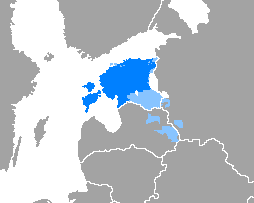


Key characteristics
Estonian uses a Latin-based alphabet and includes distinctive letters such as Ä, Ö, Ü and the unusual Õ, which represents a vowel uncommon in many other European languages. The language is known for several typological features:
- Rich case system for nouns and pronouns (around fourteen grammatical cases in standard grammar).
- Phonemic vowel and consonant length contrasts, which affect meaning.
- Suffixing morphology and limited use of prepositions compared with many Indo-European languages.
History and development
Estonian evolved within the Baltic–Finnic branch of the Uralic family. Over centuries it developed under contacts with Germanic, Scandinavian and Slavic neighbours. Significant lexical influence came from German and Swedish, reflecting medieval trade, administration and rule, and later from Finnish and Russian. In the 19th century a process of literary standardization began, leading to the modern written language based largely on northern dialects.
Uses and importance
Today Estonian is used in government, education, media and literature throughout Estonia. Language policy supports its role as the language of instruction and public life while also accommodating minority languages. In international contexts, Estonian is studied by linguists for its Uralic features and by learners interested in Baltic-Finnic languages.
Dialects and variation
Estonian has several dialect groups. Standard Estonian is largely based on northern varieties, but southern varieties such as Võro and Seto preserve distinct vocabulary and phonology; some speakers and scholars treat them as separate languages or regional standards. Regional and social variation continues to shape pronunciation, vocabulary and idiom.
Notable facts and further reading
Estonian continues to adapt: modern loanwords from English and other languages appear alongside older Germanic and Slavic loans. For concise overviews and linguistic descriptions see general resources on the vowel system, historical surveys at dialect studies, and comparative works on the Uralic languages. For an introduction suited to learners and non-specialists, consult language guides linked from national and academic portals: Estonia and language institutes often provide reliable starting points.
Related articles
Author
AlegsaOnline.com Estonian language (Eesti keel) Leandro Alegsa
URL: https://en.alegsaonline.com/art/32312