
Flag of Ethiopia
Overview of the Ethiopian flag: its tricolor design, meanings, historical development and variations, the 1996 adoption of the current emblem, and cultural and political significance.
The flag of Ethiopia is instantly recognisable by its horizontal tricolor of green, yellow and red, with a central emblem on a blue disc in the modern national version. These colors are among the oldest national colours in Africa and have been associated with Ethiopia in various forms since the late 19th century. The present composition — the traditional tricolor bearing a star and rays on a blue circle — was established in its current official form in the 1990s.
Image gallery
1 Image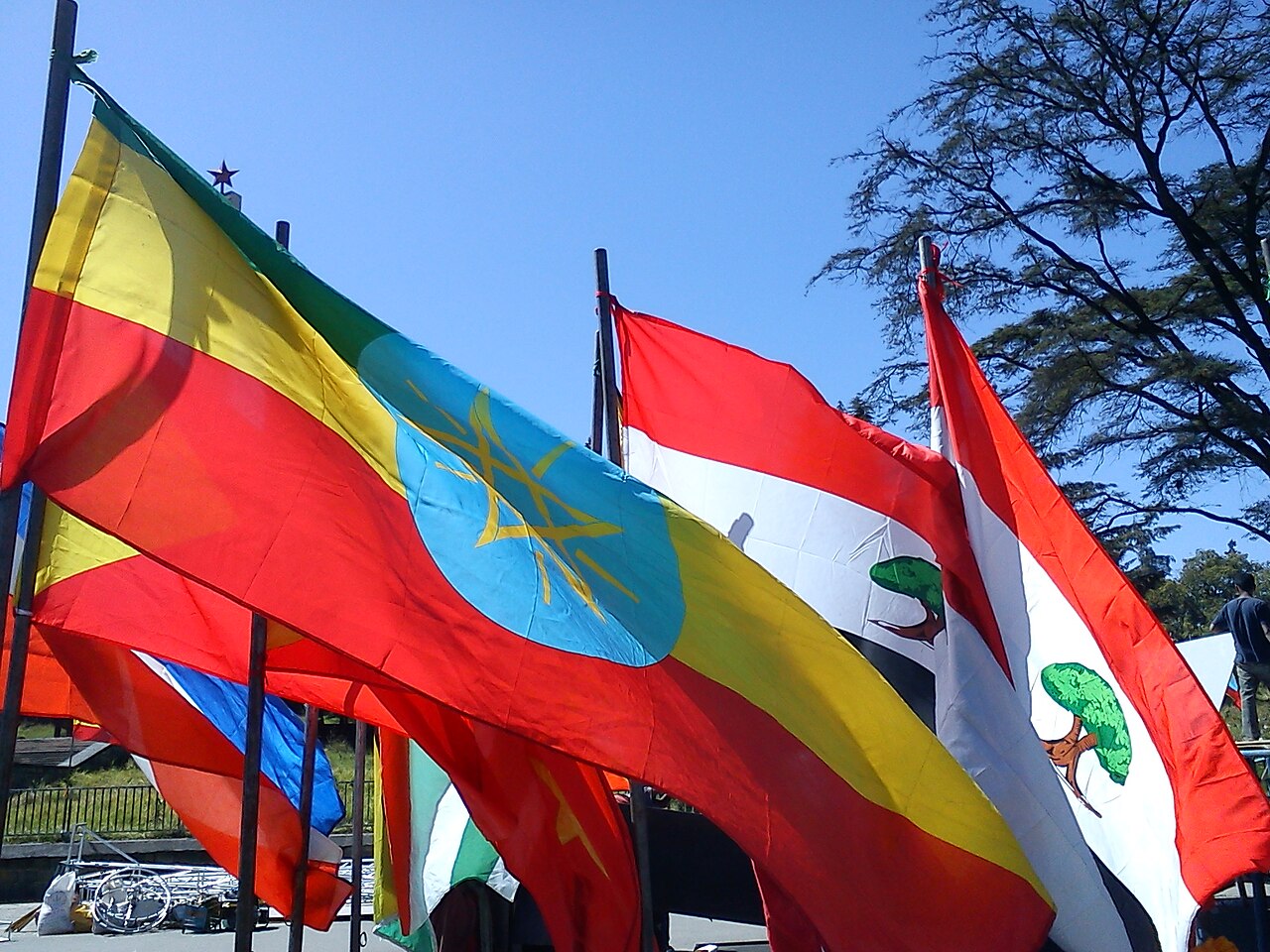
Design and symbolism
The flag combines a simple three-band field and a central device. Common interpretations of the colors are:
- Green – land, fertility, hope and the richness of the country.
- Yellow – religious freedom, peace, and harmony among peoples.
- Red – sacrifice and the willingness to defend the nation.
The modern emblem placed at the center is a gold pentagram with rays on a blue circular field; it represents unity, the equality of Ethiopia’s nations and nationalities, and the country’s bright future. For official specifications and contemporary usage see Ethiopian flag.
History and development
Variations of the green–yellow–red tricolor have appeared on Ethiopian banners since the late 1800s. During the imperial era a royal banner featuring the Lion of Judah occupied the centre. After the 20th century political changes and revolutions, the plain tricolor and several emblems were used at different times. The addition of the blue disc and star in the 1990s established a symbol intended to reflect the nation’s federal and multiethnic character while retaining the historic colours.
Variants and notable facts
- The Lion of Judah motif remains an important historical variant tied to the monarchy and Ethiopian Orthodox tradition.
- Ethiopia’s colours influenced many other African flags and have become associated with Pan-Africanism.
- The colours are also prominent in cultural movements such as Rastafarianism, which regards Ethiopia as spiritually significant.
Use and protocol
The national flag appears on government buildings, diplomatic missions and public events. Specific rules govern its display, proportions and treatment in formal settings; variations are used by military units, regional administrations and political groups. The flag’s endurance and adaptations reflect Ethiopia’s long and complex history as well as its contemporary emphasis on unity amid diversity.
For further images and official descriptions consult resources linked to the national government and recognized repositories of national symbols: official flag information.
Related articles
Author
AlegsaOnline.com Flag of Ethiopia Leandro Alegsa
URL: https://en.alegsaonline.com/art/34787