
Fathead minnow (Pimephales promelas): natural history, uses, and distribution
The fathead minnow is a small North American freshwater fish (Pimephales promelas) common in ponds and streams. Widely used as a feeder fish and test organism, it has also been introduced outside its native range.
The fathead minnow (Pimephales promelas) is a small, hardy freshwater fish native to much of North America. Recognizable by its rounded head, stout body and blunt snout, the species occurs in a range of colors from silvery to olive; captive-bred strains include the rosy-red variety often sold as feeder fish. For taxonomic details and nomenclature consult specialized resources such as species databases.
Image gallery
4 Images
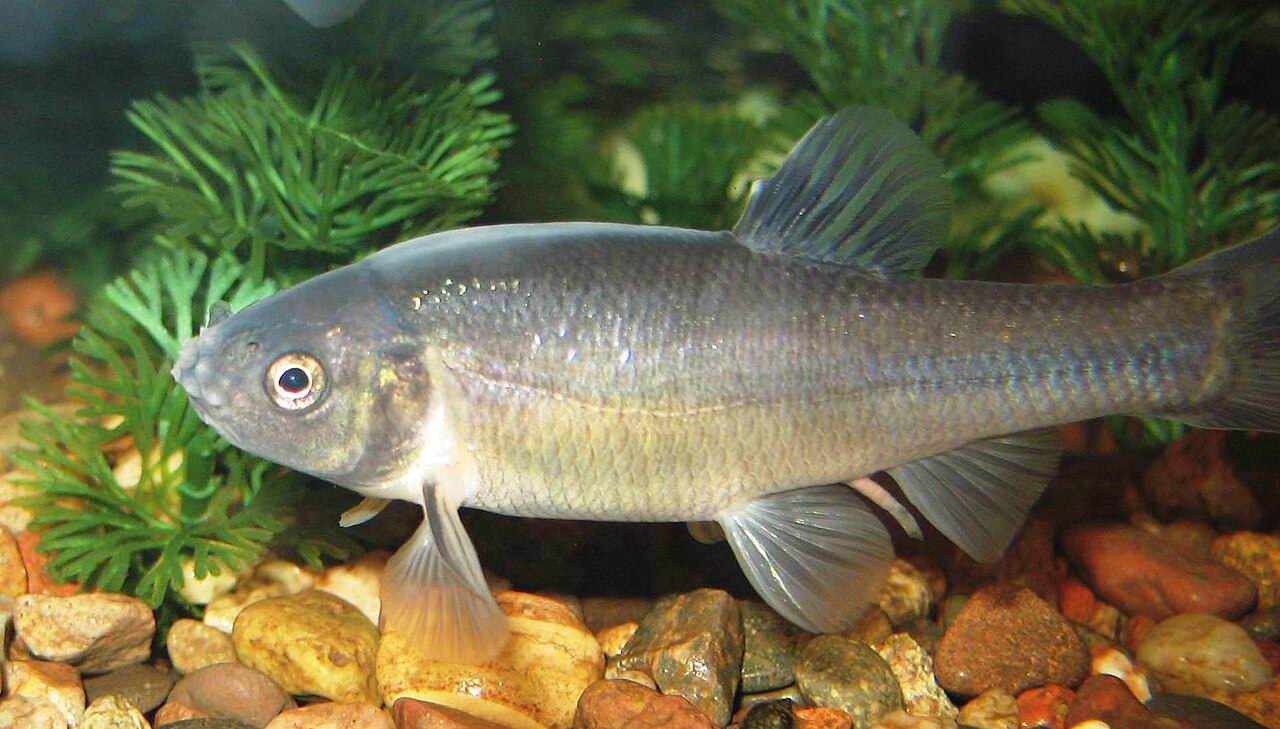


Physical characteristics and behavior
Fathead minnows are compact cyprinids known for their social and reproductive behavior. Males develop darker coloration and sometimes a pronounced head during the breeding season, when they guard nest sites. They feed opportunistically on algae, detritus and small invertebrates, and tolerate a wide range of water temperatures and oxygen conditions, which contributes to their success in diverse habitats.
Range, habitat, and introductions
Native to streams, ponds and lakes across much of the United States and central Canada, the species is adaptable to slow-moving or still waters and often occupies shallow margins. Because of human activities it has been introduced to many regions beyond its original range; information on distribution and nonnative populations can be found at regional authorities and conservation pages such as North American range guides and Canadian distribution summaries.
Reproduction and life cycle
Breeding typically occurs in warmer months when males prepare and defend a nest, often under rocks or debris, where females deposit adhesive eggs. Male parental care — fanning and guarding eggs until they hatch — is a notable behavioral trait. Juveniles grow rapidly in favorable conditions and the species can complete its life cycle in a short time relative to larger freshwater fishes.
Human uses and scientific importance
- Feeder and aquarium trade: Captive-bred color morphs like the rosy-red fathead minnow are sold as live food for larger aquarium species.
- Toxicology and ecology: The species is commonly used in laboratory testing to evaluate water quality and pollutant effects because of its hardiness and well-documented biology; research protocols and guidelines are available through government and institutional outlets such as research repositories and academic collections.
Conservation, management, and notable issues
While the fathead minnow is not generally threatened within its native range, introductions can create ecological concerns where it competes with or alters communities of native fishes. Best practices discourage releasing aquarium or bait fish into the wild. For regulatory and management information consult fisheries or environmental agencies and catalogues such as cyprinid family resources.
Related articles
Author
AlegsaOnline.com Fathead minnow (Pimephales promelas): natural history, uses, and distribution Leandro Alegsa
URL: https://en.alegsaonline.com/art/33632