
Feathered dinosaur: evolution, evidence, and biological significance
An overview of feathered dinosaurs: what they were, how feathers varied, fossil evidence (including Archaeopteryx and Chinese finds), and why feathers changed our view of dinosaur biology.
Overview
Feathered dinosaurs are members of the broader group of dinosaurs that bore integumentary structures we recognise as feathers. Modern research places many feathered forms within the theropod lineage—especially the coelurosaurs—so the distinction between some non-avian dinosaurs and early birds is now understood as a continuum rather than a sharp divide. Paleontologists commonly treat feathers as an inherited trait in several closely related groups, not a unique feature that appeared only in true birds; this view implicates broad portions of the theropod tree as feather-bearing.
Image gallery
10 Images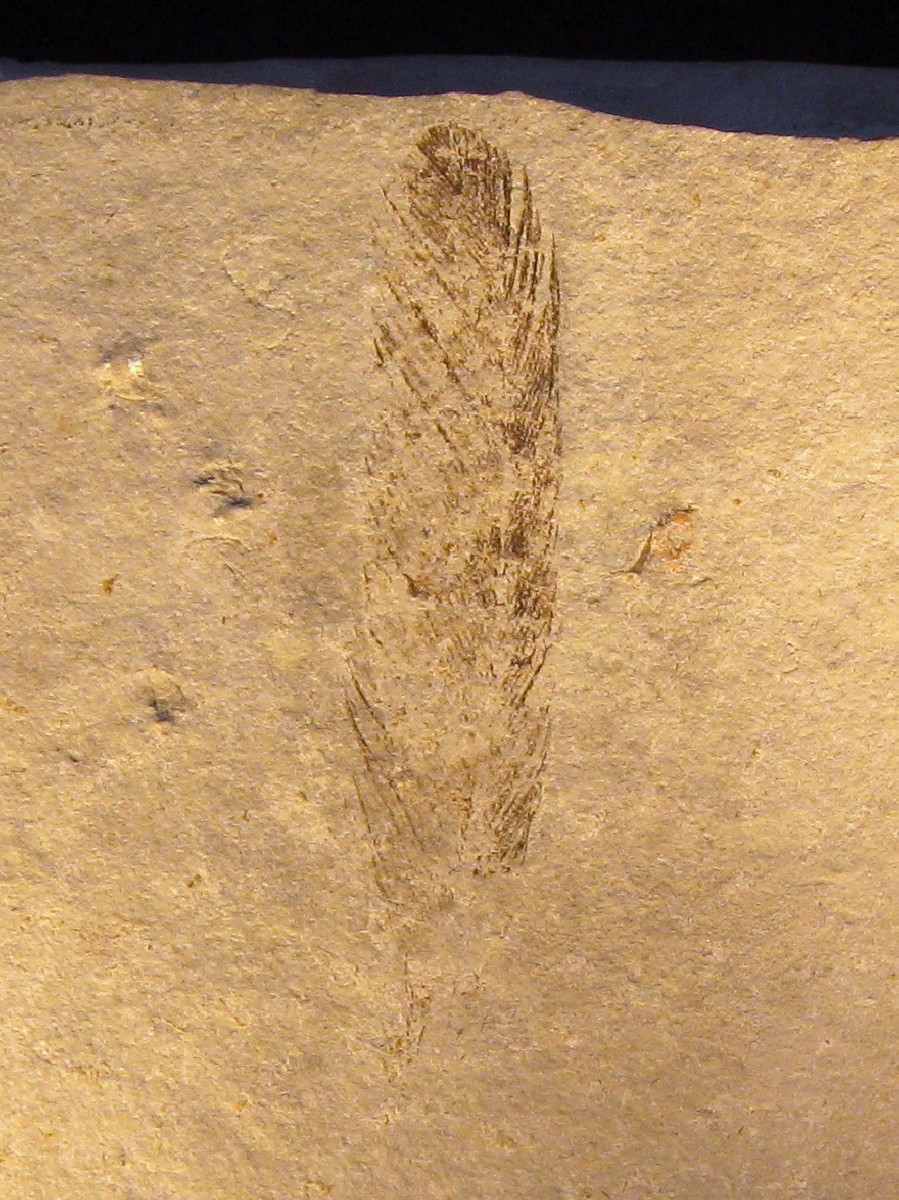


Feather types and functions
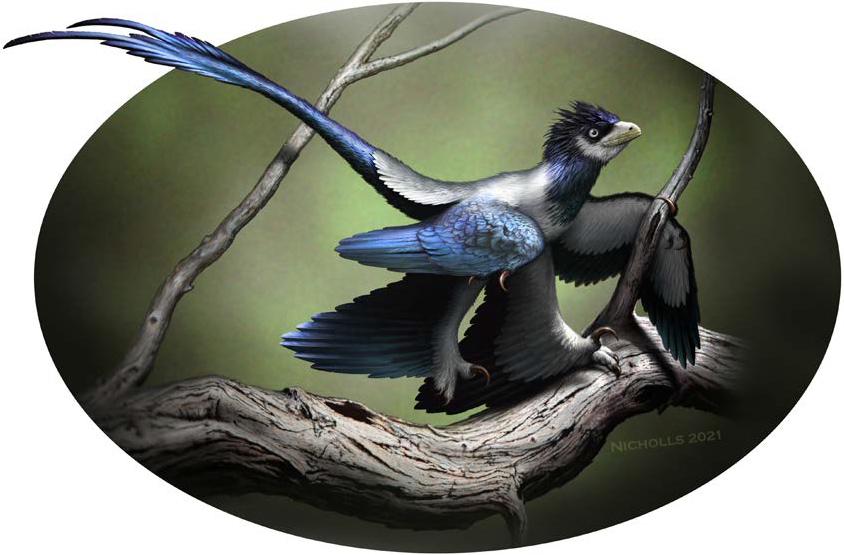
Feathers preserved in fossils range from simple filamentous strands to complex, vaned feathers similar to those of living birds. These structures probably served multiple functions over evolutionary time: thermal insulation, visual signalling in courtship or species recognition, brooding and egg protection, and — in some lineages — aerodynamic roles that eventually led to flapping and powered or gliding flight. Chemical and molecular analyses have strengthened the link between fossil filaments and modern feathers: for example, work on Shuvuuia and other specimens detected proteins consistent with beta-keratin, the rigid structural protein found in modern avian feathers (beta-keratin, a feather protein). Such findings support the biological continuity of feather materials across deep time.
Fossil evidence and historical development
Recognition of feathered dinosaurs advanced in stages. The 19th-century discovery of Archaeopteryx revealed birdlike feathers associated with a reptilian skeleton and hinted at an evolutionary link. However, indisputable evidence for feathers on clearly non-avian dinosaurs appeared only later, especially with abundant, well-preserved fossils from the Early Cretaceous Yixian Formation in northeastern China. Many of these finds were described in the 1990s and thereafter; numerous specimens show feathers around the body, along tails, or on limbs. The preserved soft tissues and impressions in these fossil beds provide the strongest paleontological data for integumentary structures in non-avian dinosaurs (fossils). Several early discoveries clarified that some feather types predate flight and likely evolved for other uses before being co-opted for aerial locomotion.
Distribution, diversity, and importance
Feathered forms are documented in about forty genera of theropods and may have been widespread among coelurosaurs; some researchers propose that many more groups carried primitive featherlike coverings. Fossil discoveries continue to expand known diversity and preserve different feather morphologies, helping reconstruct evolutionary pathways. Recognising feathers on dinosaurs changed interpretations of their physiology, suggesting higher metabolic rates, complex behaviour such as brooding or display, and new ecological niches. As a result, modern portrayals of many dinosaurs incorporate feathers rather than scales.
Notable distinctions and remaining questions
Key distinctions remain between feathered non-avian dinosaurs and crown-group birds in skeletal anatomy, flight capability, and life history, but the presence of feathers highlights evolutionary continuity. Open questions include the exact timing and pathways by which various feather types emerged, the distribution of feathers beyond well-sampled regions like the Yixian beds, and the extent to which large-bodied dinosaurs retained plumage. Ongoing discoveries and improved molecular and imaging techniques continue to refine our understanding of when and why feathers appeared in the dinosaur lineage, linking fossil data to the biology of living birds (non-bird comparisons).
Questions and answers
Q: What is a feathered dinosaur?
A: A feathered dinosaur is a dinosaur with feathers.
Q: Which dinosaurs are thought to have had feathers?
A: It is now thought that all coelurosaurs, and perhaps all theropods, had feathers.
Q: How were feathers related to the possibility of dinosaurs being closely related to birds?
A: The possibility that dinosaurs are closely related to birds raised the possibility of feathers.
Q: Which fossils include well-preserved feathers?
A: Fossils of Archaeopteryx include well-preserved feathers.
Q: When were clearly non-bird dinosaur fossils discovered with preserved feathers?
A: It was not until the early 1990s that clearly non-bird dinosaur fossils were discovered with preserved feathers.
Q: From where do most feathered dinosaur fossils come from?
A: Most of these fossils come from the Yixian formation in China.
Q: What is the main protein in bird feathers?
A: The main protein in bird feathers is beta-keratin, which has been tested positive in immunological tests of fossil feathers from the Shuvuuia deserti specimen.
Related articles
Author
AlegsaOnline.com Feathered dinosaur: evolution, evidence, and biological significance Leandro Alegsa
URL: https://en.alegsaonline.com/art/33782
Sources
- doi.org : 10.1002/(SICI)1097-010X(19990815)285:2<146::AID-JEZ7>3.0.CO;2-A
- pubmed.ncbi.nlm.nih.gov : 10440726
- sciencemag.org : "Feather quill knobs in the dinosaur Velociraptor"
- ui.adsabs.harvard.edu : 2007Sci...317.1721T
- doi.org : 10.1126/science.1145076
- pubmed.ncbi.nlm.nih.gov : 17885130
- ui.adsabs.harvard.edu : 1995Natur.378..774N
- doi.org : 10.1038/378774a0
- cell.com : cell.com/current-biology/abstract/S0960-9822(16)31193-9
- bbc.co.uk : bbc.co.uk/news/science-environment-38224564
- cbc.ca : CBC News: Dinosaur feathers found in Alberta amber
- bbc.co.uk : BBC News: Dinosaur feather evolution trapped in Canadian amber
- books.google.com : Fulltext at Google Books
- nature.com : "An Archaeopteryx-like theropod from China and the origin of Avialae"
- doi.org : 10.1038/nature10288