
Feathertail glider (Acrobates pygmaeus)
A tiny Australian marsupial and the world’s smallest gliding mammal, the feathertail glider uses a feather-like tail and a small patagium to glide between trees while foraging for nectar, pollen and insects.
Overview
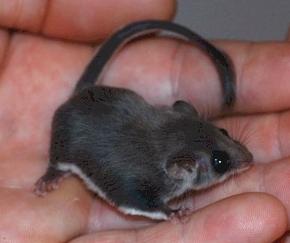
The feathertail glider (Acrobates pygmaeus) is a small nocturnal marsupial native to eastern Australia and adjacent islands. At roughly the size of a small mouse and weighing only a few grams, it is recognized as the world’s smallest gliding mammal. Its English name refers to the distinctive feather-shaped tail, which helps with balance and steering during glides.
Image gallery
5 Images


Physical characteristics
Adult feathertail gliders have a tiny compact body and a long, narrow tail fringed with stiff hairs that give a feather-like outline. A furred membrane (patagium) stretches between the fore and hind limbs; in this species the membrane is relatively short, extending between the elbows and knees. Despite its small size, the glider can leap and glide remarkable distances — commonly several metres and sometimes up to about 25 metres between trees.
Behaviour and ecology
Nocturnal and arboreal, feathertail gliders forage at night for nectar, pollen and small invertebrates, and they may also feed on sap or honeydew when available. They are agile climbers and use a rapid launch from branches followed by membrane extension and tail manipulation to control descent. During cold periods they commonly enter torpor, an energy-saving state that reduces metabolic rate.
Habitat and distribution
These animals inhabit a range of wooded environments, from wet forests to dry sclerophyll woodlands and urban parkland with suitable tree cover. They typically shelter in tree hollows, crevices, or constructed nests made from leaves and grass. Their range is concentrated in eastern Australia, where they occupy both coastal and inland habitats.
Reproduction and social life
As a marsupial, the feathertail glider raises its young in a pouch; females give birth to a small number of underdeveloped young that complete early development attached to the teats. Individuals may be solitary or occur in small family groups; detailed social structure varies with habitat and local conditions.
Conservation and notable facts
- Taxonomy: Acrobates pygmaeus, sole representative of its genus in Australia.
- Distinctive features: feathered tail, very small patagium, extreme lightweight.
- Status: generally not considered globally threatened and is listed as Least Concern by conservation assessments, though local populations can be affected by habitat loss.
- Comparison: its patagium is proportionally smaller than that of larger gliding marsupials such as the sugar glider, and its tail plays a greater role in aerial control.
The feathertail glider illustrates how specialized locomotion and small body size allow mammals to exploit arboreal niches effectively; its combination of leaping ability, a feathered tail and a compact patagium make it a unique and highly adapted small glider.
Related articles
Author
AlegsaOnline.com Feathertail glider (Acrobates pygmaeus) Leandro Alegsa
URL: https://en.alegsaonline.com/art/33784
Sources
- bucknell.edu : Mammal Species of the World
- iucnredlist.org : Acrobates pygmaeus
- australianstamp.com : "The feathertail glider"
- commons.wikimedia.org : Acrobates pygmaeus