
Felis — the genus of small cats including the domestic cat
Felis is a genus of small felids that includes the domestic cat and several wild relatives. This article covers their traits, species, distribution, evolution, behavior and conservation.
Overview
Felis is a genus of small cats placed within the family Felidae. Members of this group range from the familiar housecat to several wild species found across Europe, Asia and Africa. These felines are generally compact, with body forms and behaviors that resemble the domestic cat in many respects. Their size, coat patterns and ecological niches vary, but they share a suite of anatomical and behavioral traits that distinguish them from larger felids.
Image gallery
10 Images
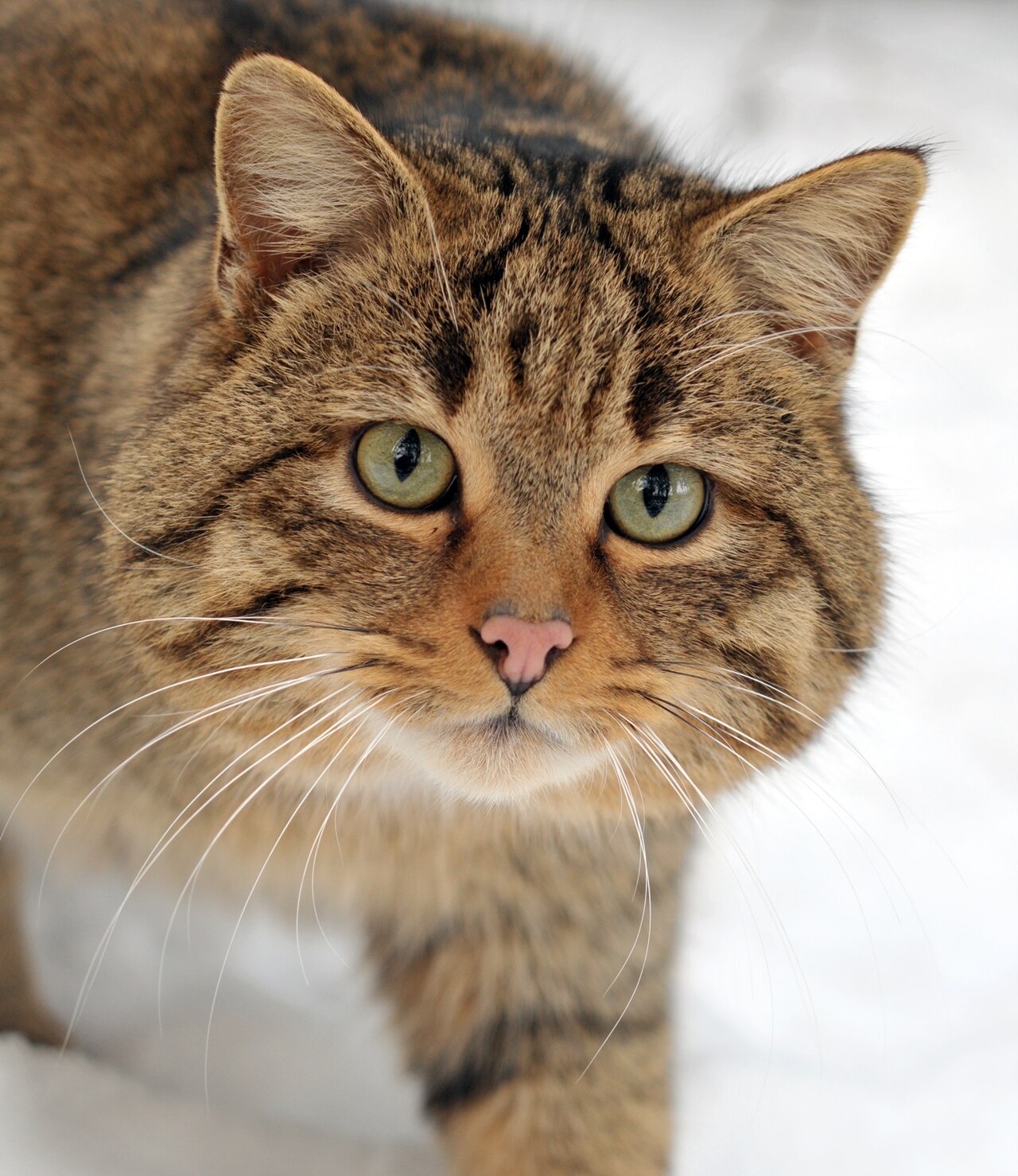


Characteristics and common species
Felis species are small to medium-sized carnivores with retractile claws, powerful jaws and agile bodies adapted to hunting small prey. The smallest representative is the sand cat, often under 40 centimetres in body length, while the largest is the jungle cat, which can approach a metre in head-and-body length in some individuals. Typical species commonly recognized in this genus include:
- Felis catus — the domestic cat (sometimes treated as a distinct species or as a subspecies of the wildcat).
- Felis silvestris — the European wildcat, a close relative of the domestic cat.
- Felis lybica — the African/ Near Eastern wildcat, ancestral to most domestic cats.
- Felis bieti — the Chinese mountain cat, adapted to highland environments.
- Felis nigripes — the black-footed cat, a small desert and savanna hunter of southern Africa.
- Felis chaus — the jungle cat, often found near wetlands and reedbeds.
- Felis margarita — the sand cat, specialized for desert life.
Distribution, habitat and diet
Species of Felis occupy a wide variety of habitats: woodlands and forests, open grasslands, riparian zones and swamplands, and arid deserts. Their diets are largely composed of small vertebrates; they are effective predators of rodents and frequently take birds, reptiles and invertebrates depending on local availability. Hunting methods are typically solitary and crepuscular or nocturnal, relying on stealth, short bursts of speed and pouncing.
Origins, taxonomy and domestication
Genetic and fossil evidence suggests that the lineage leading to modern Felis diverged several million years ago, with estimates commonly placing its origin in the late Miocene. Within recent prehistory, one branch of Felis gave rise to the populations that were gradually associated with human settlements and ultimately domesticated. The domestication process is believed to have occurred in the Near East and North Africa, where wildcats adapted to hunting rodents around grain stores and began a long association with people that produced the domestic cat.
Conservation and human interactions
Many Felis species tolerate a degree of human presence, and the domestic cat is now widespread worldwide. However, wild members of the genus face threats such as habitat loss, hybridization with feral domestic cats, persecution and reductions in prey. Conservation responses vary by region and species and include habitat protection, monitoring programs and measures to reduce hybridization. Because several species are small and elusive, population trends can be difficult to assess and often require targeted field studies.
Notable distinctions and facts
Compared with larger felids, Felis species tend to have shorter lifespans in the wild and reproduce more rapidly, which influences their population dynamics. They are important controllers of rodent populations and have a long cultural and ecological association with humans. For more general background and references, see introductory and regional resources linked throughout this article.
Questions and answers
Q: What is Felis?
A: Felis is a genus of small cats in the family Felidae.
Q: Where are the wild species of Felis found?
A: The wild species of Felis are found in Europe, southern and central Asia, and Africa.
Q: What is the origin of domestic cats?
A: The domestic cat may have its origin in North Africa.
Q: What is the size range of Felis species?
A: Members of the genus Felis are all small felines, with the smallest species being less than 40 centimetres (16 in) in length and the largest being able to reach 94 centimetres (37 in).
Q: In what kind of habitats do Felis species live?
A: Felis species live in many habitats, including forests, grasslands, swamplands, and deserts.
Q: What is the diet of Felis species?
A: Felis species mostly feed on small rodents, supplementing their diet with birds and other small animals depending on their local environment.
Q: When did the genus Felis first evolve and where?
A: Genetic studies indicate that the genus Felis first evolved around eight to ten million years ago, probably in the Mediterranean region.
Related articles
Author
AlegsaOnline.com Felis — the genus of small cats including the domestic cat Leandro Alegsa
URL: https://en.alegsaonline.com/art/33926
Sources
- genetics.org : "Patterns of Y and X chromosome DNA sequence divergence during the Felidae radiation"
- ncbi.nlm.nih.gov : 1460026
- pubmed.ncbi.nlm.nih.gov : 9539439
- bucknell.edu : bucknell.edu