
False killer whale (Pseudorca crassidens)
Large oceanic dolphin (Pseudorca crassidens) found in tropical and temperate seas worldwide; highly social, cooperative hunters that sometimes interact negatively with fisheries and other cetaceans.
False killer whale (Pseudorca crassidens) is a large member of the oceanic dolphin family, a cosmopolitan species of warm and temperate waters. It is the sole living species in the genus Pseudorca and is placed within the family Delphinidae. The common name refers to a superficial resemblance in skull shape and dentition to the killer whale, but false killer whales are not closely related to orcas; the similarity is an example of convergent traits among large, predatory dolphins.
Image gallery
10 Images



Taxonomy and identification
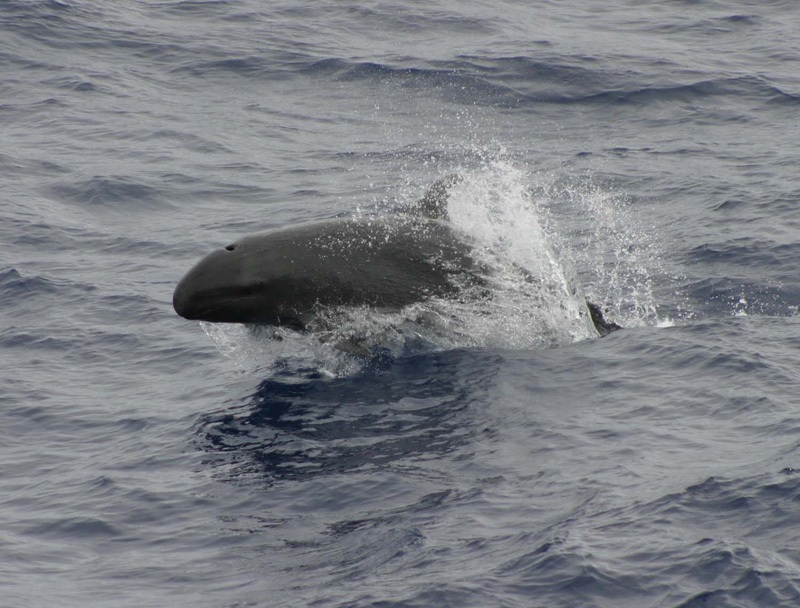
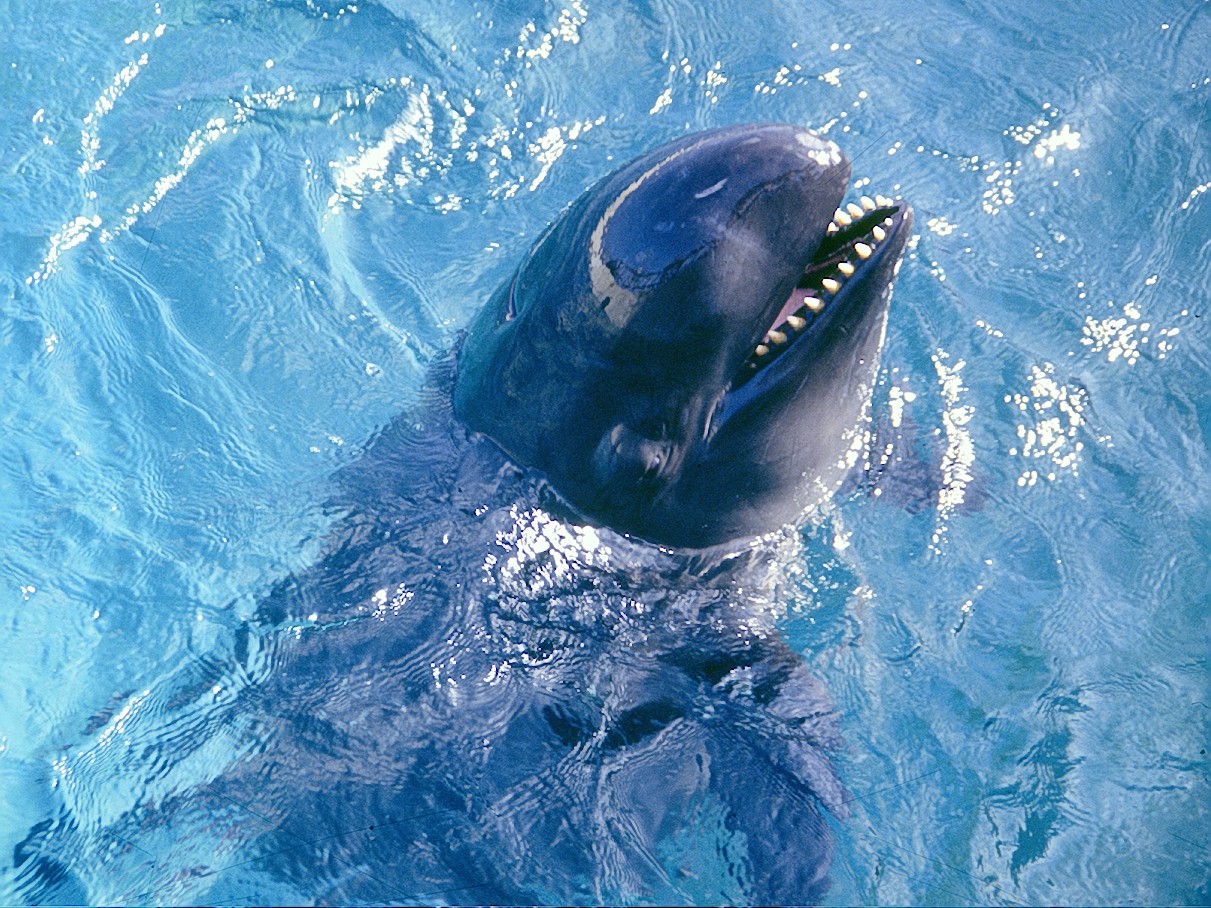
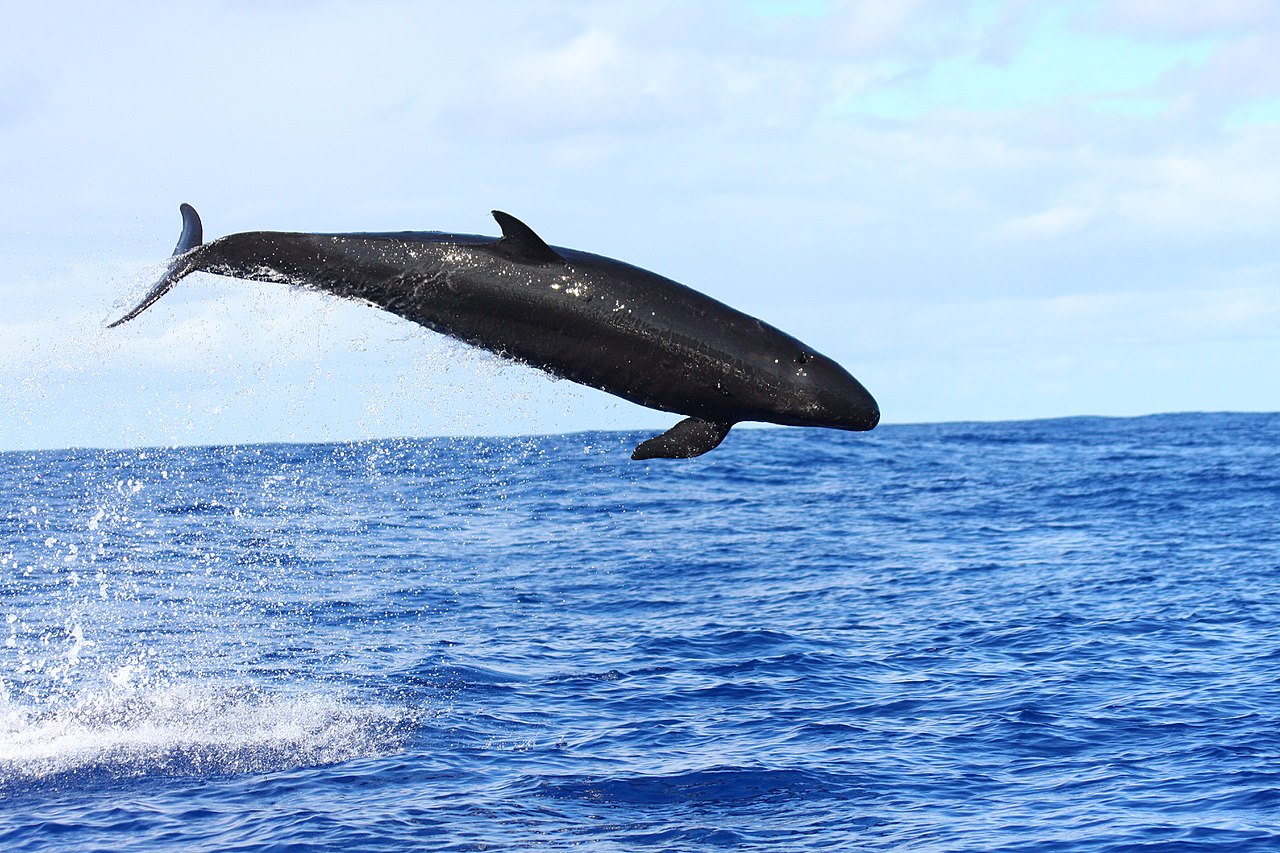
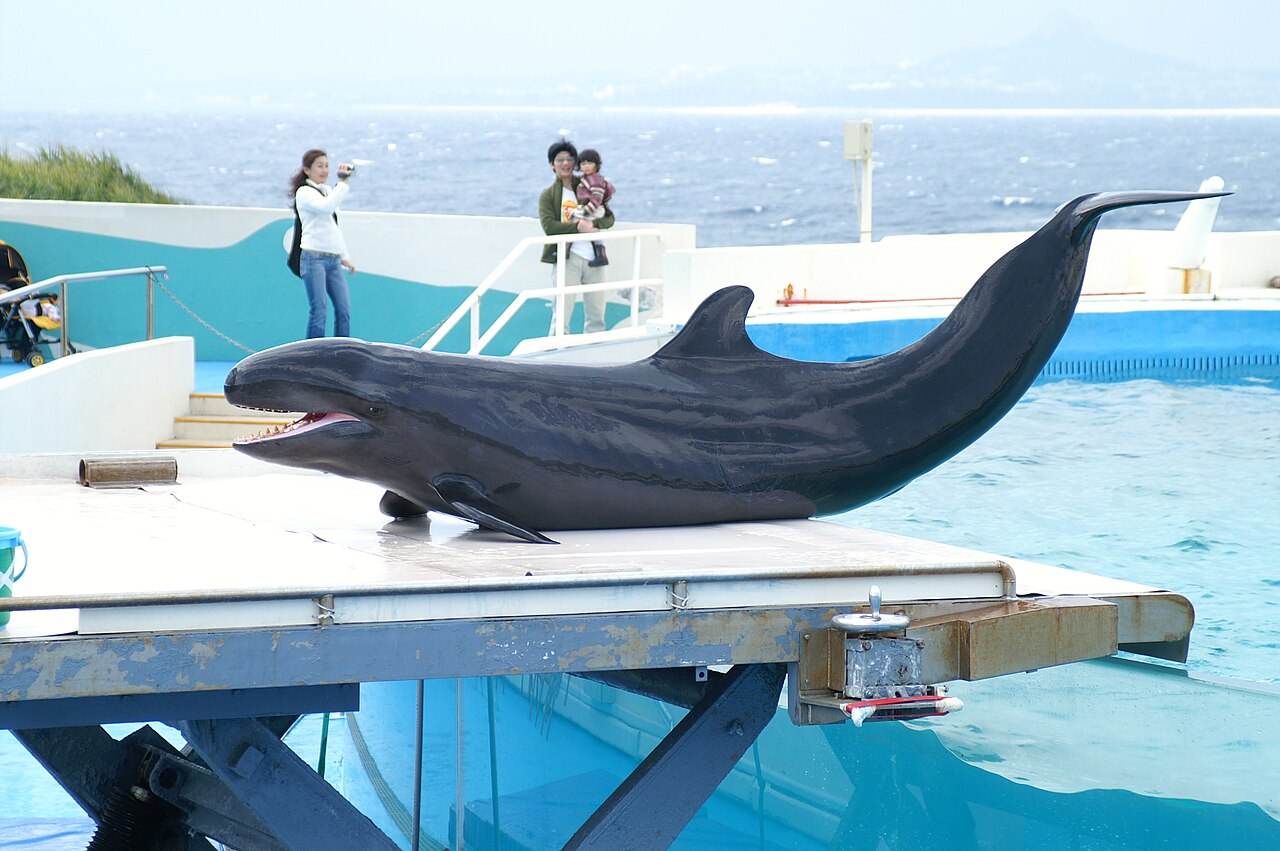
The false killer whale belongs to the oceanic dolphins grouping; for a general context see oceanic dolphins. Adults have a streamlined, relatively slender body with a rounded head that lacks a pronounced beak, a tall, curved dorsal fin, and dark gray to black coloration often with a lighter saddle patch behind the dorsal fin. Teeth are conical and set along both jaws, adapted for grasping large fish and squid. Size places them among the largest of the Delphinidae; mature individuals are noticeably larger than many other dolphin species.
Distribution and habitat
False killer whales occupy tropical to warm-temperate oceans worldwide. They are most frequently encountered in deep, offshore waters, around oceanic islands and seamounts, and along the edges of continental shelves. While primarily pelagic, they may approach coasts and sometimes enter bays or channel waters near islands. Distribution is broad but populations can be regionally structured, with groups showing fidelity to favorable feeding areas.
Behavior and social structure
These dolphins are highly social and are known for forming long-term social bonds. Typical social units, or pods, vary in size from a few individuals to dozens; multiple pods may join to form larger aggregations. Behavioral traits include cooperative hunting, sharing of food items, close association among individuals, and complex acoustic communication. Mass strandings have occurred in several regions, a phenomenon seen in other social cetaceans and often linked to the species' tight group cohesion.
Feeding and interactions with other cetaceans
The diet consists mainly of large fish and cephalopods; false killer whales are capable of taking sizeable prey and may hunt cooperatively. There are documented instances of them attacking and sometimes killing smaller dolphin species, which has contributed to their common name. Their feeding can bring them into competition or conflict with fisheries, leading to depredation (taking bait or catch from lines and nets) and incidental bycatch in some gears.
- Social life: stable pods, cooperative hunting and food sharing.
- Habitat: offshore tropical and warm-temperate seas, near islands and seamounts.
- Diet: large fish and squid; occasional predation on other small cetaceans.
- Taxonomic notes: sole extant species of Pseudorca; see broader family Delphinidae and oceanic dolphins for comparative information.
Reproduction, longevity and population
Reproductive biology follows typical delphinid patterns: a single calf is born after a multi-month gestation, calves are dependent on the mother for an extended period, and sexual maturity occurs several years after birth. False killer whales are long-lived compared with many smaller dolphins and can live for decades. Population size and dynamics vary by ocean region; some insular or island-associated populations are small and genetically distinct from offshore groups.
Human interactions, threats and conservation
Interactions with humans include entanglement in fishing gear, bycatch, depredation of fisheries catch, occasional live capture for display, and exposure to pollutants that bioaccumulate in marine food webs. Because of their social nature, mortalities from human activities can affect group cohesion and local population viability. Conservation assessments differ among regions; some local populations are of conservation concern and are the focus of management measures. Research and monitoring methods include photo-identification, acoustic studies, satellite tagging, genetic analyses and necropsies of stranded animals to better understand status and threats. For an accessible species overview see this summary.
Related articles
Author
AlegsaOnline.com False killer whale (Pseudorca crassidens) Leandro Alegsa
URL: https://en.alegsaonline.com/art/33407