
Feijoa (Acca sellowiana): pineapple guava — description, cultivation and uses
Feijoa (Acca sellowiana), also called pineapple guava, is an evergreen shrub or small tree valued for its aromatic fruit, ornamental flowers and adaptability in mild temperate climates.
Overview
The feijoa, commonly known as pineapple guava or guavasteen, is the fruit of Acca sellowiana, a hardy evergreen plant grown for both its edible fruit and attractive flowers. The species is typically cultivated as an evergreen specimen, often trained as a shrub or a small tree reaching from about one to several metres in height. The fruit has a pleasantly fragrant aroma and a sweet-tart flavor appreciated fresh or processed.
Image gallery
10 Images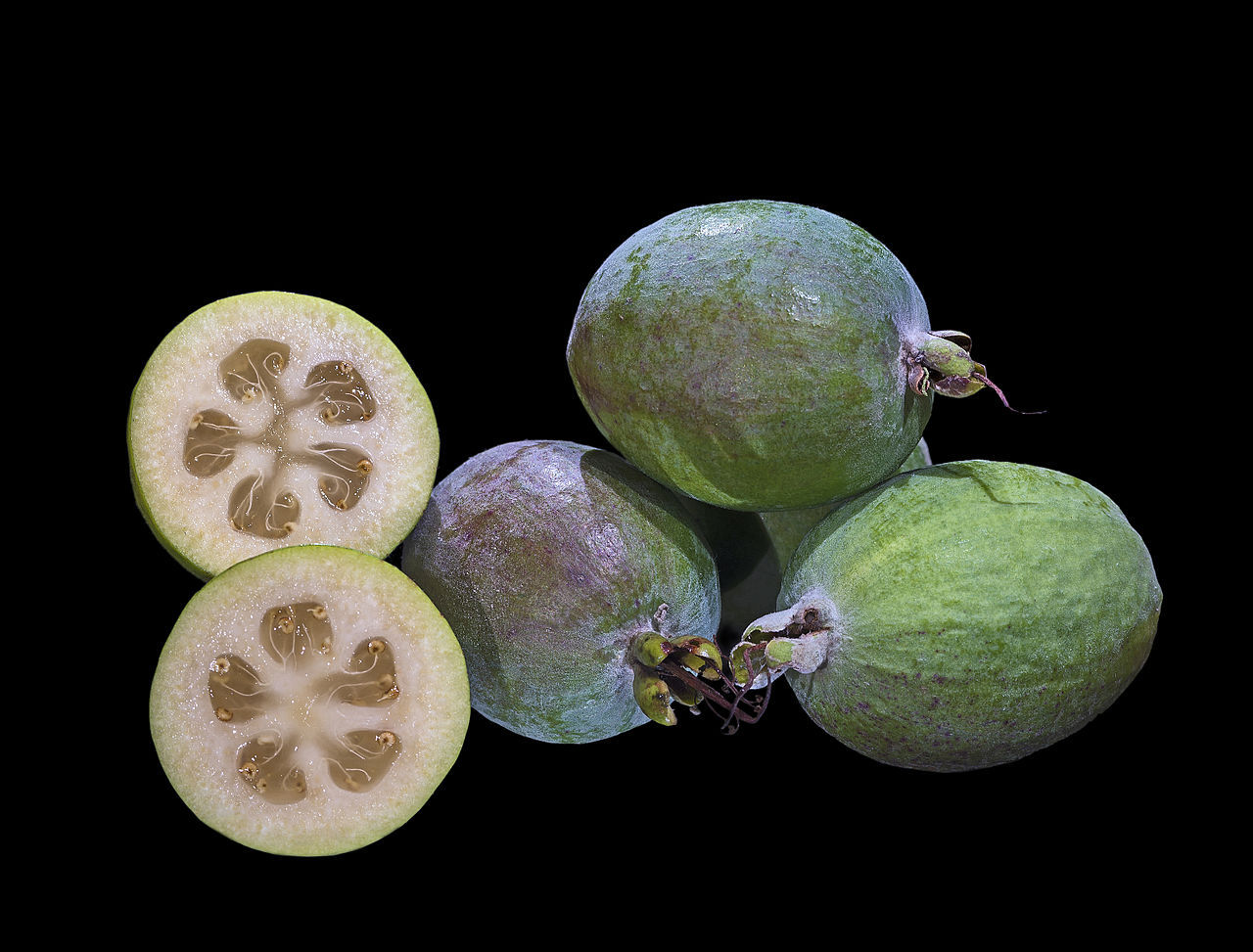


Description and characteristics
Feijoa produces oval, green fruits with a thin, slightly bumpy skin and a creamy, granular pulp that surrounds a jelly-like seed cavity. The pulp is aromatic and described variously as a blend of pineapple, guava and strawberry notes. The plant bears waxy, grey-green leaves and showy flowers with edible petals that are sometimes eaten raw. It tolerates light frosts and prefers well-drained soil and a sunny to part-shaded position.
Native range and cultivated regions
Feijoa is native to the highland regions of South America. Native and naturalized regions include:
Outside its native range it is widely cultivated in temperate zones and mild coastal climates such as:
- Azerbaijan
- Iran
- Georgia
- Russia (including Sochi)
- New Zealand
- Tasmania and Australia
Cultivation, pollination and harvest
Feijoa is grown in home gardens and commercially where winters are mild but chilling is sufficient to induce flowering. Plants are commonly propagated by cuttings, grafting or seed. While some varieties set fruit alone, many benefit from cross-pollination by bees or another cultivar to improve fruit set and size. Fruits generally ripen in late summer to autumn in temperate hemispheres and are picked when slightly soft and fragrant.
Uses and importance
The fruit is eaten fresh by scooping the pulp, and it is also used in jams, jellies, juices, desserts and baked goods. Petals of the flowers are edible and sometimes used as a garnish. Feijoas provide dietary fiber and vitamin C and are valued for their distinct aroma in culinary and small-scale commercial products. In addition to fruit production, the plant is used as an ornamental hedge or specimen because of its attractive foliage and flowers.
History and nomenclature
The common name "feijoa" derives from a botanist’s name; the species has been known both under the older genus name Feijoa and the currently accepted Acca sellowiana. It has spread globally from South America into suitable climates worldwide. Gardeners and small growers prize it for its unusual flavor, ornamental value and relative ease of care in compatible climates.
Notes and distinctions
Although often called "pineapple guava," feijoa is not a true guava (Psidium) nor directly related to pineapple; the name refers to the fruit’s aromatic, pineapple-like notes. Varietal differences affect size, sweetness and bloom time, so growers select cultivars to match local conditions and pollination needs.
Questions and answers
Q: What is the feijoa?
A: The feijoa is a fruit that comes from the evergreen shrub or small tree Acca sellowiana.
Q: Where does the feijoa come from?
A: The feijoa comes from the highlands of southern Brazil, parts of Colombia, Uruguay, Paraguay, and northern Argentina.
Q: Where else is the feijoa grown?
A: The feijoa is also grown in Azerbaijan, Iran (Ramsar), Georgia, Russia (Sochi), New Zealand, and Tasmania, Australia.
Q: How tall can the Acca sellowiana shrub or tree grow?
A: The Acca sellowiana shrub or tree can grow anywhere between 1-7 meters in height.
Q: What are some other names for the feijoa?
A: The feijoa is also called the 'pineapple guava' or 'guavasteen'.
Q: Is the feijoa an evergreen or deciduous plant?
A: The feijoa is an evergreen plant.
Q: What is unique about the feijoa fruit?
A: The feijoa fruit has a unique flavor that is often described as a mix of pineapple, guava, and mint.
Related articles
Author
AlegsaOnline.com Feijoa (Acca sellowiana): pineapple guava — description, cultivation and uses Leandro Alegsa
URL: https://en.alegsaonline.com/art/33897