
Cambrian explosion: rapid diversification of animal life in the early Paleozoic
The Cambrian explosion refers to the relatively brief geological interval around 541 million years ago when most major animal body plans first appear in the fossil record, prompting debate about causes and tempo.
The Cambrian explosion describes a major increase in the diversity and complexity of multicellular animals near the base of the Cambrian Period, beginning about 541 million years ago. In rocks of this age many of the major animal phyla appear as fossils for the first time, a pattern often described as a rapid diversification of body plans. That apparent suddenness in the fossil record stimulated intense scientific interest because it marks a profound transformation in the character of life on Earth.
Image gallery
10 Images



Key characteristics and major groups
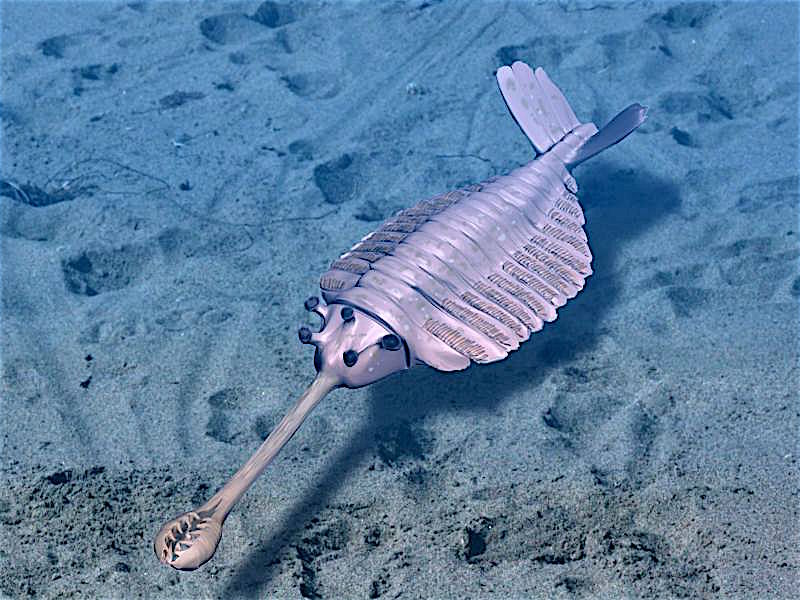
During the Cambrian, organisms developed hard parts such as shells and mineralized skeletons that fossilize more readily, and complex features like jointed limbs, segmented bodies, and specialized feeding and sensory organs emerged. Typical Cambrian groups include early arthropods, mollusks, brachiopods, echinoderms, sponges and the earliest known chordates. Many of these taxa display anatomical designs that persist in modified form to the present day.
Evidence and important fossil sites
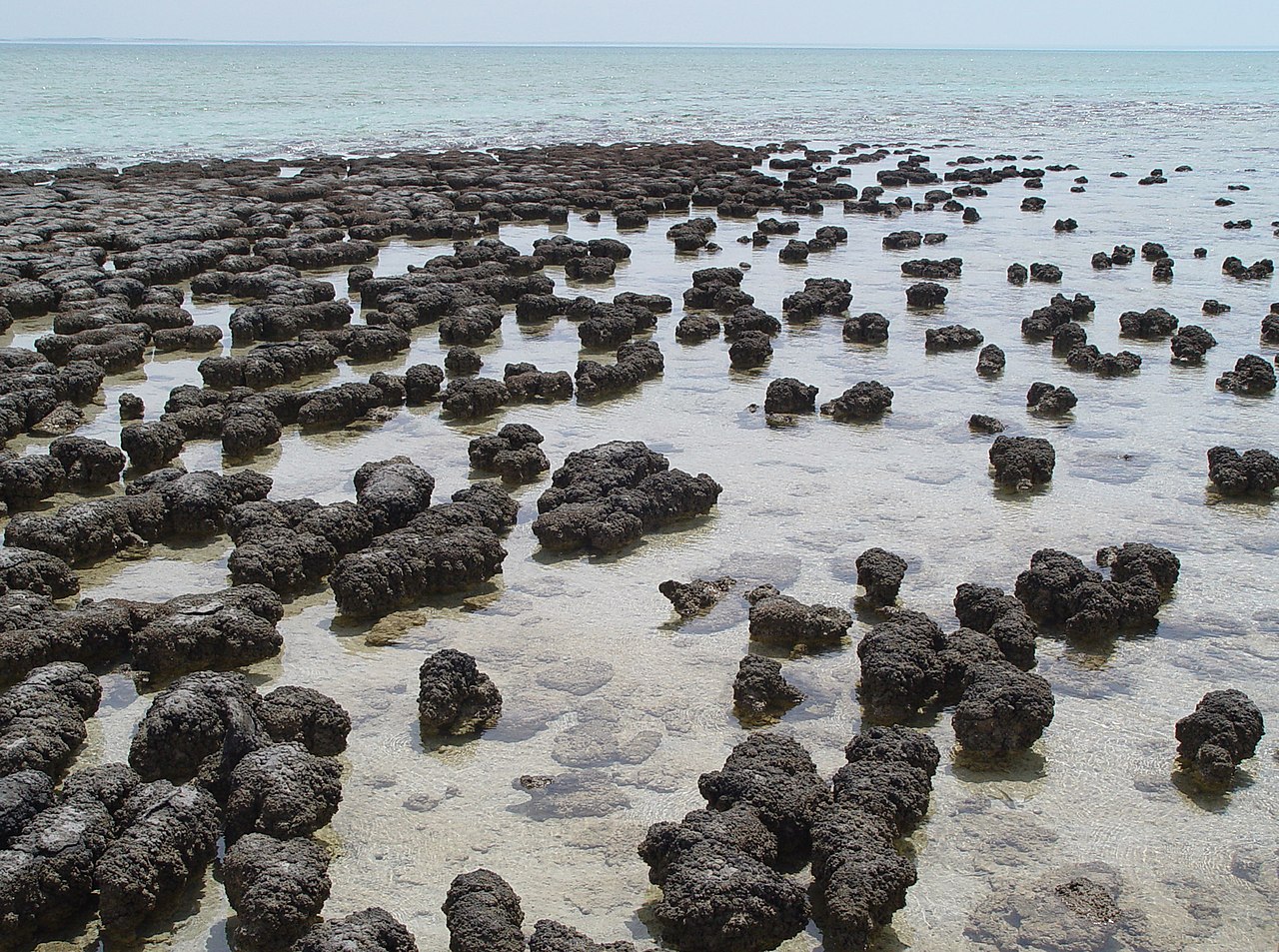
Fossil evidence for the Cambrian fauna comes from a variety of exceptionally preserved deposits that reveal soft parts as well as shells. Two famous sites are the Burgess Shale of Canada and the Chengjiang biota of China; both preserve a rich diversity of soft-bodied animals. Earlier, much simpler organisms were mostly microscopic and often consisted of single cells or simple multicellular colonies, and their preservation potential was lower. The switch to more readily preserved anatomies helps explain why the Cambrian interval appears so distinctive in the rock record.
Timing, tempo and early debates
The rapidity of the Cambrian event depends on how one measures it. The commonly cited start at about 541 million years ago marks the base of the Cambrian, and the interval of major diversification probably unfolded over several tens of millions of years. Paleontologists have argued whether this was a true evolutionary 'explosion' in the sense of very fast speciation, or partly a preservational artifact that makes pre-Cambrian forms harder to detect. The striking contrast between primordial strata and Cambrian assemblages was noted in the 19th century and even prompted figures such as Charles Darwin to view the pattern as an apparent challenge to evolution by natural selection, a puzzle that stimulated further research rather than a refutation.
Hypotheses for causes
- Environmental change: rising oxygen levels in the oceans may have allowed larger bodies and more active metabolisms.
- Genetic and developmental innovations: the emergence and diversification of gene networks that control body plans (for example, regulatory genes) could have enabled novel morphologies.
- Ecological interactions: predation, competition and new ecological niches may have accelerated an evolutionary arms race leading to greater disparity.
- Taphonomic and sampling effects: the shift to biomineralized skeletons increased the likelihood of fossilization, amplifying the apparent signal of diversification.
These ideas are not mutually exclusive; most researchers favor a combination of environmental, genetic and ecological drivers together with fossilization bias to explain the pattern.
Significance and open questions
The Cambrian explosion remains central to understanding the origin of modern animal diversity. It illustrates how changes in physiology, development, and environment can interact to produce rapid morphological innovation. Ongoing work—integrating new fossils, molecular clocks, experimental developmental biology and geochemistry—continues to refine when and how the major animal lineages diverged and how much of the apparent speed reflects preservation versus true evolutionary rates. For further reading consult general summaries and collections of primary research available through paleontological resources such as overviews of evolutionary rates and historical treatments of the primordial strata. Additional introductory material and databases can be found via curated portals and museum pages that summarize Cambrian finds and their interpretation (cells and colonies, colonies, and field sites).
Scholars continue to investigate early animal life using both new fossil discoveries and modern analytical methods; the Cambrian interval remains a vivid example of both the power and limits of the rock record for reconstructing deep evolutionary history. For accessible overviews and historical context see resources on the subject and specialized reviews that trace debates from the 19th century to current hypotheses (Darwin's discussion, methodological reviews at fossil record, and synthesis articles referenced through curated links like evolutionary theory and broader paleobiology portals).
Readers interested in detailed fossil lists, stratigraphic charts and site-specific descriptions should consult specialist monographs and museum collections that catalogue Cambrian taxa and their stratigraphic contexts (primordial strata, evolutionary rates, and regional faunal lists at recognized paleontological repositories).
Questions and answers
Q: What is the Cambrian Explosion?
A: The Cambrian Explosion is when many animal phyla first appeared in the fossil record. It happened 541 million years ago (mya).
Q: How long did it take for most of the phyla we know today to exist?
A: Over the following 70 or 80 million years, the rate of evolution seemed to accelerate and by the end of the Cambrian, most phyla we know today existed.
Q: When was it first noted that fossils were appearing rapidly in 'primordial strata'?
A: It was first noted as early as the mid 19th century.
Q: Who saw this rapid appearance of fossils as an objection to their theory?
A: Charles Darwin saw this rapid appearance of fossils in 'primordial strata' as one of the main objections that could be made against his theory of evolution by natural selection.
Q: What type of organisms existed before 580 mya?
A: Before about 580 mya, it seems that most organisms were simple. They were made of individual cells, occasionally organized into colonies.
Q: Was there any evidence that animals had evolved before they appeared in fossil records?
A: Probably most had evolved before then, but that was their first appearance as fossils.
Tags
Related articles
Author
AlegsaOnline.com Cambrian explosion: rapid diversification of animal life in the early Paleozoic Leandro Alegsa
URL: https://en.alegsaonline.com/art/16258
Sources
- ucmp.berkeley.edu : The Cambrian period
- palaeo.gly.bris.ac.uk : The Cambrian explosion – timing
- books.google.com : The ecology of the Cambrian radiation
- doi.org : 10.1111/j.1475-4983.2006.00611.x
- onlinelibrary.wiley.com : doi:10.1111/j.1475-4983.2006.00613.x.
- worldcat.org : 176630493
- sciencemag.org : "Dating the origin of animals"
- ui.adsabs.harvard.edu : 1996Sci...274.1993M
- doi.org : 10.1126/science.274.5295.1993f
- sciencemag.org : "Precambrian columnar stromatolite diversity: Reflection of metazoan appearance"
- ui.adsabs.harvard.edu : 1971Sci...174..825A
- doi.org : 10.1126/science.174.4011.825
- pubmed.ncbi.nlm.nih.gov : 17759393
- nrm.se : The fossil record of predation. The Paleontological Society Papers 8
- paleobiol.geoscienceworld.org : "Predation defeats competition on the seafloor"