
Exotoxin (bacterial secreted toxin)
Exotoxins are protein poisons secreted by bacteria that damage host cells or alter cell function; they include neurotoxins, cytotoxins, enterotoxins and superantigens and underlie several vaccines and therapies.
An exotoxin is a biologically active protein secreted by certain bacteria that interferes with normal function in an infected organism. Unlike structural components that remain part of the bacterial surface, exotoxins are released into the surrounding environment and can act at a distance to injure host cells, disrupt tissues or provoke damaging immune responses.
Image gallery
1 Image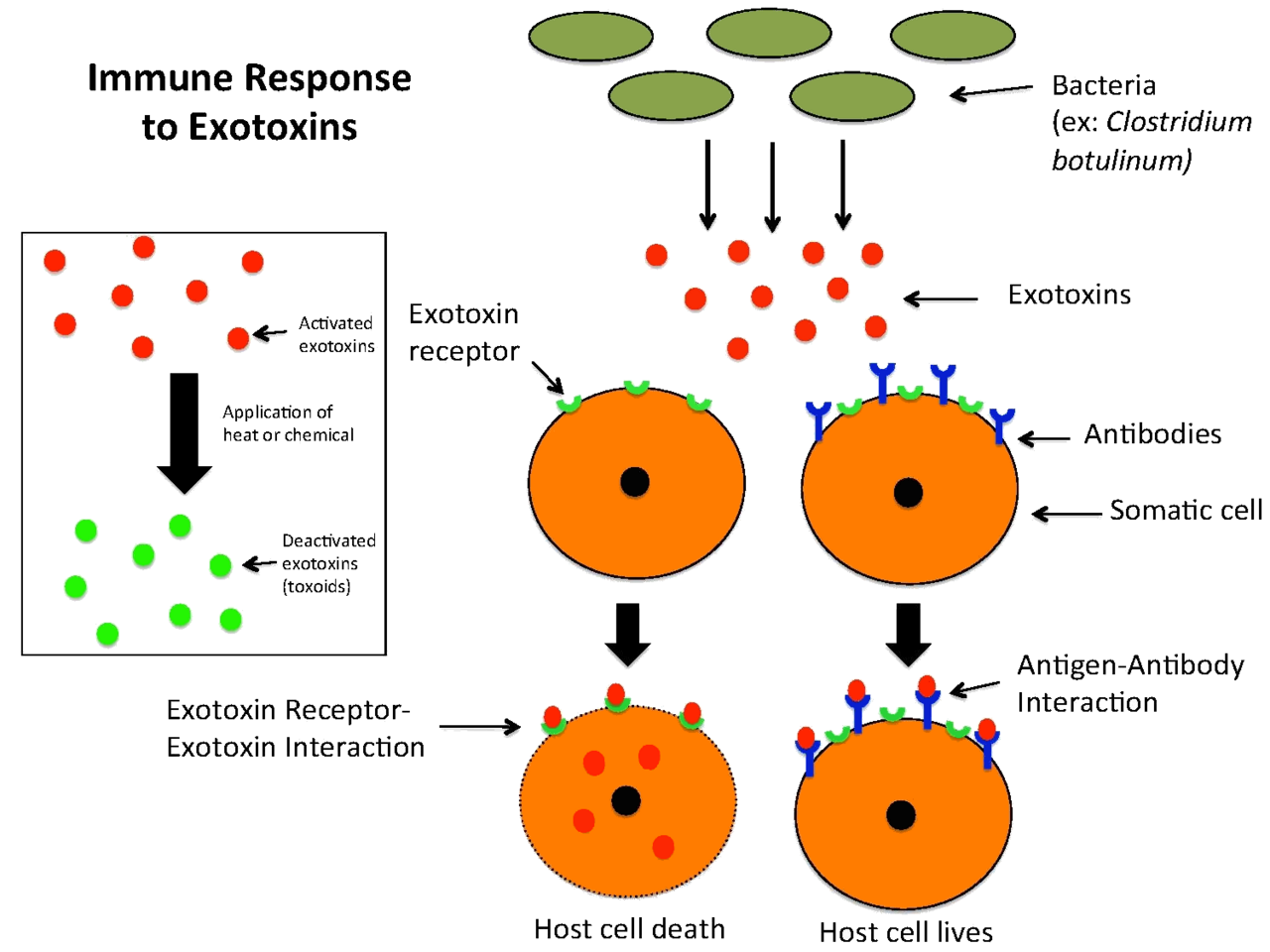
Characteristics and mechanisms
Exotoxins are typically proteins or polypeptides with specific molecular targets. They may enzymatically modify host molecules (for example by ADP-ribosylation), cleave cellular proteins, form pores in membranes, or bind receptors to trigger signaling cascades. Many are potent at very low doses and are often heat-labile and antigenic, which makes them detectable by the immune system and, in some cases, convertible into vaccines.
Types and examples
- Neurotoxins: target nerve function (e.g., botulinum and tetanus toxins).
- Enterotoxins: affect intestinal cells and cause diarrhea (e.g., cholera toxin, some staphylococcal toxins).
- Cytotoxins: directly damage or kill cells (e.g., diphtheria toxin).
- Superantigens: overstimulate immune cells and can cause shock (e.g., toxic shock syndrome toxin).
History and clinical importance
The concept of soluble bacterial poisons emerged in the late 19th century as researchers isolated factors responsible for diseases such as diphtheria and botulism. Clinically, exotoxins are central to the symptoms of many infectious diseases and are targets for treatment with antitoxins, supportive care and prevention by immunization. Toxoid vaccines, produced by inactivating exotoxins, have dramatically reduced illnesses caused by diphtheria and tetanus.
Some exotoxins have been adapted for medical use: controlled doses of botulinum toxin treat muscle spasms and are used cosmetically, while others serve as tools in cell biology to probe signaling pathways. Because they are proteins, exotoxins often elicit strong immune responses, which both contributes to disease pathology and offers a route for vaccine development.
Distinctions and notable facts
Exotoxins differ from endotoxins, which are heat-stable lipopolysaccharides associated with the outer membrane of Gram-negative bacteria. Endotoxins generally provoke broad inflammatory responses, whereas exotoxins usually act by specific molecular mechanisms. Public health and laboratory practices classify and handle exotoxin-producing organisms with caution because of their potency and potential for systemic effects.
Related articles
Author
AlegsaOnline.com Exotoxin (bacterial secreted toxin) Leandro Alegsa
URL: https://en.alegsaonline.com/art/32963