
Evapotranspiration: water transfer from land and plants to the atmosphere
Evapotranspiration is the combined loss of water by evaporation and plant transpiration; it links soil, vegetation and climate and is central to hydrology, agriculture and weather studies.
Overview
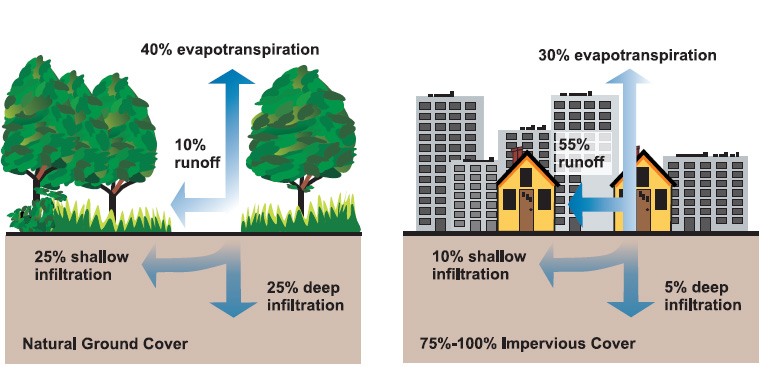
Evapotranspiration is the combined process by which water moves from the Earth's surface into the atmosphere through movement of water as vapour. It comprises two related phenomena: evaporation from soils, water bodies and wet surfaces, and transpiration by living plants. Together they form a major flux in the water cycle, affecting local humidity, energy balance and water availability.
Image gallery
5 Images



Components
Evaporation is the physical conversion of liquid water into vapour from sources such as soil, puddles and open water (for example, lakes). Transpiration occurs when plants release water vapour through leaf pores called stomata; this process is tightly linked to plant physiology and stomatal regulation. The relative contribution of each component varies with vegetation cover, soil moisture and weather.
Measurement and models
Estimating evapotranspiration can be done directly or indirectly. Direct methods use instruments such as lysimeters to weigh water loss. Indirect approaches combine weather observations and equations — from empirical formulas to physically based models. A widely used standard in agronomy and hydrology is the reference evapotranspiration concept, which separates climatic demand from crop characteristics. Classic and modern model families (including Penman-style energy-balance formulations and newer remote-sensing approaches) provide tools for mapping and forecasting evapotranspiration.
Factors affecting evapotranspiration
Evapotranspiration responds to multiple interacting factors: incoming radiation and temperature control available energy; humidity and wind determine how readily vapour is removed from near-surface air; and vegetation type, leaf area and soil water limit how much water is available to evaporate or transpire. Human actions—irrigation, land-use change and vegetation management—also alter regional evapotranspiration patterns.
Importance and applications
- Agriculture: scheduling irrigation and estimating crop water needs.
- Hydrology and water resources: balancing watershed inputs and outputs.
- Climate studies: linking surface energy fluxes to local and regional climates.
- Environmental management: assessing drought, ecosystem health and land-use impacts.
Practical work on evapotranspiration blends field observation, meteorological data and models to inform decisions from farm-level irrigation to basin-scale water planning. For further introductory material see general summaries on evaporation and plant processes: plants, stomata, and the broader concept of the water cycle.
Historically, the concept developed as meteorology and agronomy recognized the need to quantify water loss. Modern remote sensing and improved models now allow spatial estimates across landscapes, but uncertainty remains where measurements are sparse or vegetation dynamics are complex.
Related articles
Author
AlegsaOnline.com Evapotranspiration: water transfer from land and plants to the atmosphere Leandro Alegsa
URL: https://en.alegsaonline.com/art/32729