
Fire Ecology: Role of Fire in Ecosystems, Adaptations, and Management
Fire ecology examines how fire shapes ecosystems, the adaptations of plants and animals, historical and human influences, and how managers use prescribed fire to reduce risk and support biodiversity.
Fire ecology studies the interactions between fire and the biological, physical and chemical components of the ecosystems where it occurs. Rather than treating fire only as destruction, this field examines how different kinds of fires influence species composition, nutrient cycling, habitat structure and the long-term dynamics of landscapes.
Image gallery
10 Images


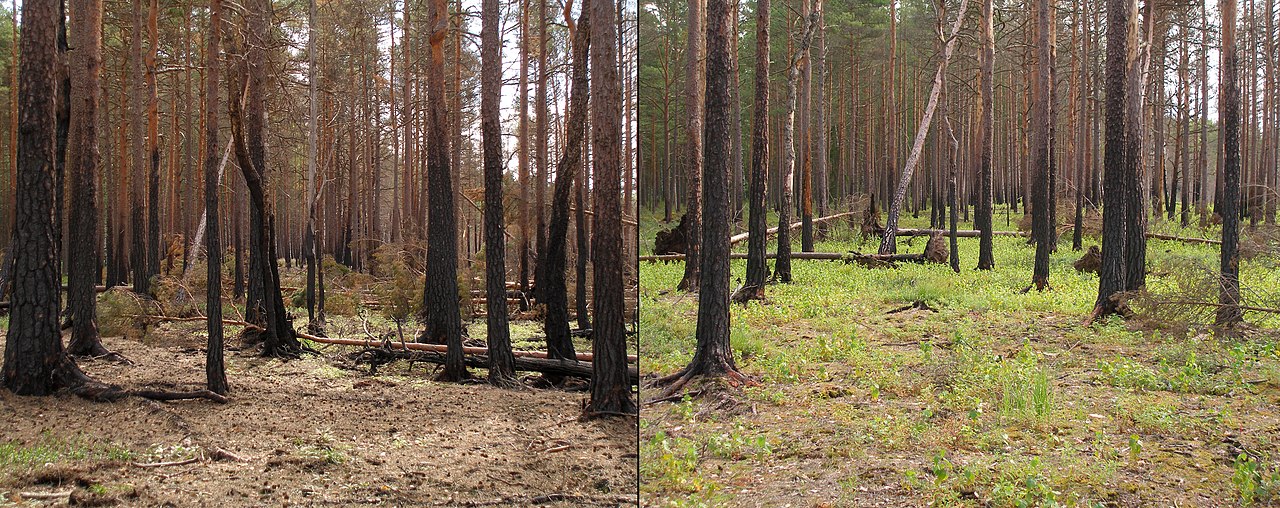




Fire regimes and characteristics
Ecologists describe a landscape's fire regime by its typical frequency, intensity, seasonality and spatial pattern. These elements determine whether a fire is a low-severity surface burn that clears grasses and leaf litter, a high-intensity crown fire that consumes tree canopies, or something in between. Fire regimes are shaped by climate, weather, fuel types and topography, and they vary widely between, for example, temperate grasslands, mediterranean shrublands and tropical savannas.
Ecological effects and adaptations
Many habitats depend on periodic fire to remain productive. In some regions periodic burns remove accumulated dead material and stimulate growth in remaining vegetation. Species in these systems often exhibit specific traits that enhance survival or reproduction after fire: thick bark, rapid resprouting, seed release triggered by heat or smoke, and soil-stored seed banks. For instance, plants in the North American prairie, Californian chaparral, and South African savanna show a range of fire-adapted strategies. Some species actually require fire cues for seeds to germinate and initiate ecological succession.
History, human influence and misconceptions
Human cultures have long used fire deliberately to shape ecosystems for hunting, agriculture and habitat management. In contrast, modern fire suppression policies—most notably in the United States—have sometimes emphasized that wildfires are purely harmful. Public information campaigns and fire control practices grew from a preservationist view that disturbances disrupt a stable natural balance. Contemporary ecology recognizes that preventing all fires can allow fuels to accumulate and actually increase the likelihood of large, severe fires.
Management, uses and contemporary challenges
Land managers now use tools such as controlled burns and mechanical thinning to restore more natural fire regimes, reduce hazardous fuel loads, and maintain habitat features that support biodiversity. Prescribed fire can lower the probability of catastrophic blazes near communities, recycle nutrients, and promote species that depend on disturbance. However, climate change, invasive plants, altered ignition patterns and expanding development in fire-prone landscapes complicate management and increase risks to people and property.
Distinctions and notable facts
- Wildfire versus prescribed fire: goals and control distinguish an unmanaged conflagration from an intentionally applied burn.
- Surface, crown and ground fires affect ecosystems in different ways—some renew grasses, others transform forest structure.
- Adaptive management uses monitoring to adjust timing, frequency and intensity of burns to meet ecological and social objectives.
Understanding fire ecology helps reconcile the need to protect lives and infrastructure with the ecological importance of fire in many landscapes. Effective policies balance scientific knowledge of fire regimes, historical practices, and the rights and safety of nearby communities while using carefully planned burns and other measures to sustain resilient ecosystems.
Further reading and resources: fire basics, ecosystem interactions, habitat maintenance, prairie studies, chaparral research, savanna ecology, adaptation mechanisms, germination by fire, successional roles, US fire history, public campaigns, wildfire impacts, biodiversity links, prescribed burning.
Questions and answers
Q: What is fire ecology?
A: Fire ecology is the study of the effects of fire on ecosystems, as well as what causes fires.
Q: What are some examples of habitats where fire helps keep them healthy?
A: Examples of habitats where fire helps keep them healthy include North American prairie and chaparral ecosystems, and South African savanna.
Q: How does fire help renew these habitats?
A: In these habitats, many plants and trees have adapted to need fire in order to grow well or for their seeds to germinate and start ecological succession. Without it, dry wood and dead plants accumulate.
Q: Why do people believe that wildfires are always bad for nature?
A: People used to believe that ecosystems grow towards a stable system, and disturbances like fires stop that process and destroy the harmony of nature. However, we now know that in some areas, fires are needed in order for the system to work properly; they also help with biodiversity.
Q: How can controlled burns be used?
A: Controlled burns are sometimes done so that there is still fire where it is needed but not where it could cause damage to people or their property.
Q: How have plants and animals adapted to protect themselves from fire?
A: Plants and animals in these habitats have adapted ways to protect themselves from fires, while some species even rely on it for survival.
Related articles
Author
AlegsaOnline.com Fire Ecology: Role of Fire in Ecosystems, Adaptations, and Management Leandro Alegsa
URL: https://en.alegsaonline.com/art/34463
Sources
- californiachaparral.com : californiachaparral.com