
Eurozone (Euro area)
The Eurozone is the group of EU countries that use the euro. This article explains its institutions, membership rules, history, economic role, and key distinctions.
Overview
The Eurozone, often called the Euro area or Euroland, is the collection of European Union members that have adopted the euro as their official currency. It is a monetary union inside the broader European Union. A common currency facilitates cross-border trade, travel and price comparison while supporting deeper economic integration among participants.
Image gallery
5 Images


Governance and institutions
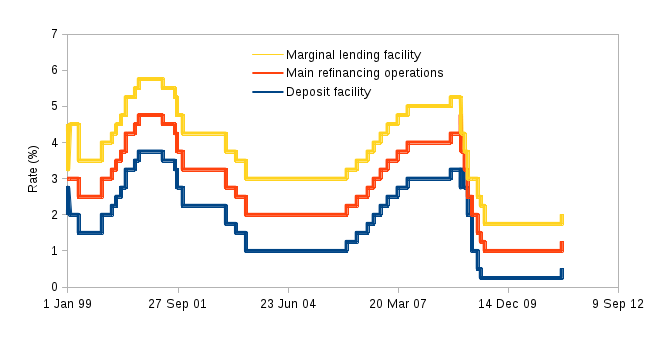
Monetary policy for the Eurozone is set by the European Central Bank (ECB), whose mandate focuses on price stability and the management of the euro money supply. Political and fiscal coordination takes place through informal and formal bodies, most prominently the Eurogroup, where finance ministers from euro countries discuss common economic issues and policy responses.
Membership and adoption
To join the Eurozone an EU member must meet economic and legal conditions commonly known as the Maastricht convergence criteria, which cover price stability, public finances, exchange-rate stability and interest rates. Most EU members have adopted the euro, while others have chosen to delay adoption or have formal opt-outs. Current EU members that have not adopted the euro include:
Croatia is an example of a country that completed euro adoption after joining the EU, showing that membership timing and currency change can occur in separate stages.
History and development
The euro was introduced as an accounting and electronic currency in 1999 and entered circulation as banknotes and coins in 2002. Since its creation the Eurozone expanded in stages, with new entrants joining after fulfilling convergence conditions. Over time the union has evolved institutional mechanisms for banking supervision, fiscal coordination and crisis response to strengthen economic resilience.
Economic role and implications
A shared currency removes exchange-rate risk among participants, lowers transaction costs and can increase market transparency and investment. However, members give up individual monetary policy and independent exchange-rate tools, which makes fiscal policy coordination and structural reform important for adjusting to asymmetric shocks. The trade-offs between integration benefits and loss of national monetary autonomy are central to debates about the Eurozone's future reforms.
Notable distinctions
- Identifiers: the euro uses the symbol € and the ISO code EUR.
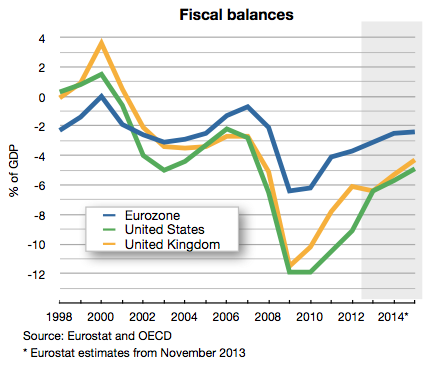
- Partial union: the Eurozone is a monetary union, not a full political union; fiscal policy remains largely national.
- Ongoing process: enlargement and institutional reform continue as member states and EU institutions seek to improve stability and governance.
Related articles
Author
AlegsaOnline.com Eurozone (Euro area) Leandro Alegsa
URL: https://en.alegsaonline.com/art/32661