
Eriophyidae: the gall mites — tiny plant parasites
Eriophyidae are microscopic plant-feeding mites that induce galls and other symptoms, often host-specific and economically important; some species also vector plant viruses.
Overview
Eriophyidae, commonly called gall mites or eriophyid mites, are a family of microscopic arachnids that feed on plants. Unlike most mites, eriophyids have only two pairs of legs and a very narrow, wormlike body. Many species induce characteristic plant deformities such as galls, erineum (leaf felt), silvering, or curled and distorted tissue. They occur worldwide and are especially notable in horticulture and agriculture for the damage they cause.
Image gallery
8 Images


Characteristics and anatomy
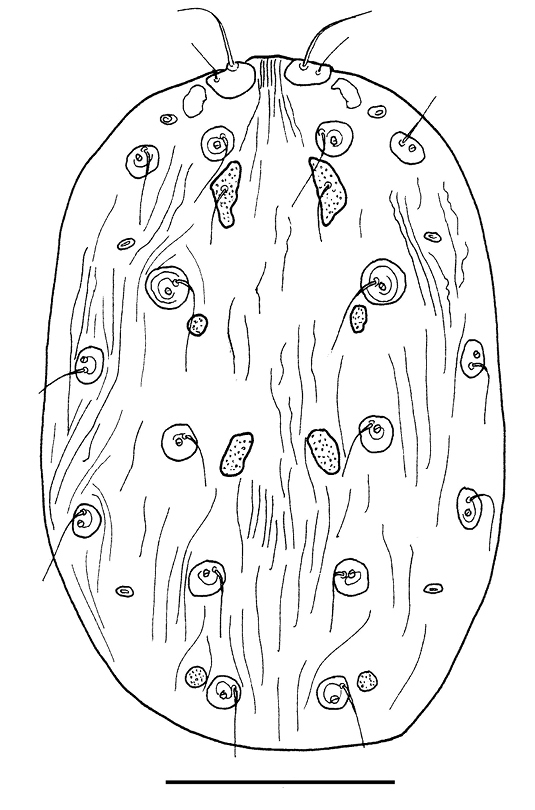
Adults are extremely small (typically about 0.08–0.3 mm) and can be difficult to see without magnification. Their body is elongate with a simple, straight digestive tract and no obvious gut diverticula. They lack a distinct heart or conventional circulatory system, and their mouthparts are adapted to pierce and suck plant cells. For more on their structure, see detailed anatomy resources.
Life cycle and behavior
Eriophyid mites have a direct life cycle with egg, nymphal, and adult stages; development can be rapid under warm conditions, leading to population explosions. Most species are highly host-specific, completing their life cycle on a single plant species or closely related hosts. They disperse slowly by crawling but can be carried long distances by wind, human movement of plant material, or on insects.
Plant interactions and impacts
Feeding by eriophyids stimulates abnormal plant growths (galls) or subtle symptoms such as bronzing, stippling, or leaf curling. Some species reduce vigor and yield, deform ornamental plants, or render fruit unmarketable. A number of eriophyid mites are also vectors of plant viruses, which can amplify their economic importance.
Management and significance
- Identification and monitoring with magnification or trapping
- Use of resistant cultivars where available
- Cultural controls: removing infested material and avoiding plant stress
- Chemical controls: targeted miticides when thresholds are exceeded
- Biological control: predatory mites and natural enemies in integrated programs
Practitioners can find practical guidance on control and management in extension literature and pest management guides; consult management strategies for region-specific advice. Eriophyids are a distinct and specialized group of mites whose subtle appearance belies their often large effects on cultivated and wild plants.
Questions and answers
Q: What are Eriophyidae?
A: Eriophyidae are a family of mites that are plant parasites and produce galls.
Q: What kind of damage can Eriophyidae cause to the host plant?
A: Eriophyidae can cause severe damage to the host plant.
Q: How many pairs of legs do Eriophyidae have?
A: Eriophyidae have only two pairs of legs.
Q: What is the size range of Eriophyidae?
A: Eriophyidae are very small, with a size range of 0.08 mm - 0.3 mm.
Q: What is the gut structure of Eriophyidae?
A: The gut of Eriophyidae is straight, with no outgrowths.
Q: Do Eriophyidae have a heart or circulatory system?
A: No, Eriophyidae have no heart or circulatory system.
Q: What is the main characteristic of Eriophyidae?
A: The main characteristic of Eriophyidae is that they are plant parasites and produce galls.
Related articles
Author
AlegsaOnline.com Eriophyidae: the gall mites — tiny plant parasites Leandro Alegsa
URL: https://en.alegsaonline.com/art/31950