
Circulatory system (cardiovascular system)
The circulatory system moves blood through the body using the heart and a network of vessels. It transports gases, nutrients, hormones and wastes, supports immunity and helps regulate temperature.
Overview
The circulatory system, often called the cardiovascular system, is the biological network that moves blood and its dissolved substances throughout an animal's body. At its core are a muscular pump — the heart — and an extensive set of blood vessels. Together these parts maintain a flow that delivers oxygen and nutrients to tissues, carries away metabolic waste, distributes chemical signals, and helps defend the body against infection.
Image gallery
10 Images


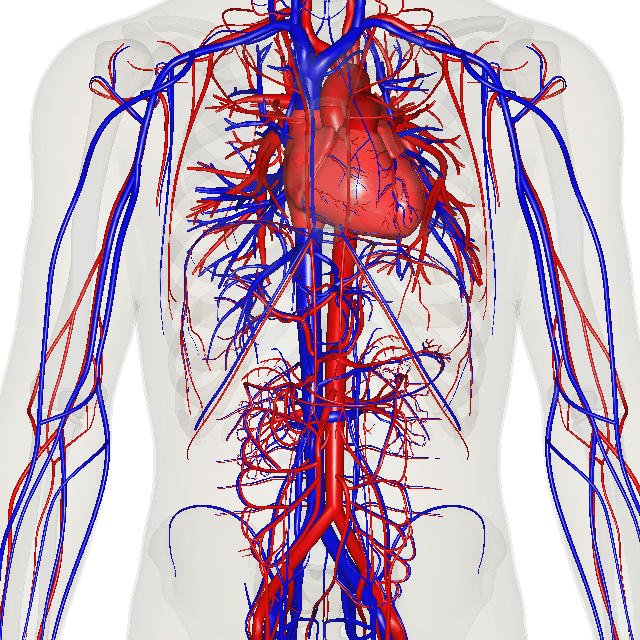

Main components and their roles
The system is commonly described by three vessel types and the chambers that drive flow. Arteries carry blood away from the heart and branch into smaller arterioles before reaching the thin-walled capillaries. Capillaries form networks where exchange with tissues occurs. After exchange, blood collects into small venules and returns to the heart through veins. The continuous sequence heart → artery → arteriole → capillary → venule → vein → heart is known as circulation.
Two circulatory circuits
Many vertebrates have two linked circuits. The systemic circuit distributes oxygenated blood to most of the body, while the pulmonary circuit carries blood between the heart and the lungs for gas exchange. Mammals and birds typically show this double circulation pattern, which supports high metabolic rates. In contrast, other groups show variations in chamber number and mixing of blood; examples of such differences occur across mammals and other vertebrates.
Functions and examples
- Transport: moves oxygen, carbon dioxide, nutrients, metabolic wastes and hormones.
- Homeostasis: helps regulate pH, fluid balance and body temperature.
- Protection: delivers immune cells and clotting factors to sites of injury or infection.
- Integration: connects organs so they can communicate via blood-borne signals.
Evolutionary context and variations
Circulatory arrangements have evolved to match different lifestyles. Many invertebrates use an open circulatory system where hemolymph bathes organs directly, while vertebrates have a closed system in which blood remains confined to vessels. Within vertebrates, heart structure ranges from two chambers in fishes to three or four chambers in amphibians, reptiles and birds, reflecting adaptations to aquatic or terrestrial life and to varying metabolic demands.
Health, disease and clinical importance
Because the circulatory system supports every organ, its dysfunction affects overall health. Conditions such as hypertension, atherosclerosis and heart failure are major causes of illness. Medical evaluation often includes listening to the heart, imaging the vasculature and measuring pressure and flow. Lifestyle, nutrition and preventive care influence circulatory health, and scientific study continues to refine treatments and interventions.
For further reading and basic diagrams, consult reputable educational resources and anatomical references. Different sources offer detailed views of vessel structure, blood composition and comparative anatomy for students and professionals alike.
Questions and answers
Q: What is the circulatory system?
A: The circulatory system, also known as the cardiovascular system, is the bodily system that moves blood throughout the body.
Q: What does the circulatory system consist of?
A: The circulatory system consists of the heart and blood vessels.
Q: What does blood carry?
A: Blood carries various materials that the body needs, and takes away waste or harmful substances.
Q: What are arteries?
A: Arteries are blood vessels that take blood away from the heart.
Q: What are capillaries?
A: Capillaries are blood vessels that connect smaller arteries to veins.
Q: What are veins?
A: Veins are blood vessels that take blood towards the heart.
Q: Are there different circulations in the circulatory system?
A: Yes, there are two different circulations in the circulatory system: systemic and pulmonary. Systemic circulation is how blood goes to most of the body, while pulmonary circulation is how blood goes through the lungs.
Related articles
Author
AlegsaOnline.com Circulatory system (cardiovascular system) Leandro Alegsa
URL: https://en.alegsaonline.com/art/20461
Sources
- etymonline.com : "Online Etymology Dictionary"