
Esox: the pike genus of freshwater predatory fishes
Esox is the genus of pike and pickerel — elongated, ambush predators of northern freshwater systems. This article covers their traits, species, fossil record, behaviour, fishery importance and conservation.
Overview
Esox is a genus of freshwater fishes commonly known as pike and pickerel. Members of this genus are native to temperate regions of the Northern Hemisphere, occurring across parts of North America, Europe and Asia. They are notable as large predatory fishes with a characteristic elongated form and a reputation as ambush hunters. Esox is the only living genus in the family Esocidae and has an ancient fossil record that shows the group has existed for tens of millions of years.
Image gallery
10 Images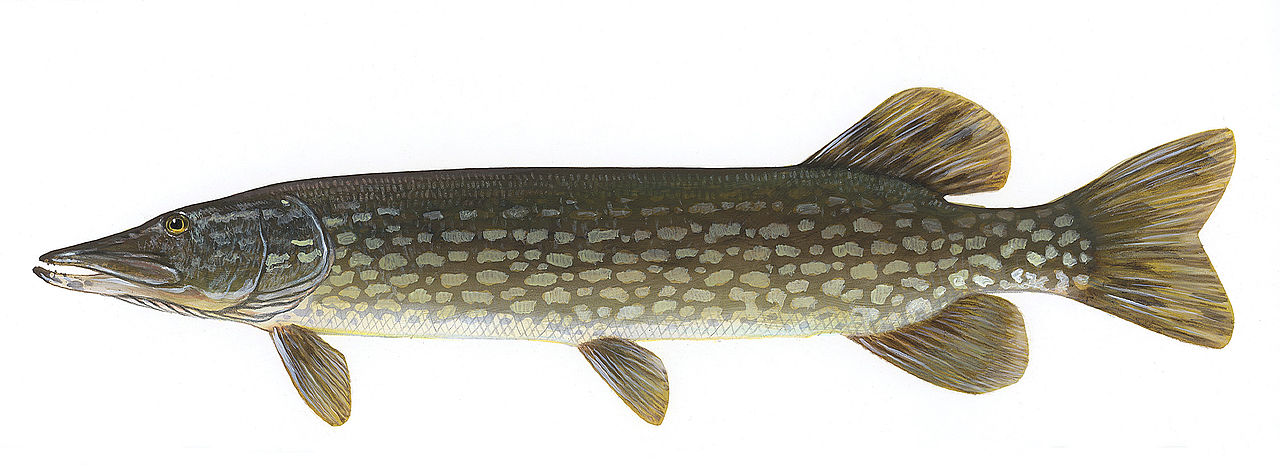


Distinctive characteristics
Species of Esox share a suite of physical and behavioral features that suit an ambush-predator lifestyle. Typical traits include:
- Long, cylindrical or slightly compressed body and a tapered tail, giving a streamlined silhouette for sudden bursts of speed.
- A flattened, elongated head with a broad, tooth-lined snout sometimes described as "duckbill" shaped.
- Sharp conical teeth and a wide mouth capable of taking relatively large prey items.
- Dorsal and anal fins positioned far back on the body to provide rapid thrust during a strike.
- Camouflaged coloration, commonly shades of green or brown with lighter spots or bars, which helps them ambush prey among aquatic vegetation.
Species, taxonomy and fossil history
The genus contains several well-known species, including the Northern pike (Esox lucius), the muskellunge (often called muskie), and species commonly referred to as pickerels. These species occupy different but sometimes overlapping ranges and vary in size from relatively small pickerels to the very large muskellunge. Fossils attributable to the genus show that Esox-like fishes have existed since at least the early Cenozoic. One notable fossil, named Esox tiemani, was reported from deposits in Alberta, Canada, and dates to roughly 62 million years ago, indicating an ancient lineage within northern freshwater ecosystems.
Range, habitat and life history
Esox species are largely freshwater fishes found in lakes, slow rivers, marshes and vegetated shallows. They prefer habitats that provide cover for hiding and ambush, such as reeds, submerged vegetation and fallen structures. Feeding is primarily piscivorous: adults take fish as their main food, though they will also consume amphibians, small mammals and birds when available. Reproduction typically involves spring spawning in shallow, vegetated water where adhesive eggs are deposited and left to develop without parental care. Growth rates, lifespan and maximum size vary by species and environment.
Human interactions and importance
Esox species are prized by recreational anglers for their fighting ability and size. They are also culturally and economically important in many regions, featuring in sport-fishing industries and local fisheries. Because they are apex or near-apex predators, pike and related species play an important ecological role in structuring fish communities. However, when introduced outside their native ranges, some Esox species have become invasive, altering food webs and competing with or preying on native fishes, which has prompted management and control efforts in several areas.
Conservation and notable distinctions
Conservation status varies among Esox species and populations. Habitat loss, water quality degradation, overfishing and the effects of invasive species can threaten local populations. Distinguishing between common names can be important: "pike" often refers to larger species like the Northern pike, while "pickerel" typically denotes smaller congeners; "muskellunge" is a separate species sometimes mistaken for large pike. Management measures frequently include habitat protection, fishing regulations and, where necessary, targeted removal in places where introductions have caused ecological harm.
Further reading and resources
For more information consult taxonomic keys, regional fish guides, and fisheries management literature. Below are placeholder links to additional resources and databases:
- Taxonomy overview
- Freshwater fish resources
- General fish biology
- Family Esocidae details
- Geological timescales
- Alberta fossil sites
- Canadian paleontology references
- Northern distribution notes
- North American fish guides
- European freshwater fishes
- Asian fish fauna
- Species profiles
- Northern pike information
- Anatomy and morphology
- Body form adaptations
- Coloration and camouflage
- Eye and sensory adaptations
- Fin placement and locomotion
Note: The placeholders above link to external resources when replaced. For species-specific management or identification, consult regional authorities or specialist guides.
Questions and answers
Q: What is Esox?
A: Esox is a genus of freshwater fish.
Q: What family does Esox belong to?
A: Esox is the only living genus in the family Esocidae.
Q: What is the oldest known example of Esox and where was it found?
A: The oldest known example of Esox is the fossil Esox tiemani. It dates to about 62 million years ago and was found in Alberta, Canada.
Q: Where are pike and pickerel commonly found?
A: Pike and pickerel are commonly found in the northern parts of North America, Europe and Asia.
Q: Which Esox species is found in both Europe and North America?
A: Esox lucius, the Northern pike, is found in both Europe and North America.
Q: What is the physical appearance of Esox?
A: Esox is a large predatory fish with a long cylindrical body. They have a green color (various shades) with yellow eyes. Pike and pickerel share a forked tail fin and a large pointed head. Their dorsal and anal fins are located far back on their bodies. All species have very sharp teeth.
Q: What are pike and pickerel known for?
A: Pike and pickerel are known as large predatory fish with very sharp teeth.
Related articles
Author
AlegsaOnline.com Esox: the pike genus of freshwater predatory fishes Leandro Alegsa
URL: https://en.alegsaonline.com/art/32190
Sources
- fishbase.org : "Esocidae"