
Etruscan shrew (Suncus etruscus)
A tiny insectivorous mammal, the Etruscan shrew is the smallest mammal by mass; this article summarizes its size, metabolism, behaviour, range, reproduction and conservation.
Overview
The Etruscan shrew (Suncus etruscus), also called the Etruscan pygmy shrew or white‑toothed pygmy shrew, is notable for being the smallest known mammal by mass. It is an insectivorous species with an extremely fast metabolism and a very small body. For comparison, the bumblebee bat is often discussed in the same context because it has a very small skull and overall dimensions; the bat can have a smaller skull in some measurements.
Image gallery
3 Images

Physical characteristics
Adults are extraordinarily small: some of the smallest adults weigh about 1.3 grams, with head‑body lengths reported in the low tens of millimetres—examples of ~36 mm have been recorded. Typical total length including tail may be on the order of several centimetres. The coat is short and dense; unlike some other shrew species its teeth lack the reddish iron staining and are described as "white‑toothed." Its long whiskers and sensitive snout help locate small prey.
Metabolism, diet and behaviour
Etruscan shrews have very high mass‑specific metabolic rates and must eat frequently to sustain themselves. Their diet consists primarily of insects and other small invertebrates such as spiders and larvae. They are active foragers and use rapid movements and tactile cues to capture prey. Individuals are typically solitary except during brief reproductive interactions.
Habitat and distribution
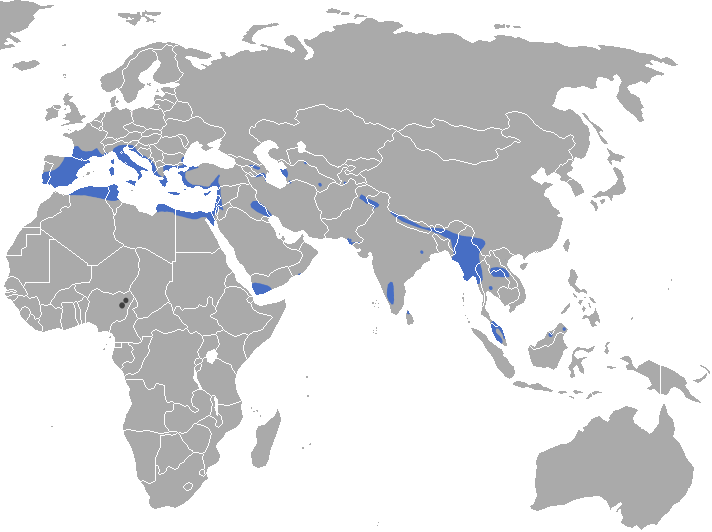
The species occupies a broad, patchy range across the Mediterranean region and into parts of North Africa, the Middle East and southern Asia. It also occurs in parts of southern Europe. Etruscan shrews are adaptable and can be found in a variety of habitats—from forests and brush and scrub to marginally altered agricultural or garden areas—so long as cover and a supply of invertebrate prey are available.
Reproduction and lifespan
Breeding may occur several times per year where conditions are favourable; females produce litters of a few young that develop rapidly. Lifespan in the wild is short compared with many mammals and is typically measured in months rather than years, with many individuals living around fifteen months under natural conditions.
Predators, threats and conservation
Predators of the Etruscan shrew include owls, snakes and small carnivorous mammals. While the species is generally common across much of its range and not considered globally threatened, local populations can be affected by habitat loss, intensive agriculture and declines in prey availability. Its small size and energetic life history make it a frequent subject in studies of mammalian physiology and ecology; further reading and comparative material may be found via the size and regional references above.
Key reference points include size comparisons (mass reference and length data), specimen measurements (smallest adults, weight data), and range or habitat notes (habitat, Asia, Europe, bat comparison, skull note).
Questions and answers
Q: What is the Etruscan shrew?
A: The Etruscan shrew is the smallest known mammal by mass.
Q: What are some other names for the Etruscan shrew?
A: The Etruscan shrew is also known as the Etruscan pygmy shrew or the white-toothed pygmy shrew.
Q: How heavy can the smallest adult Etruscan shrew weigh?
A: The smallest adult Etruscan shrew can weigh about 1.3 grams.
Q: How long is the Etruscan shrew?
A: The Etruscan shrew can be up to 36 mm (1.42 inches) long.
Q: What is the lifespan of the Etruscan shrew?
A: The Etruscan shrew has a lifespan of 15 months.
Q: Where does the Etruscan shrew live?
A: The Etruscan shrew lives in forests and brush areas between southern Asia and southern Europe.
Q: What does the Etruscan shrew mostly eat?
A: The Etruscan shrew mostly eats insects.
Related articles
Author
AlegsaOnline.com Etruscan shrew (Suncus etruscus) Leandro Alegsa
URL: https://en.alegsaonline.com/art/32435
Sources
- bucknell.edu : Mammal Species of the World
- iucnredlist.org : Suncus etruscus