
ENIAC — Early Electronic Numerical Integrator and Computer
ENIAC was one of the first large-scale electronic general-purpose computers (built 1943–1946). It used vacuum tubes, plugboard programming, and influenced later computer designs and programming practice.
Overview
ENIAC (Electronic Numerical Integrator and Computer) was an early electronic general-purpose computer developed during World War II and completed in 1946. Designed by John Mauchly and J. Presper Eckert, it demonstrated that fully electronic numerical calculation at high speed was practicable. The machine was built to accelerate ballistic trajectory calculations and other large numerical tasks that previously consumed long human and mechanical effort.
Image gallery
9 Images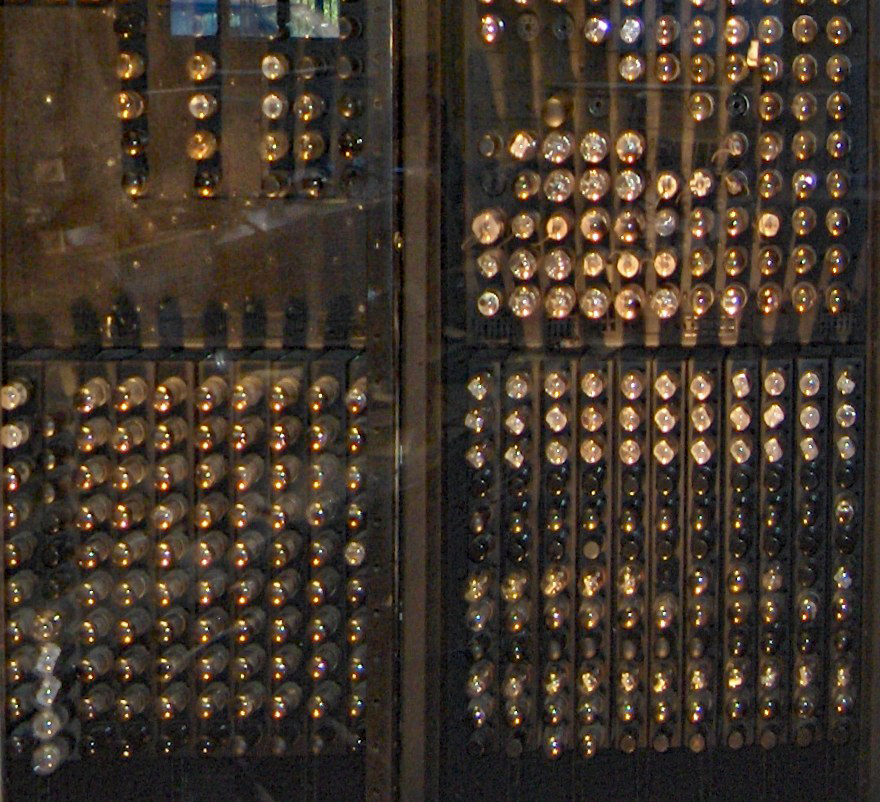


Design and components
ENIAC occupied a large room and was composed of modular panels containing thousands of components. It used nearly 17,500 vacuum tubes and several thousand diodes, with extensive wiring connecting arithmetic units, accumulators, and control panels. The hardware required substantial electrical power and cooling; maintenance was a regular part of operation because vacuum tubes were prone to failure.
Programming and operation
Programming ENIAC was done by setting plugboards and switches and by rewiring cable connections; that is, programs were physically configured rather than stored in memory. Teams of operators—most notably a group of women mathematicians who became known as the ENIAC programmers—translated mathematical problems into the machine's wiring and sequence of operations. Later modifications introduced more flexible sequence control techniques that anticipated stored-program concepts.
Uses and historical importance
The first practical applications were military and scientific calculations, including artillery firing tables. ENIAC's speed and electronic architecture showed a clear path beyond mechanical calculators and early electromechanical devices. Its construction stimulated commercial ventures and inspired further research that led to smaller, more reliable, and more easily programmed machines.
Notable facts and legacy
- Designed by John Mauchly and J. Presper Eckert, who later formed a computer company.
- Used a plugboard programming model rather than a stored program at first.
- Required continuous maintenance and significant electrical infrastructure.
- Recognized as a milestone in the transition to electronic computing and studied in histories of computing.
For introductory and archival materials, see contemporary summaries and museum collections: technical overview, component lists, and photographic records. Additional educational resources and timelines are available from institution pages and computing histories: timeline, further reading.
Related articles
Author
AlegsaOnline.com ENIAC — Early Electronic Numerical Integrator and Computer Leandro Alegsa
URL: https://en.alegsaonline.com/art/31505
Sources
- ftp.arl.mil : "The ENIAC Story"
- onlinelibrary.wiley.com : "Turning Potential into Realities: The Invention of the Integrated Circuit"
- ed-thelen.org : "Ballistic Research Laboratories Report № 971 — A Survey of Domestic Electronic Digital Computing Systems — page 41"