
Diode — two-terminal semiconductor device
A diode is a two-terminal electronic device that conducts primarily one way. Common semiconductor diodes are used for rectification, signal detection, voltage reference, switching and light emission.
Overview
A diode is a fundamental electronic component with two terminals arranged so that electrical flow is favored in one direction. In circuits a diode is used to control the direction of current, protect sensitive parts, or convert waveforms. Its one‑way characteristic makes it a basic building block for power conversion, signal processing and protection circuits.
Image gallery
10 Images





How it works
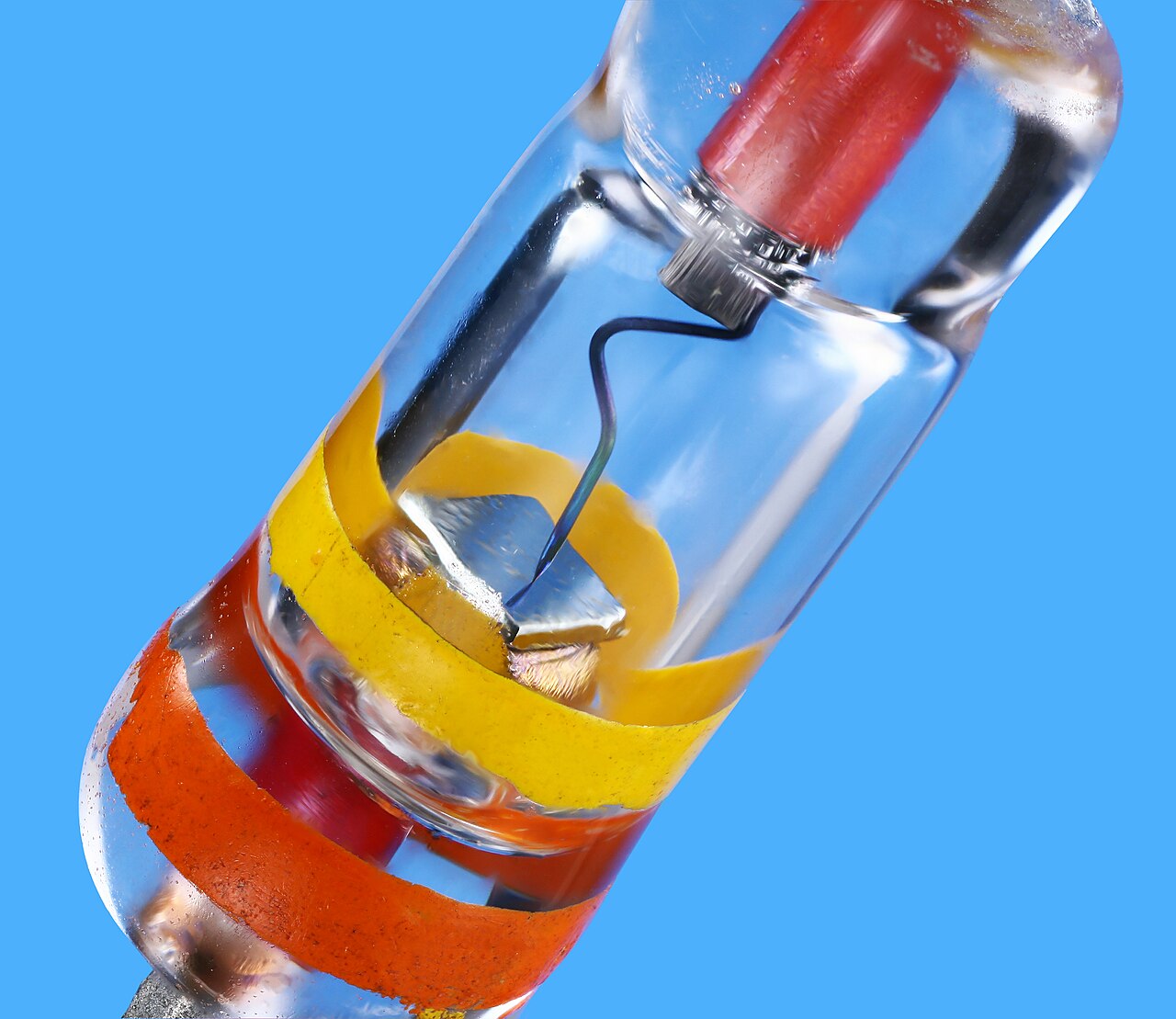
Most contemporary diodes are built from semiconductor materials such as silicon or germanium. A p–n junction forms a depletion region that resists carrier motion until the device is forward biased; when forward voltage exceeds a small threshold the diode conducts. Typical silicon junction diodes begin to conduct at roughly around 0.7 volts, with germanium types having a lower forward drop. When reverse biased, only a small leakage current flows until a breakdown process occurs in devices not intended to operate in that regime.
Common types and uses
Diodes appear in many specialized forms tailored to different tasks.
- Rectifier diodes — used in bridge configurations to turn alternating current into direct current for power supplies.
- Zener diodes — exploit controlled reverse breakdown to provide voltage regulation and references.
- Light‑emitting diodes (LEDs) — emit light when forward biased and are ubiquitous in displays, indicators and lighting.
- Photodiodes — convert light into electrical signals and are used in optical receivers and sensors.
- Schottky, tunnel and varactor diodes — chosen for low forward drop, high speed switching or voltage-dependent capacitance.
Diodes are also used in radio detection: a simple detector in a crystal radio recovers audio from amplitude modulated broadcasts via diode rectification, a basic example of AM demodulation.
History and development
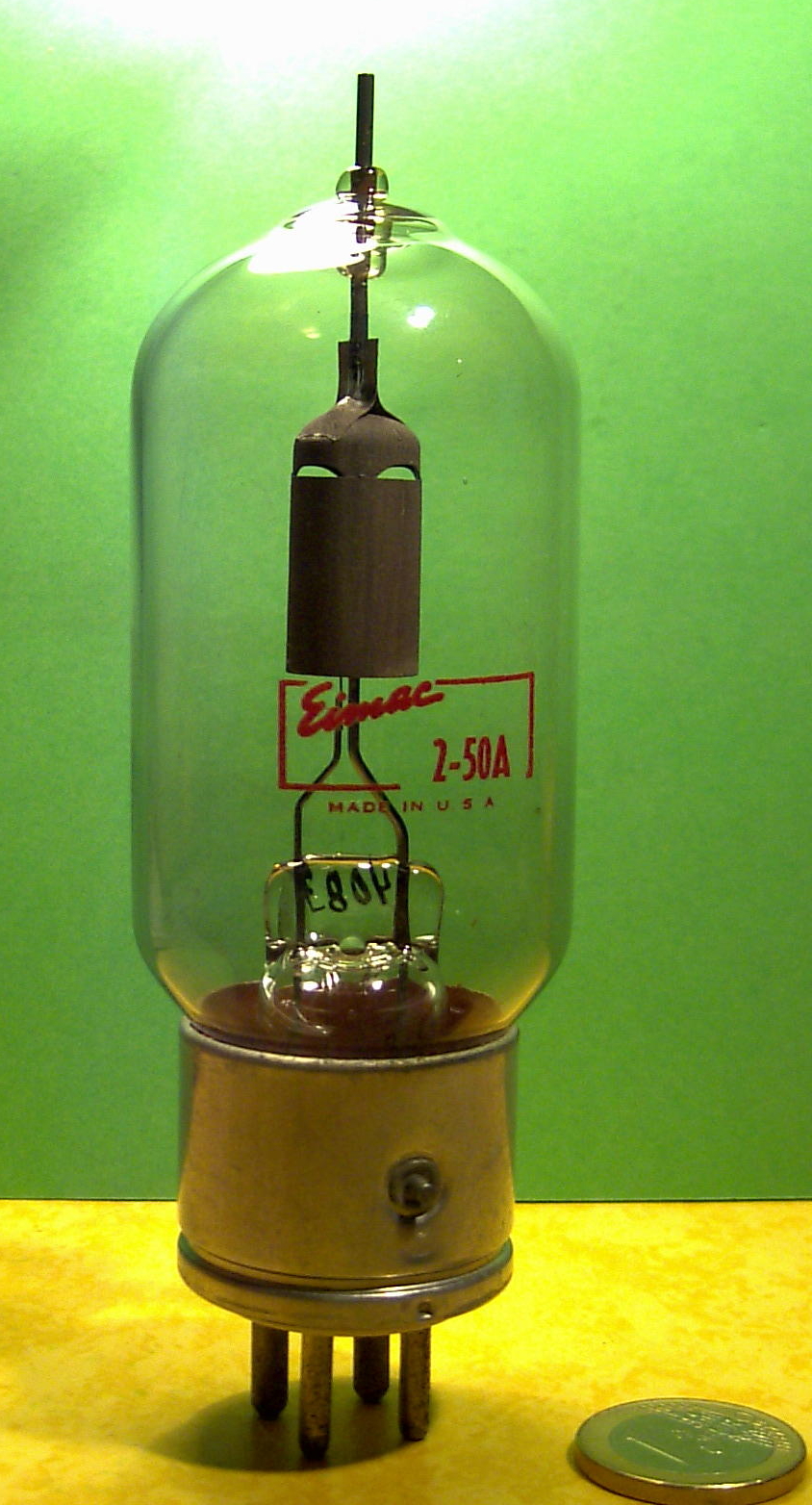
The idea of directing current predates semiconductor technology. Early rectification used vacuum tubes (such as the Fleming valve), and solid‑state detectors appeared as cat's‑whisker crystal contacts in early radio. The systematic development of doped semiconductor materials and manufacturing processes in the 20th century produced reliable, compact diodes that replaced bulkier vacuum devices and enabled modern electronics.
Characteristics, limits and practical notes
Key parameters include forward voltage drop, maximum forward current, reverse breakdown voltage and switching speed. Diode symbols on schematics show a triangle pointing to a bar; physical parts often carry a stripe marking the cathode to indicate polarity. Diodes are not ideal one‑way valves: they have finite forward voltage and small reverse leakage, and they produce heat when conducting significant current, so current ratings and thermal management matter in application design. Certain diodes are intentionally used in reverse breakdown (Zener) while others must be protected to avoid destructive avalanche events.
Where to learn more
Introductory electronics texts and many online resources explain diode circuits, characteristics and selection for design. For practical experimentation consider simple rectifier and LED circuits, or study detector circuits such as the classic crystal radio to observe basic diode behavior.
Questions and answers
Q: What is a diode?
A: A diode is an electronic component with two electrodes that allows electricity to go through it in one direction and not the other direction.
Q: What is the use of diodes?
A: Diodes can be used to turn alternating current into direct current (Diode bridge). They are used in power supplies and sometimes to decode amplitude modulation radio signals.
Q: What are light-emitting diodes?
A: Light-emitting diodes (LEDs) are a type of diode that produce light.
Q: What are the materials mostly used to make diodes?
A: Today, the most common diodes are made from semiconductor materials such as silicon or sometimes germanium.
Q: How many electrodes does a diode have?
A: A diode has two electrodes (connectors).
Q: Can electricity flow through a diode in both directions?
A: No, electricity can only flow through a diode in one direction.
Q: What is the purpose of using diodes to turn AC into DC?
A: The purpose of using diodes to turn AC into DC is to make it easier to power electronic devices that require DC power.
Related articles
Author
AlegsaOnline.com Diode — two-terminal semiconductor device Leandro Alegsa
URL: https://en.alegsaonline.com/art/27529
Sources
- ecee.colorado.edu : "Chapter 3: Metal-Semicond. Junctions"
- jap.aip.org : "Journal of Applied Physics"
- ocw.weber.edu : "Zener Diode"
- mysite.du.edu : "Varactors"
- energystar.gov : "Learn About LEDs"
- hep.ucsb.edu : "The Silicon Controlled Rectifier"