
Vacuum tube (electron tube, valve): overview, operation, history, and uses
An electron tube (vacuum tube or valve) controls electric current by thermionic emission. Once central to radios, TVs and early computers, tubes remain in niche high-power and audio applications.
Overview
A vacuum tube, often called a valve in British English, is an electronic device that controls the flow of electric current through a sealed, evacuated envelope. Its basic function is to emit and collect electrons in a vacuum and thereby amplify, switch, rectify or modulate electrical signals. Vacuum tubes were the dominant active components in consumer electronics, broadcast transmitters and early digital machines before semiconductor transistors became widespread. For a general definition see electronics reference or the historical term valve (British).
Image gallery
10 Images




Construction and basic operation
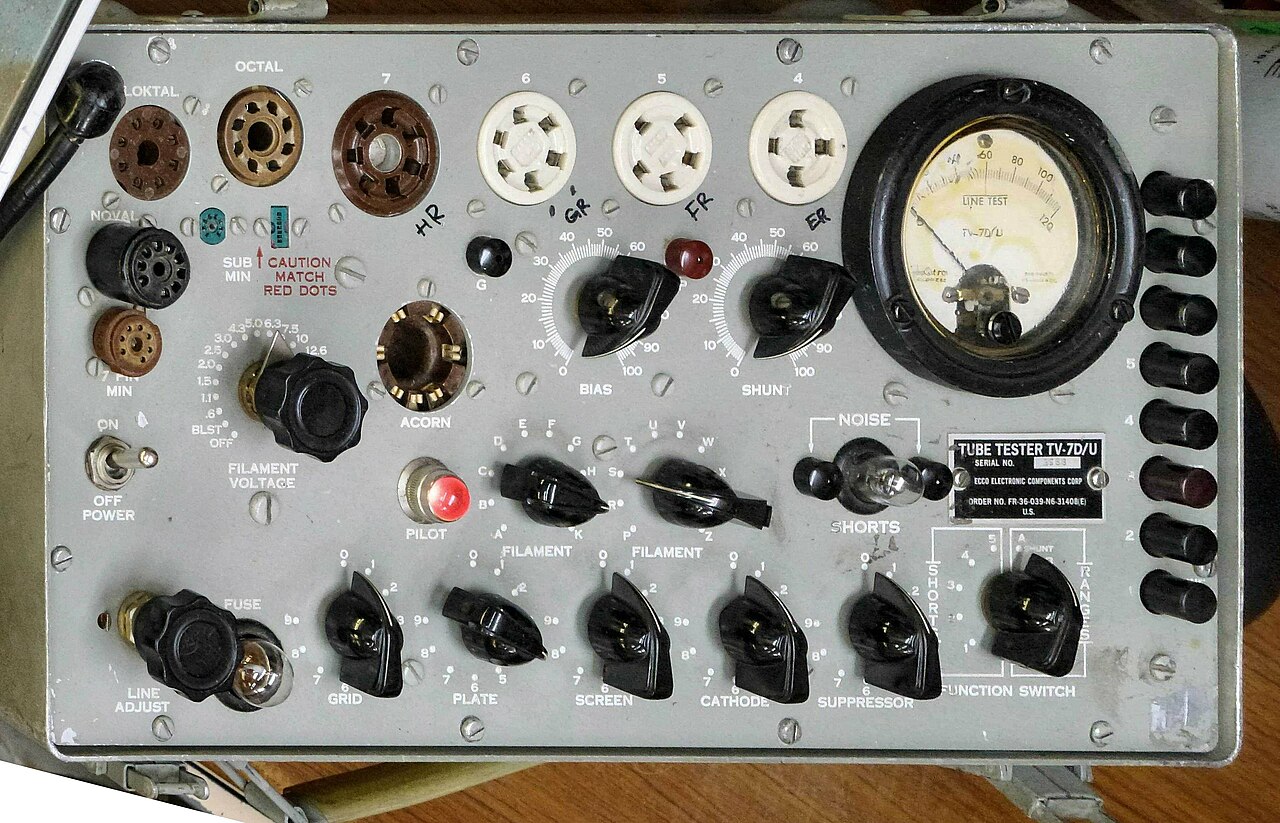
Typical tubes include a heated cathode that emits electrons by thermionic emission and an anode (plate) that collects them. Many designs include additional electrodes—grids, screens or suppressors—to control the current between cathode and anode. Because the cathode must be heated, either directly or indirectly, most vacuum tubes operate at elevated temperature and require time to reach operating conditions. Tubes are commonly housed in glass or metal envelopes and are fragile compared with solid-state devices. Safety considerations include high voltages and heat.
Common types and internal elements
- Diode: the simplest tube with cathode and anode, used for rectification and detection.
- Triode: adds a control grid to enable voltage amplification; an important milestone in early electronics.
- Tetrode and pentode: include extra grids to improve gain and reduce unwanted feedback.
- Specialised tubes: beam tetrodes, magnetrons and klystrons for high-power radio-frequency work.
These distinctions are important for applications such as audio amplification (amplifiers), radio-frequency transmission (RF systems) and signal detection (detection).
History and development
Vacuum tube technology emerged in the early 20th century. Innovations such as the triode made electronic amplification practical, enabling long-distance telephony, radio broadcasting and electronic computation. Large early computers relied on vacuum tubes for switching and processing; these machines required substantial power, cooling and maintenance because they used thousands of tubes and produced a lot of heat. As solid-state transistors and integrated circuits matured in the mid-20th century, many tube functions were replaced, leading to smaller, more reliable equipment—see developments in early computers.
Uses, legacy and modern niche roles
Although largely superseded in consumer electronics, vacuum tubes remain in specialized roles. High-power transmitters, certain radar and microwave sources, and some audiophile or musical instrument amplifiers still use tubes for their electrical characteristics and perceived sound qualities. Tubes are also used where radiation hardness or high-voltage performance is required. For overviews of specific applications consult resources on heater cathodes and tube-based amplification.
Notable facts and distinctions
Key points: tubes require warm-up, are temperature-dependent, are fragile, and usually operate at higher voltages than comparable semiconductor devices. They played a central role in early 20th-century electronics and left a lasting legacy in engineering terminology and specialized equipment. For further reading and technical specifications, see linked subject summaries and archival materials at technical references and historical collections (broadcast history, valve usage).
Questions and answers
Q: What is a vacuum tube?
A: A vacuum tube is an electronic device that controls electric current flow in older model radios, television sets, and amplifiers.
Q: What is the difference between a vacuum tube and a valve?
A: There is no difference between a vacuum tube and a valve, they are the same electronic device just called by different names in British English.
Q: How are electrons emitted in a vacuum tube?
A: Electrons are emitted from a heated cathode, through a process called thermionic emission, and are accepted by the anode.
Q: What are vacuum tubes typically made of?
A: Vacuum tubes are typically made of glass which makes them fragile and prone to breaking.
Q: Do vacuum tubes require heat to operate?
A: Yes, vacuum tubes require heat to operate efficiently.
Q: What was the ENIAC and how were vacuum tubes used in it?
A: The ENIAC was one of the first computers and vacuum tubes were used in it to ensure it continued operating.
Q: Is the use of vacuum tubes still common in modern electronics?
A: No, vacuum tubes are not commonly used in modern electronics as they have largely been replaced by more efficient solid-state electronics.
Tags
Related articles
Author
AlegsaOnline.com Vacuum tube (electron tube, valve): overview, operation, history, and uses Leandro Alegsa
URL: https://en.alegsaonline.com/art/103850
Sources
- pbs.org : "The Vacuum Tube"
- vacuumtubes.net : "How Vacuum Tubes Work"