
EPROM (Erasable Programmable Read-Only Memory)
Non-volatile memory chip that can be programmed and later erased by ultraviolet light; historically used for firmware storage and now largely superseded by electrically erasable memories and flash.
Overview
An EPROM, shorthand for erasable programmable read-only memory, is a non-volatile memory chip that retains stored data when power is removed. Unlike a one-time programmable PROM (PROM), an EPROM’s contents can be erased and rewritten. Erasure is most commonly accomplished by exposing the silicon die to ultraviolet light through a transparent window built into the package.
Image gallery
10 Images





Design and operation
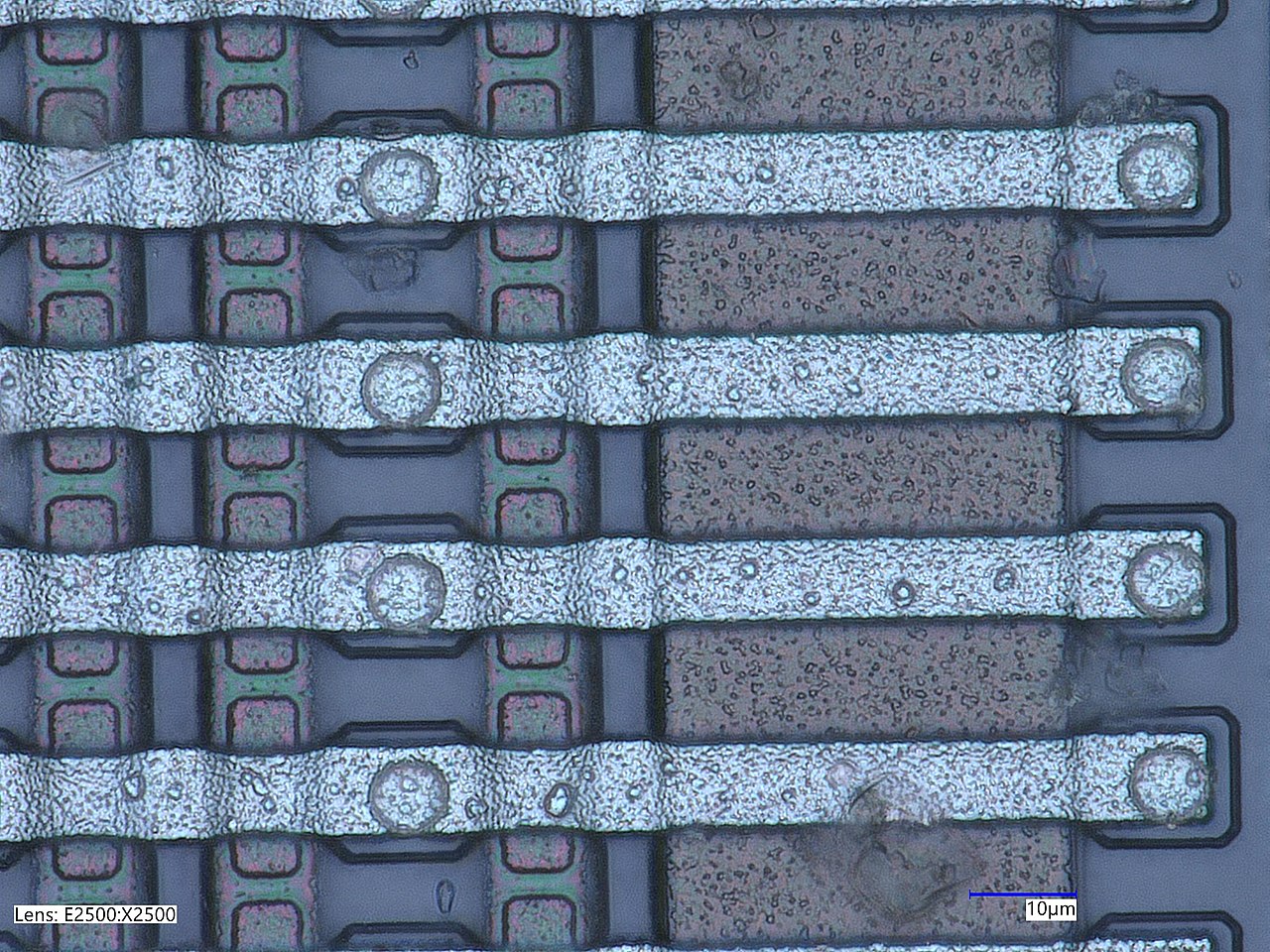
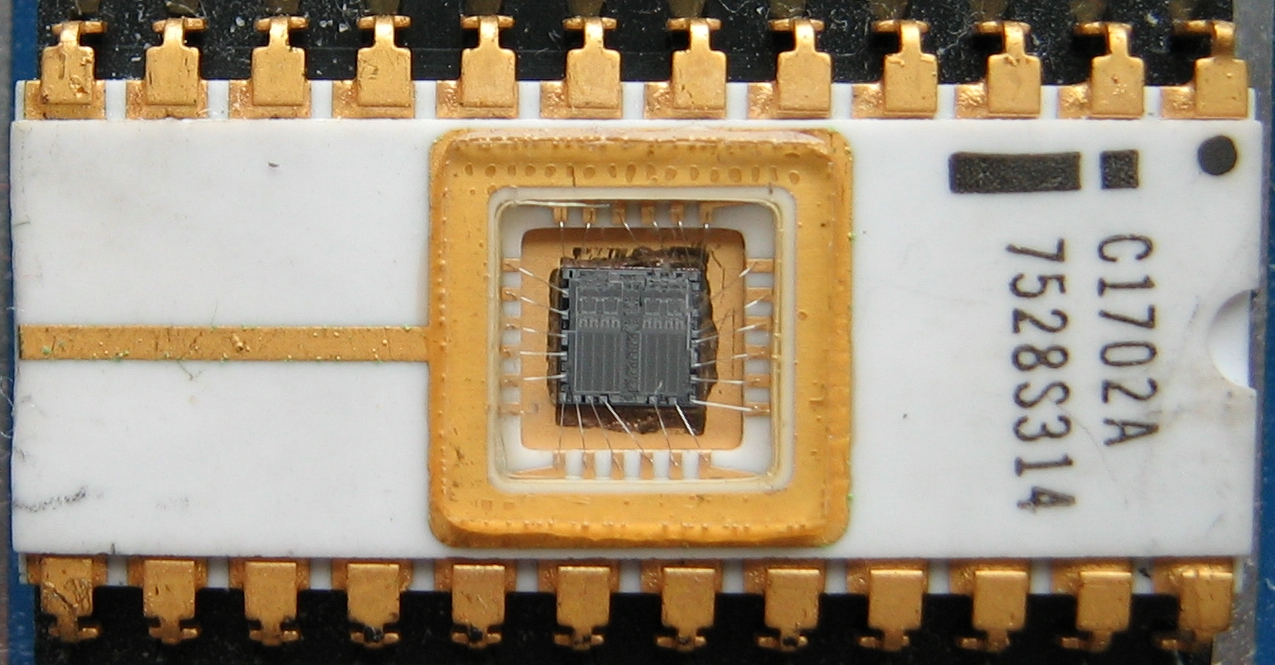
Internally, EPROMs store information using floating-gate transistors. During programming, selected transistors are charged so they represent binary values; the charge remains trapped on the floating gate, preserving data without power. The package often includes a small quartz window that allows ultraviolet light to reach the silicon for erasure. After erasure the device can be reprogrammed using a suitable programmer that applies the required voltages and timing.
Programming, erasure and handling
Erasure is typically done by illuminating the die for a specified duration under a UV lamp; the ultraviolet photons discharge the floating gates and return the device to an erased state. Because the window admits light, EPROMs must be protected from incidental lighting during normal use, often with an opaque sticker or cap. Careful handling is also important to avoid electrostatic damage and unintended data loss.
History and development
EPROM technology was developed in the early 1970s and provided a valuable advance over one-time programmable ROMs by allowing in-circuit development and iterative firmware updates. Over time, electrically erasable variants known as EEPROMs (EEPROM) and block-erasable flash memory improved convenience by removing the need for ultraviolet erasure and enabling easier field reprogramming.
Uses and examples
EPROMs were commonly used to store firmware, microcode, and small operating routines in computers, embedded systems, and instrumentation. Typical package styles included ceramic or plastic DIP packages with a visible window. In contemporary designs, EPROMs are less common but are still encountered in legacy equipment, in educational settings, and where long-term data retention without frequent updates is desired.
Variants and notable distinctions
- EPROM vs PROM: PROM can be programmed only once; EPROM can be erased and reprogrammed.
- EPROM vs EEPROM: EEPROM is erased electrically, allowing selective byte- or sector-level updates without UV exposure.
- Modern replacements: Flash memory provides faster, more convenient block erasure and has largely supplanted EPROM in many applications.
For further technical reference, datasheets and manufacturer's application notes explain specific programming voltages, timing, and package details; those resources and historical descriptions help explain why EPROMs were a crucial step in the evolution of re-programmable non-volatile memory.
Related articles
Author
AlegsaOnline.com EPROM (Erasable Programmable Read-Only Memory) Leandro Alegsa
URL: https://en.alegsaonline.com/art/31787