
Enigma machine: rotor cipher device and its role in World War II
Electro-mechanical rotor cipher machine used by Germany and others; famous for its wartime use, the Allied cryptanalysis effort (including Polish and British breakthroughs), and its legacy.
Overview
The Enigma was an electro-mechanical cipher machine developed in the years around World War I for commercial and later military use. Its principal inventor is commonly identified as Arthur Scherbius, and early development began soon after World War I. As a cipher machine, Enigma transformed plaintext letters into a stream of seemingly random letters; the process was reversible so that an operator with the same settings could recover the original text.
Image gallery
10 Images


How it worked
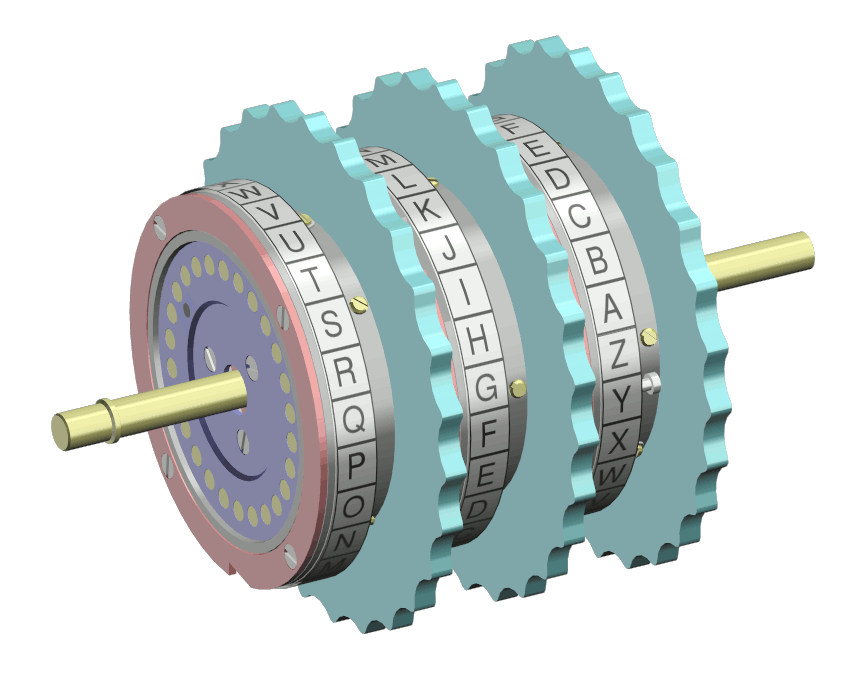
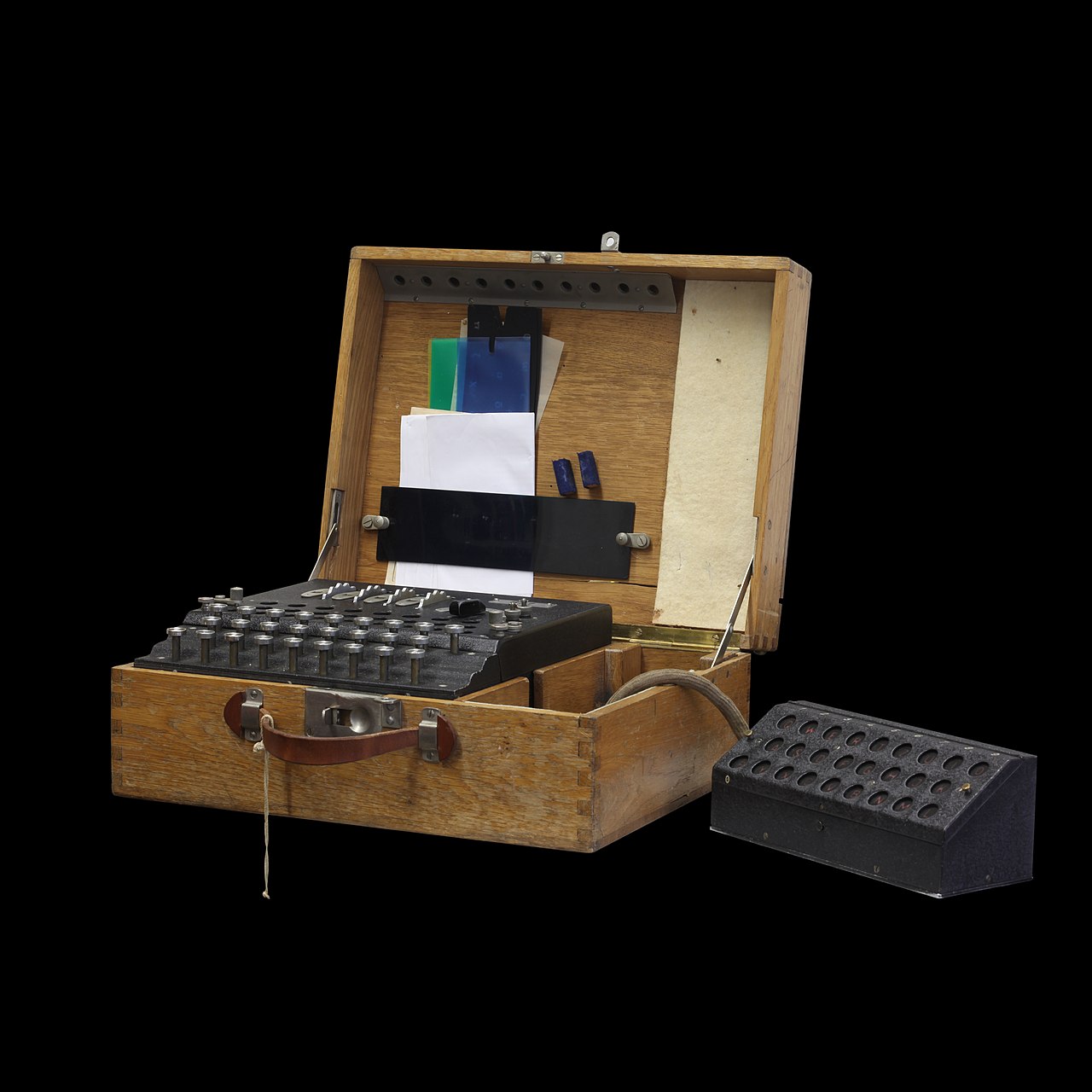
At its core Enigma used rotating discs called rotors, a reflecting element, and—on military variants—a plugboard to alter electrical pathways. Each key press sent an electric current through a sequence of contacts: rotor wiring, optionally a plugboard connection, a reflector that sent the current back through the rotors, and finally a lampboard to display the enciphered letter. Although output appeared random, it was determined by the rotor wirings and positions rather than true randomness; the machine produced a complex but deterministic substitution that changed with each key press by shifting rotor positions (systematic wiring).
Components and procedures
- Rotors (or wheels): several interchangeable disks with internal wiring; different rotor types and orders created many possible configurations.
- Reflector: a fixed element that made the cipher reciprocal—typing A to get B meant typing B would yield A in the same setting.
- Plugboard (Steckerbrett): on military Enigmas this allowed pairwise swapping of letters before and after the rotor sequence, greatly increasing complexity.
- Daily key settings: rotor order, rotor start positions, plugboard pairings, and message indicators were set per agreed schedules so senders and recipients matched.
Operational use and variants
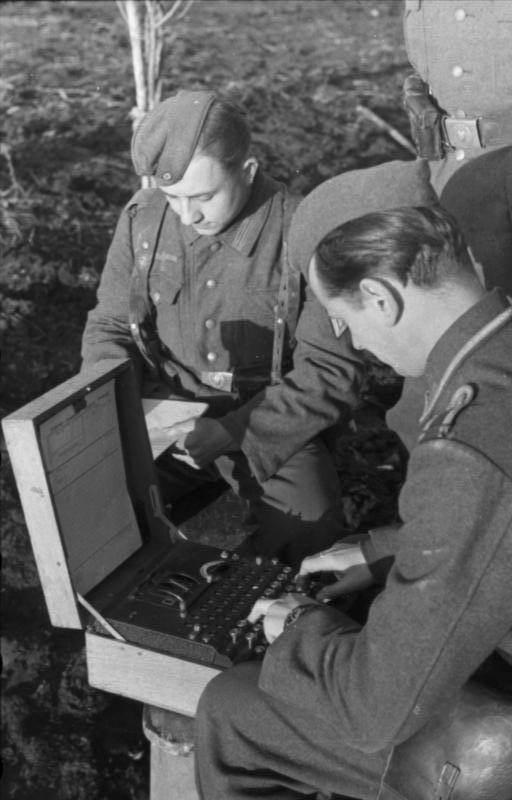
Germany adopted Enigma machines for diplomatic and military communications in the interwar period and during World War II. Different services (army, navy, and air force) used variations with distinct operating rules and additional features; for example the naval Enigma often had more complex procedures. In the late 1930s additional security measures and procedural changes were introduced, which increased the challenge of decryption for adversaries and required continuous adaptation by cryptanalysts (Luftwaffe being one of the services affected).
Breaking Enigma: Polish beginnings and the international link
Systematic cryptanalysis of Enigma messages began well before the outbreak of World War II. Mathematicians and cryptologists in Poland made the first major breakthroughs, reconstructing internal rotor wiring and devising electromechanical aids to reduce the search for daily keys. In July 1939 the Polish Cipher Bureau demonstrated their progress in Warsaw to representatives of French and British intelligence, sharing methods and samples that made further Allied work possible. This exchange of knowledge and equipment, together with Polish cryptanalysis, was a decisive early step for later efforts.
Bletchley Park and Allied effort
After the invasion of Poland, many Polish cryptologists moved to France and some later reached Britain, where multinational teams at Bletchley Park developed and refined mechanical and logical methods to exploit operator errors, predictable message formats, and captured material. British technical work—building on Polish ideas—produced machines known as Bombes that sped up key discovery; individuals such as Alan Turing and Gordon Welchman contributed designs and improvements. The decrypted messages, known to British planners as Ultra, provided plaintext intelligence that the Allied commands used with extreme secrecy to inform operations.
Critical aids and mistakes
Cryptanalysis benefited from several practical advantages in addition to mathematical insight. Repeated procedures and predictable phrasing in German traffic, errors by operators (such as repeated message keys or sloppy indicators), and the recovery of codebooks and machines from captured vessels were all important. In particular, the capture of material from a capture from a German submarine and other prize hauls supplied rotors and key tables that sped decryption. These sources, combined with analytical breakthroughs, multiplied Allied capabilities over time.
Legacy and notable facts
The effort to read Enigma traffic is widely regarded as a turning point in wartime signals intelligence and in the development of modern computing and cryptanalysis. The story highlights the interaction of engineering, mathematics, intelligence tradecraft, and human factors. Many Enigma machines and documents are preserved in museums and collections; the significance of the Bletchley Park work was publicly acknowledged decades after the war—visitors and official commemorations include events such as a visit by Queen Elizabeth II—and historians continue to assess how Ultra intelligence influenced decisions and shortened the war. The Enigma case remains an instructive example of both the strengths and limitations of mechanical ciphers used by Nazi Germany and others.
Further reading
For more on technical details, operating procedures, and the history of cryptanalysis see introductory resources and archival collections that describe the machine design, wartime use, and the multinational intelligence work that made decryption possible. Researchers often consult translated documents, museum catalogs, and dedicated histories to trace how a commercial invention became a central element of twentieth‑century cryptologic history.
Questions and answers
Q: What is an Enigma machine?
A: The Enigma machine is a cypher machine created for Germany by Arthur Scherbius during World War I. It is a way of changing the letters of a message so that it appears to be scrambled letters (or, random letters). Each time a letter is typed, it appears as another letter in the alphabet and the choices are not random but decided by a series of rotors which are set each day to a different starting set-up.
Q: Who first broke German military messages done on the Enigma machine?
A: The Polish Cipher Bureau were the first to break German military messages done on the Enigma machine, beginning in December 1932.
Q: How did British codebreakers solve vast numbers of messages from Enigma?
A: British codebreakers solved vast numbers of messages from Enigma by making technical improvements and giving plaintext information to military staff. This was called "Ultra" by the British and was very helpful for Allied war efforts.
Q: What mistakes did German operators make that helped cryptanalysis of Luftwaffe Enigmas?
A: Mistakes made by German operators helped cryptanalysis of Luftwaffe Enigmas.
Q: How did British capture key tables and machines from German submarines help cracking Navy ones?
A: The British capture of key tables and machines from German submarines helped in cracking Navy ones as they provided additional information about how these systems worked.
Q: When did Queen Elizabeth II visit Bletchley Park?
A: Queen Elizabeth II visited Bletchley Park on 15th July 2011 to pay tribute to those who worked there since they cut short the war by breaking Nazi Germany's cyphers.
Related articles
Author
AlegsaOnline.com Enigma machine: rotor cipher device and its role in World War II Leandro Alegsa
URL: https://en.alegsaonline.com/art/31508