
Ethernet switch: function, types, features, and network roles
An Ethernet switch forwards Ethernet frames between devices on a wired network. This article explains how switches work, common types, features (VLANs, PoE, QoS), uses, history, and differences from hubs and routers.
Overview
An Ethernet switch is a network device that connects multiple wired devices within a local area network (LAN) and forwards data frames between them. Unlike a simple repeater or a shared medium device, a switch inspects the addressing information in Ethernet frames and selectively forwards traffic only to the destination port, reducing unnecessary load on other links and decreasing collisions in half-duplex environments. Conceptually, a switch performs frame-level forwarding as part of packet switching behavior and is a fundamental building block of modern wired networks.
Image gallery
8 Images


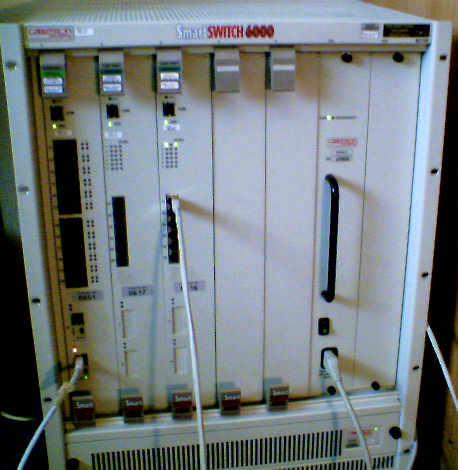
How a switch works
At its core a switch uses a hardware table called a MAC address table (or forwarding table) to learn which device is reachable from each physical port. When a frame arrives the switch examines the source MAC to update its table, then looks up the destination MAC to decide whether to forward the frame out a single port, flood it to all ports (if unknown), or drop it. Most switches operate primarily at the data link layer (Layer 2) of the OSI model, though some devices add Layer 3 (routing) capabilities to interconnect IP subnets.
Types and common features
- Unmanaged switches: Plug-and-play devices with no user configuration, suitable for small offices or home networks.
- Managed switches: Offer configuration and monitoring (via CLI, web UI, or SNMP) and support advanced features such as VLANs, link aggregation, and access control.
- PoE (Power over Ethernet): Supplies electrical power over Ethernet pairs to devices like IP phones, wireless access points, and cameras.
- Layer 3 switches: Combine switching with basic routing to move traffic between IP subnets at higher performance than a general-purpose router.
Other widely used capabilities include VLAN segmentation to isolate broadcast domains, Quality of Service (QoS) to prioritize traffic, Spanning Tree Protocol (STP) to prevent loops in redundant topologies, port mirroring for monitoring, and security features such as port-based access control (802.1X).
History and development
Ethernet technology originated in the 1970s and evolved from shared-medium designs that used hubs or coaxial cables. As traffic and device density increased, switches emerged to provide dedicated links, greater effective bandwidth, and improved collision handling. Over time, switch fabrics became faster and more feature-rich, scaling from small desktop models to large modular chassis used in data centers and enterprise networks.
Uses, deployment examples, and benefits
Switches are used in nearly every wired network. In homes and small offices they expand the number of Ethernet ports available from a router. In enterprises and campus environments they form access, distribution, and core layers that aggregate user devices, interconnect servers, and carry traffic to routers or firewalls. Data center switches emphasize low latency, high throughput, and features like link aggregation and VLANs. Typical benefits include the ability to connect dozens or hundreds of devices, improved per-link performance through full-duplex operation, and fine-grained control over traffic and access.
Distinctions and notable facts
- A switch differs from an ethernet hub in that a hub broadcasts incoming signals to all ports while a switch forwards frames selectively, conserving bandwidth.
- Switches separate collision domains per port but normally keep a single broadcast domain unless VLANs are used to segment it.
- While many home routers include a few built-in switch ports, dedicated switches scale to many more ports and offer advanced management and performance options.
Understanding the role and capabilities of switches helps design networks that are efficient, secure, and scalable. Whether deploying a small unmanaged unit in a home or configuring a managed fabric across thousands of endpoints, switches remain central to wired networking.
Related articles
Author
AlegsaOnline.com Ethernet switch: function, types, features, and network roles Leandro Alegsa
URL: https://en.alegsaonline.com/art/32376