
European Article Number (EAN)
Numeric product identifiers used in retail and supply chains, typically EAN-8 or EAN-13 barcodes; part of the GTIN family and administered through GS1 numbering schemes.
Overview
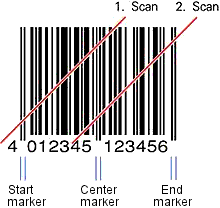
The European Article Number, commonly abbreviated EAN, is a standardized numeric identifier used to label retail products and other trade items. In practice the EAN is most often printed on product packaging and encoded in a one-dimensional barcode so that scanners at point of sale and in warehouses can read the number quickly. The EAN format exists in two compact lengths in everyday use: EAN-8 and EAN-13. Conceptually the EAN is a form of Global Trade Item Number (GTIN) and is used for lookup, pricing, inventory control and logistical tracking.
Image gallery
6 Images


Structure and characteristics
An EAN encodes a sequence of digits that together identify a product and include a final digit used to validate the remainder of the number. The typical components are:
- Prefix: a GS1-assigned prefix that identifies the national or regional numbering authority (often called a country code in common usage).
- Manufacturer or company number: a block of digits assigned to the brand owner or manufacturer.
- Item reference: the digits that a company uses to designate a specific product or variant.
- Check digit: a single digit calculated from the preceding digits to detect transcription and scanning errors (computed using a modulo 10 weighted-sum algorithm, commonly alternating weights of 1 and 3).
History and standards context
The EAN system originated as a regional barcode standard to enable automated checkout and more efficient inventory management. Over time it was harmonized with international numbering systems and is now managed through the global GS1 organization. Today the term EAN is often used interchangeably with GTIN-based identifiers: an EAN-13 number is equivalent to a GTIN-13, and EAN-8 corresponds to GTIN-8. Related formats such as UPC (commonly used in North America) are compatible in practice; a UPC-A code can be represented as an EAN-13 by adding a leading zero.
Encoding and related technologies
While the numeric EAN itself is an abstract identifier, it is most commonly represented on packaging as a linear barcode made of bars and spaces that encode the digits. These barcodes are read by laser or imaging scanners. Other machine-readable methods (for example two-dimensional codes like QR codes) can also carry GTIN/EAN values but are separate standards. The widespread deployment of EAN barcodes enabled real-time price lookup at checkout and automated reordering in supply chains.
Uses, importance and practical notes
Retailers, wholesalers and logistics providers rely on EAN/GTIN identifiers to manage stock, process sales, and synchronize product data between trading partners. Because numbering is assigned centrally through GS1 member organizations, EANs are intended to be globally unique for each distinct trade item when used correctly. However, reassignments, local reuse, private labels and barcode printing errors can produce ambiguities in practice, so systems often supplement the EAN with internal identifiers and metadata.
Distinctions and notable facts
- EAN-13 is the most common form for packaged retail goods; EAN-8 is used where space is limited.
- EANs are part of the broader GTIN family, which also includes 8-, 12-, 13- and 14-digit variants.
- The numeric prefix is commonly shown as a country code but actually identifies the numbering authority rather than the physical place of manufacture.
- More information about official assignment and management of EAN/GTIN numbers is available from the GS1 organization: GS1 information on GTINs and EAN.
Understanding EANs helps businesses and consumers recognize how everyday barcodes support pricing, traceability and global commerce.
Related articles
Author
AlegsaOnline.com European Article Number (EAN) Leandro Alegsa
URL: https://en.alegsaonline.com/art/32595