
Embryology: development of embryos from fertilization to organ formation
Embryology is the study of embryos and their early development from fertilization through organogenesis. It informs medicine, evolutionary biology and developmental research across animals.
Embryology is the branch of biology that examines the formation, growth and early differentiation of an embryo. The discipline begins at fertilization, when egg and sperm unite to form a zygote, and continues through the stages that lead to organ formation and the fetal period. It overlaps with the broader field of developmental biology, which traces how a single cell gives rise to the whole organism across life stages.
Image gallery
5 Images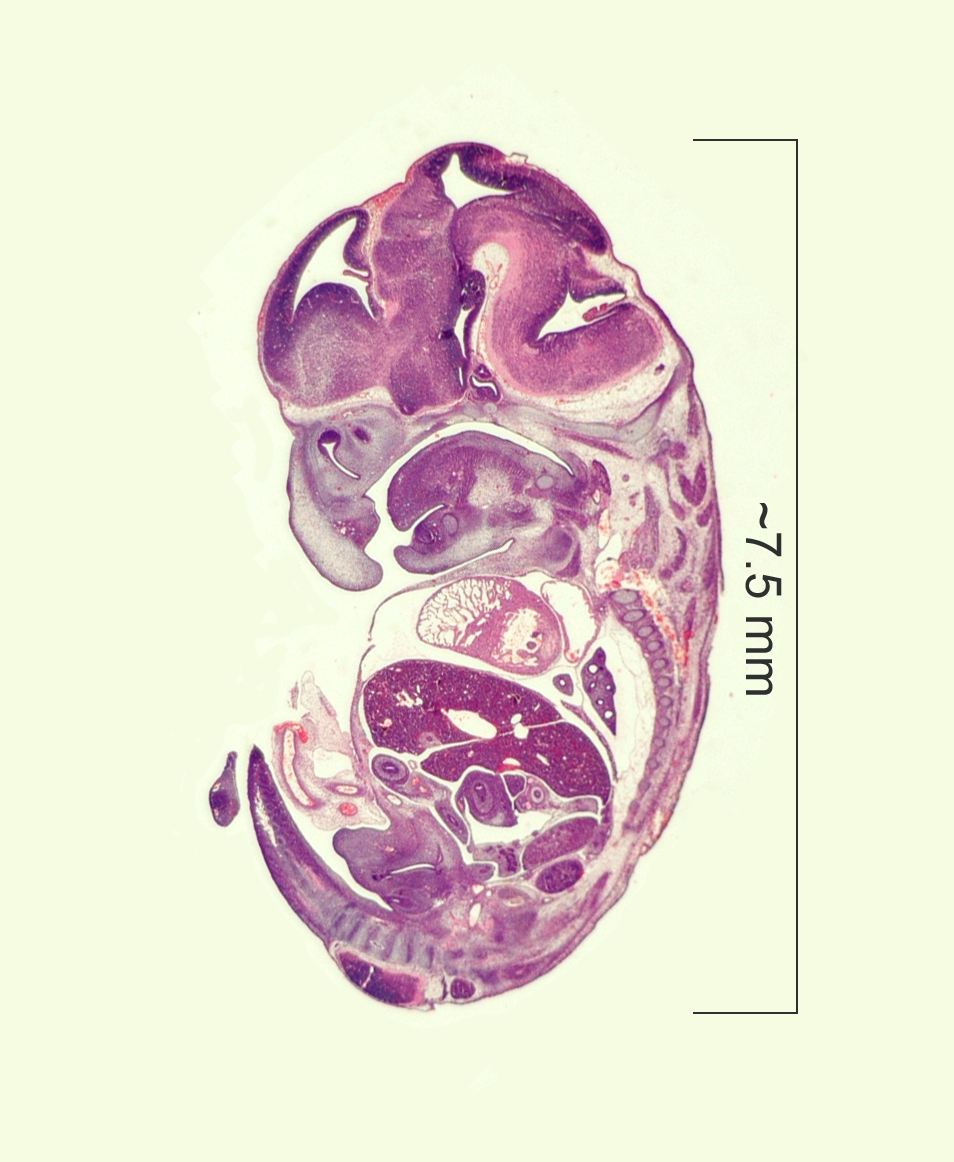


Major stages and processes
Embryonic development is commonly divided into sequential events that are conserved in broad outline across many animals, although timing and details vary by species:
- Zygote and cleavage — the fertilized egg undergoes rapid cell divisions (cleavage) that increase cell number without enlarging the overall embryo.
- Blastula or blastocyst — cells become arranged around a cavity or within a specialized structure that sets the scene for patterning.
- Gastrulation — dramatic cell movements establish the primary germ layers (ectoderm, mesoderm, endoderm) and basic body axes.
- Neurulation and organogenesis — tissues fold, differentiate and interact to form the nervous system and early organs.
- Fetal growth and maturation — organs expand and mature; growth accelerates and systems begin functional integration.
Variation in site and mode of development
The place where embryos develop differs between groups. In most mammals the embryo develops within the mother, commonly referred to as the womb, with nutrition and gas exchange mediated by a placenta in placental mammals. In oviparous species development proceeds inside eggs laid into the environment. Environmental factors such as temperature, moisture and oxygen availability can strongly influence developmental rate and survival in externally developing embryos. In many insects and amphibians the embryonic sequence may culminate in a distinct transformation called metamorphosis, which produces the adult body form from a larval stage.
Mechanisms and model systems
Modern embryology integrates experimental, cellular and molecular approaches. Researchers use model organisms — such as fruit flies, frogs, fish and mice — to study conserved mechanisms like axis formation, cell fate specification and signaling pathways. Techniques include live imaging of developing tissues, gene expression analysis, genetic manipulation and transplantation experiments that test how cells communicate and acquire identity.
Applications, medicine and ethics
Knowledge from embryology supports reproductive medicine, prenatal diagnosis, and the understanding of congenital malformations (teratology). It also underpins regenerative medicine efforts that seek to harness developmental programs for tissue repair. Research on human and animal embryos raises ethical and legal considerations; regulations vary by country and research context and often guide permissible procedures and stages of study.
Comparative and evolutionary perspectives
Comparative embryology compares developmental patterns across species to infer evolutionary relationships and the origins of morphological diversity. Changes in the timing, rate or regulation of developmental processes (heterochrony and heterotopy) are recognized ways evolution modifies body plans. The integration of comparative data with molecular genetics has given rise to evolutionary developmental biology, which seeks to explain how developmental changes generate novel traits.
Further study and resources
Embryology remains a dynamic field connecting anatomy, cell biology, genetics and ecology. Readers seeking introductory material or primary literature can consult textbooks and specialized reviews, or follow resources and databases maintained by research institutions and professional societies that cover laboratory methods, ethical guidelines and species-specific development. For a general overview see entries and summaries in authoritative biology resources and educational portals.
Related articles
Author
AlegsaOnline.com Embryology: development of embryos from fertilization to organ formation Leandro Alegsa
URL: https://en.alegsaonline.com/art/31095