
Electric guitar: design, history, and musical role
Overview of the electric guitar: construction, pickups and electronics, historical development, playing techniques, major manufacturers and common variants.
The electric guitar is a fretted stringed musical instrument that relies on electronic amplification to produce audible sound. Unlike an acoustic guitar, its vibrating strings are converted into an electrical signal by magnetic or piezoelectric pickups and then routed through an amplifier and loudspeaker to be heard. As a type of musical instrument, the electric guitar has been central to many modern styles of music since the 1930s; it is typically categorized as a string instrument.
Image gallery
10 Images






Main components and construction
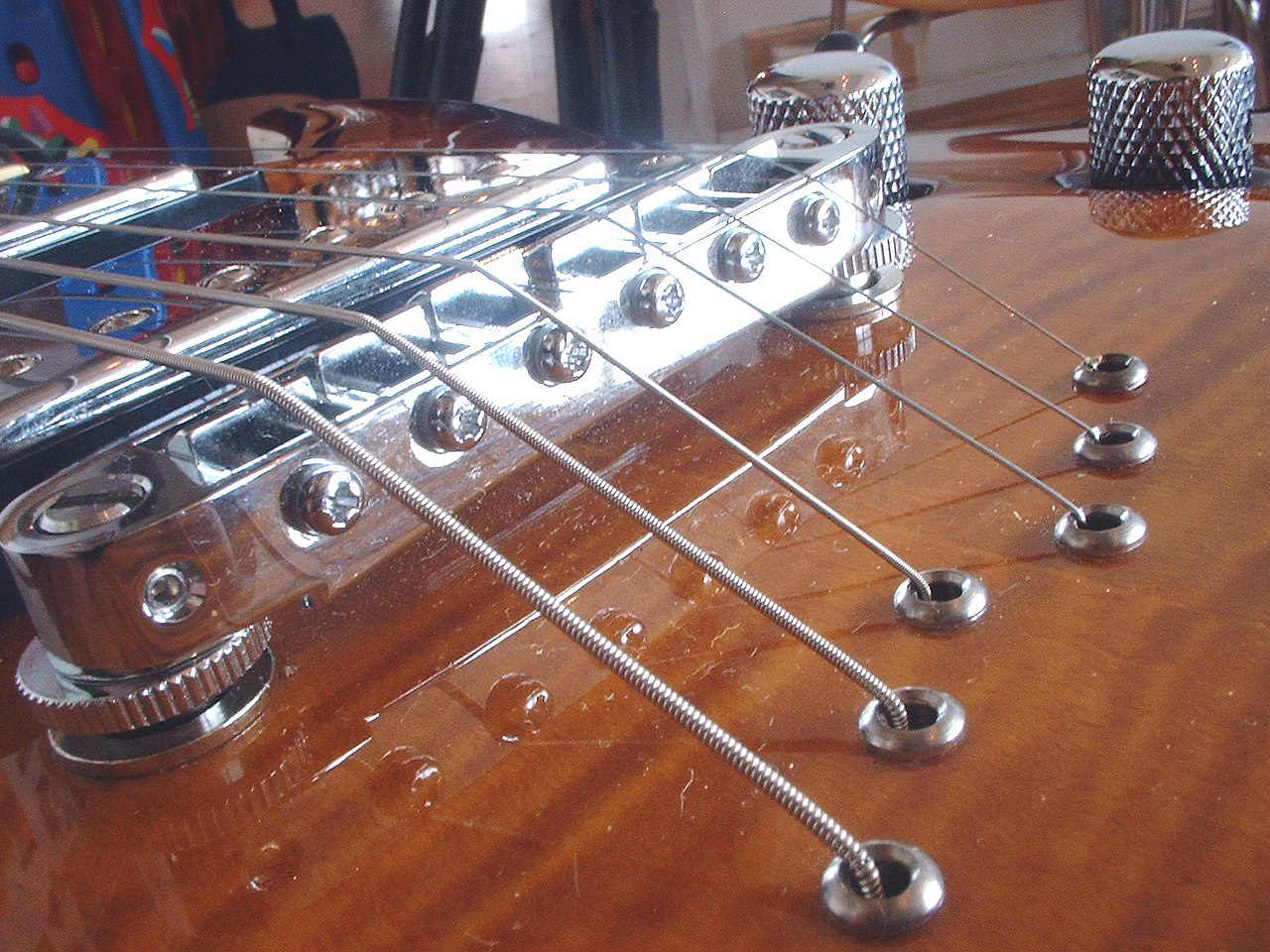
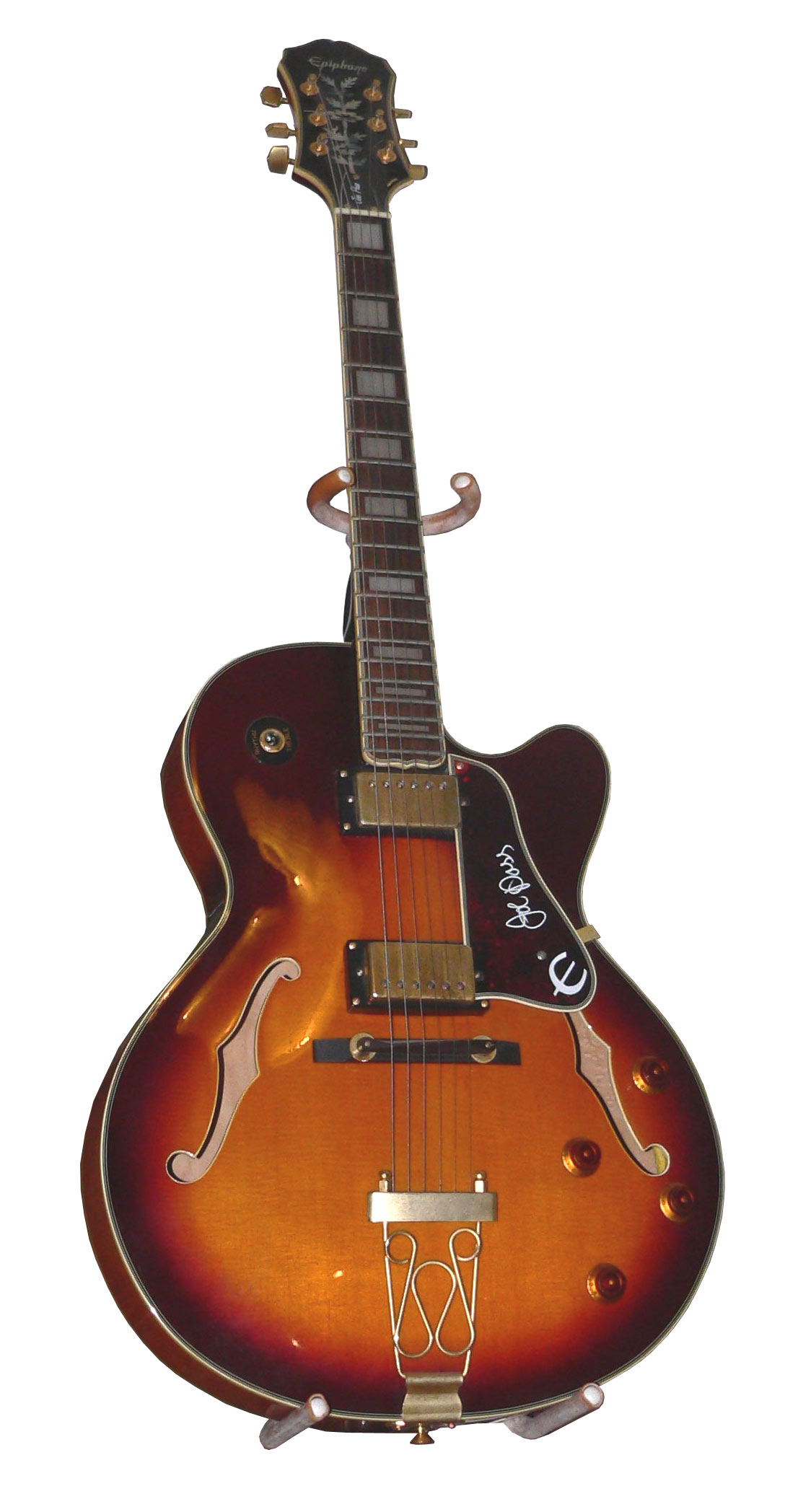
Most electric guitars share a common set of parts, although materials and details vary. A typical instrument includes a neck with a fingerboard and frets, a solid or semi-hollow body, one or more pickups, a bridge that anchors the strings, tuning machines (tuners), an output jack, and controls such as volume and tone knobs. Many instruments also have a pickguard and hardware such as strap buttons. The standard configuration is a single neck with six steel strings; however, 12-string instruments, extended-range guitars, and multi-neck designs exist for specific musical purposes.
- Neck and frets: define pitch positions and playability.
- Pickups: transduce string motion into an electrical signal.
- Bridge and nut: affect intonation, sustain and action.
- Electronics: potentiometers, switches and wiring shape the tone.
Pickups, amplification and effects
Pickups are the defining electronic element. Most common pickups are electromagnetic: coils of wire wrapped around magnets detect the vibration of the metal strings and generate a small voltage. That voltage is the initial electric current that leaves the guitar through the output jack and feeds an amplifier, which reproduces and boosts the signal as sound. Between guitar and amp or inside the amplifier, effects such as overdrive, distortion, delay, chorus and reverb can alter the tone. Players also change timbre by varying picking technique: with a pick, with fingers, by palm muting, tapping or using a slide.
History and development
Electric amplification for guitars emerged in the early 20th century to increase volume in ensembles. One of the earliest commercially produced electric instruments was developed in 1931 by George Beauchamp and others; early lap-steel designs and hollow-body electrics followed. Throughout the 1940s and 1950s builders refined solid-body designs that reduced feedback and expanded sustain, enabling new playing styles. The instrument became closely linked with blues, jazz, country, rock and later a wide array of popular and experimental genres.
Styles, manufacturers and production
Electric guitars are manufactured worldwide and range from handcrafted boutique instruments to high-volume factory models. They are produced in many regions and by many companies. Instruments may be built by luthiers or by industrial production lines in a factory, and the market includes a wide range of price points and quality. Major internationally known makers include Fender, Ibanez and other brands; some sources group such names under the general heading of instrument companies.
Variants, uses and notable facts
Electric guitars appear in many forms: solid-body, semi-hollow, hollow-body, 7- or 8-string extended-range models, baritone guitars, and guitar synthesizer interfaces. They serve roles from rhythm accompaniment to lead soloing and textural effects in recording and live performance. Key distinctions include pickup type (single-coil versus humbucker), body construction and scale length; these characteristics influence tone, noise performance and playability. Over decades the electric guitar has been both a practical tool for musicians and a cultural icon associated with innovation in music and technology.
For further reading on instrument types, electronics and playing technique, consult specialized resources or manufacturer documentation linked here: general overview, strings and vibration, picks, fingerstyle, pickup physics, electrical signal, amplifiers, acoustic output, global production, manufacturers, factory vs handbuilt, Fender, Ibanez.
Questions and answers
Q: Who invented the electric guitar?
A: The electric guitar was invented by George Beauchamp in 1931.
Q: What are "electric pickups"?
A: Electric pickups are wire-wound magnets that change the vibration of the strings into electric current.
Q: What does an amplifier do with the electric current from an electric guitar pickup?
A: An amplifier changes the electric current from an electric guitar pickup into sound.
Q: What are some of the parts of an electric guitar?
A: Some of the main parts of an electric guitar are the neck, pickups, tuners, bridge, input, body, frets, pick guard, volume knobs, and tone knobs.
Q: Can electric guitars have more than one neck or 6 strings?
A: Yes, electric guitars can have more than one neck or 6 strings. There are 12 string guitars and guitars with more than one neck.
Q: Who are some of the companies that make electric guitars?
A: Some companies that make electric guitars are Fender, Gibson, and Ibanez.
Q: Can electric guitars be handmade or factory-made?
A: Yes, electric guitars can be handmade or factory-made.
Related articles
Author
AlegsaOnline.com Electric guitar: design, history, and musical role Leandro Alegsa
URL: https://en.alegsaonline.com/art/30675