
String instrument (chordophone): types, construction, history and uses
An overview of string instruments (chordophones): how they produce sound, main types (bowed, plucked, struck), common examples, historical development, playing techniques and their musical roles.
Overview
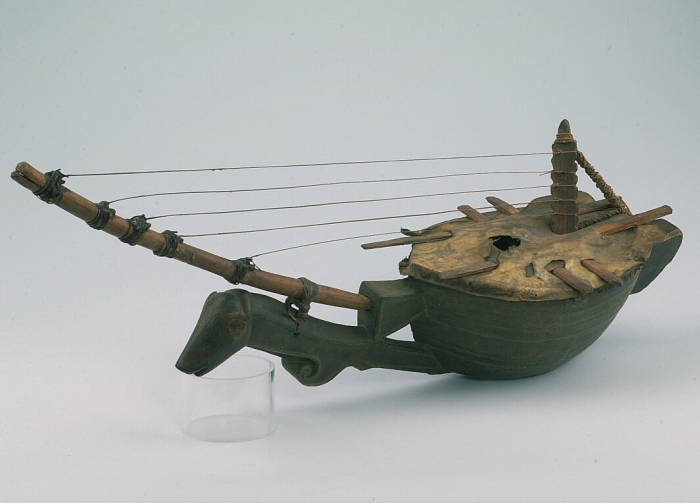
A string instrument, or chordophone in organology, is a musical instrument that produces sound primarily through the vibration of stretched strings. These vibrations are transmitted to the air either directly or via a resonating body such as a hollow wooden soundbox or a metal plate. Players change pitch by altering string length, mass, or tension and shape the tone with their hands, fingers, bows, or other implements. String instruments appear in nearly every musical tradition and range from simple folk devices to technically advanced orchestral instruments.
Image gallery
10 Images




Construction and sound production
Although designs vary widely, most string instruments share a few characteristic parts: one or more strings, a frame or neck to support them, a mechanism to adjust tension (tuners or pegs), and a resonator that amplifies sound. Sound results from the string’s vibration, which is influenced by length, thickness and tension. The resonator’s material and shape — often wood, but sometimes metal or composite — strongly affect timbre. On some instruments the body is essential for projection; on others, like electric guitars, amplification can be electronic.
Families and common types
String instruments are commonly grouped by how their strings are caused to vibrate. Major categories include:
- Bowed (e.g., violin family: violin, viola, cello, double bass) where a bow draws across the strings to sustain sound.
- Plucked (e.g., guitar, lute, harp, banjo, mandolin) where fingers or plectra set the strings in motion.
- Struck (e.g., piano, hammered dulcimer) where hammers hit the strings.
Within each group, instruments differ in tuning systems, number of strings, scale length, and playing posture. For example, the violin is tuned in fifths while the guitar uses a combination of fourths and a major third.
History and development
Stringed instruments are ancient: archaeological and iconographic records show harps, lyres and zithers in many early civilizations. Over centuries regional designs evolved, influenced by available materials and musical needs. The bowed string instruments familiar in Western classical music trace much of their modern form to 16th- and 17th-century Italy. Fretted plucked instruments developed in varied forms across Europe, the Middle East and Asia; the modern piano, a struck-string instrument with a keyboard, was developed around the turn of the 18th century and radically expanded compositional possibilities.
Techniques, repertoire and uses
Players use a wide range of techniques to shape sound: bowing, plucking (pizzicato), strumming, striking, harmonics, vibrato, glissando and various muting effects. These techniques support diverse musical roles: solo performance, chamber music, orchestral textures, accompaniment in folk and popular styles, and special effects in contemporary music. Plucked instruments like the guitar became central to popular music genres; for example, rock groups such as Led Zeppelin and performers such as Eric Clapton have popularized guitar-based idioms worldwide.
Notable distinctions and facts
Some important distinctions among string instruments include whether they are fretted or unfretted, bowed or plucked, and acoustic or electric. Instruments may employ sympathetic strings (as in the sitar or some violas d’amore) that resonate without being directly played, adding complexity to the sound. The same basic physical principles underlie all chordophones: vibrating strings interacting with resonating bodies. Despite this shared foundation, the diversity in form and technique gives string instruments a vast expressive range, making them central to many musical traditions and innovations.
Further reading and resources can introduce construction details, repair and maintenance, and regional instrument catalogs; for introductions to related topics see general entries on musical instruments and articles that discuss string materials and tuning practice (strings).
Related articles
Author
AlegsaOnline.com String instrument (chordophone): types, construction, history and uses Leandro Alegsa
URL: https://en.alegsaonline.com/art/94287