
Egyptian vulture (Neophron percnopterus)
Small Old World vulture known for white plumage, scavenging diet and rare tool use; breeds across southern Europe, Africa and Asia and faces major conservation threats.
Overview
The Egyptian vulture (Neophron percnopterus) is a small Old World vulture noted for its pale body, contrasting dark flight feathers and a bare, often yellowish face. It is the sole living species of the genus Neophron and is commonly called the scavenger vulture in parts of southern Asia. For a general species profile see species page.
Image gallery
10 Images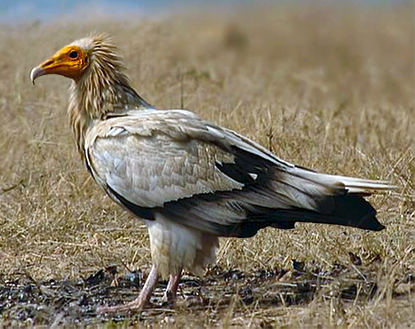


Appearance and behaviour
Adults show mostly white plumage with black remiges and a slender build that distinguishes them from larger, bulkier vultures. Key behavioural features include soaring flight, opportunistic scavenging, and social feeding at carcasses. For identification details and taxonomy consult taxonomic notes.
Diet, tool use and nesting
Diet is varied and includes carrion, small vertebrates, offal and eggs. The species is notable among birds for documented use of tools: some individuals drop stones to break large eggs and have been observed using sticks to collect nest material such as wool. These behaviours are rare in avian species and illustrate problem-solving abilities. Observations of egg-breaking and nest material use are discussed further at behavioural studies.
Distribution and subspecies
Breeding populations occur from southwestern Europe and northern Africa eastward through the Middle East to South Asia. Migratory populations move seasonally, often crossing deserts and seas. The species includes several regional forms or subspecies; summaries of regional distribution include European range, North African range and Asian range. Regional subspecific treatments are summarized at subspecies notes.
Conservation status and threats
The Egyptian vulture has declined in many parts of its range and is recognised as a conservation concern. Major threats include poisoning (both intentional and accidental), reduced food availability, habitat change, collision and electrocution on energy infrastructure, and disturbance at breeding sites. International and local measures for recovery include research and monitoring, mitigating poisoning, protecting nests, and targeted conservation programmes; see regional conservation for examples and range actions for coordination efforts.
Notable facts and human cultural links
- The species has significance in some cultures and appears in historical art and symbolism.
- Its tool use when opening eggs and collecting nest material makes it one of the better-known avian examples of problem-solving.
- Ongoing conservation work often involves community engagement and international collaboration; further resources are available at regional programmes and research portals.
For photographic galleries, monitoring reports and regional action plans consult the links above or local conservation organisations that focus on raptor protection.
Related articles
Author
AlegsaOnline.com Egyptian vulture (Neophron percnopterus) Leandro Alegsa
URL: https://en.alegsaonline.com/art/30421
Sources
- biostor.org : "A Nineteenth-century reference to the use of tools by the Egyptian vulture"
- wikidata.org : Q33504
- species.wikimedia.org : Neophron percnopterus
- animaldiversity.org : Neophron · web.archive.org
- avibase.bsc-eoc.org : 6D3480A64B4953CE
- biolib.cz : 8509
- datazone.birdlife.org : 22695180
- cms.int : neophron-percnopterus
- ebird.org : egyvul1
- eunis.eea.europa.eu : 1155
- eu-nomen.eu : 96698
- fauna-eu.org : f5822041-645a-42ba-9699-e58d302542f0
- fossilworks.org : 137200
- gbif.org : 2480696