
Elapids (Elapidae): venomous snakes of cobras, kraits, mambas, and sea snakes
Elapids are a family of primarily tropical venomous snakes with fixed hollow front fangs. This article summarizes their anatomy, diversity, habitats, notable genera, and importance to humans and conservation.
Overview
The family Elapidae, commonly called elapids, comprises a group of primarily tropical and subtropical venomous snakes. Members are known for delivering potent venom through specialized front fangs and occur in a wide range of habitats worldwide. Current inventories recognize roughly 61 genera and about 231 species, though taxonomic revisions continue as research progresses.
Image gallery
6 Images


Anatomy and venom
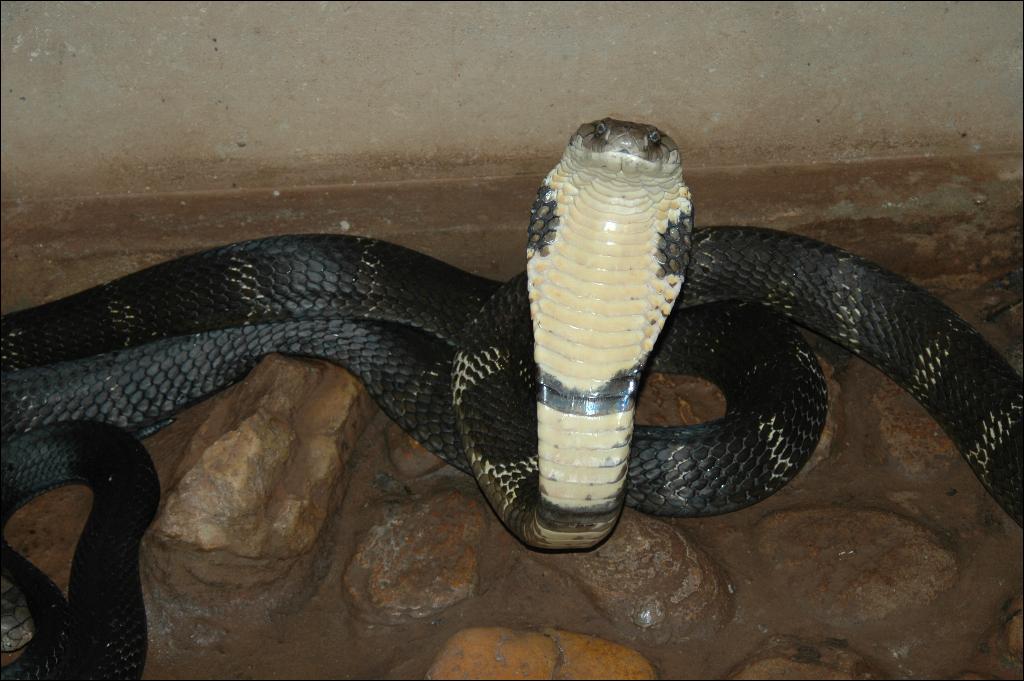
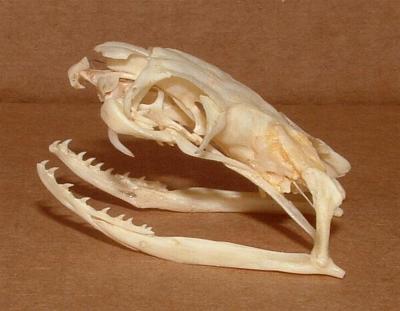
Elapids possess short, hollow, fixed anterior fangs (a condition described as proteroglyphous) used to inject venom during a strike; these hollow, immovable teeth are a defining feature (fang structure). Their venoms are often rich in neurotoxins that interfere with nerve signal transmission, producing paralysis and respiratory failure in severe untreated envenomations. Compared with vipers, elapids have relatively slender bodies and rely on rapid strikes rather than long, hinged fangs.
Diversity and habitat
Species size and lifestyle vary widely: some small terrestrial forms measure under 20 cm, while the king cobra can reach lengths near 6 m. Elapids occupy terrestrial, arboreal, and fully aquatic niches. Sea snakes and some related groups inhabit the Indian Ocean and Pacific regions and have specialized adaptations for life at sea, including paddle-like tails and modified lungs (marine distribution).
Behavior, reproduction, and ecology
Many elapids are oviparous (egg-laying), though several sea-dwelling species are viviparous (giving live birth). Behavioral traits vary: some are secretive and nocturnal, others diurnal and fast-moving. Ecologically, elapids serve as predators of small vertebrates and invertebrates, helping control rodent and frog populations, and they are in turn prey for larger animals.
Human interactions and conservation
Elapids are medically significant because bites can be life-threatening; timely antivenom and supportive care are critical. They are studied for venom composition and potential pharmacological applications. Threats to many species include habitat loss, persecution, and bycatch; conservation status ranges from secure to endangered depending on species and region.
Notable groups and examples
- Cobras and related hooded species, familiar in many cultures for their defensive displays.
- Coral snakes, with aposematic coloration and powerful neurotoxic venom.
- Mambas and kraits, known for speed or potent venom respectively.
- Sea snakes, fully or partially aquatic and found mainly in the Indo-Pacific (venomous snake groups).
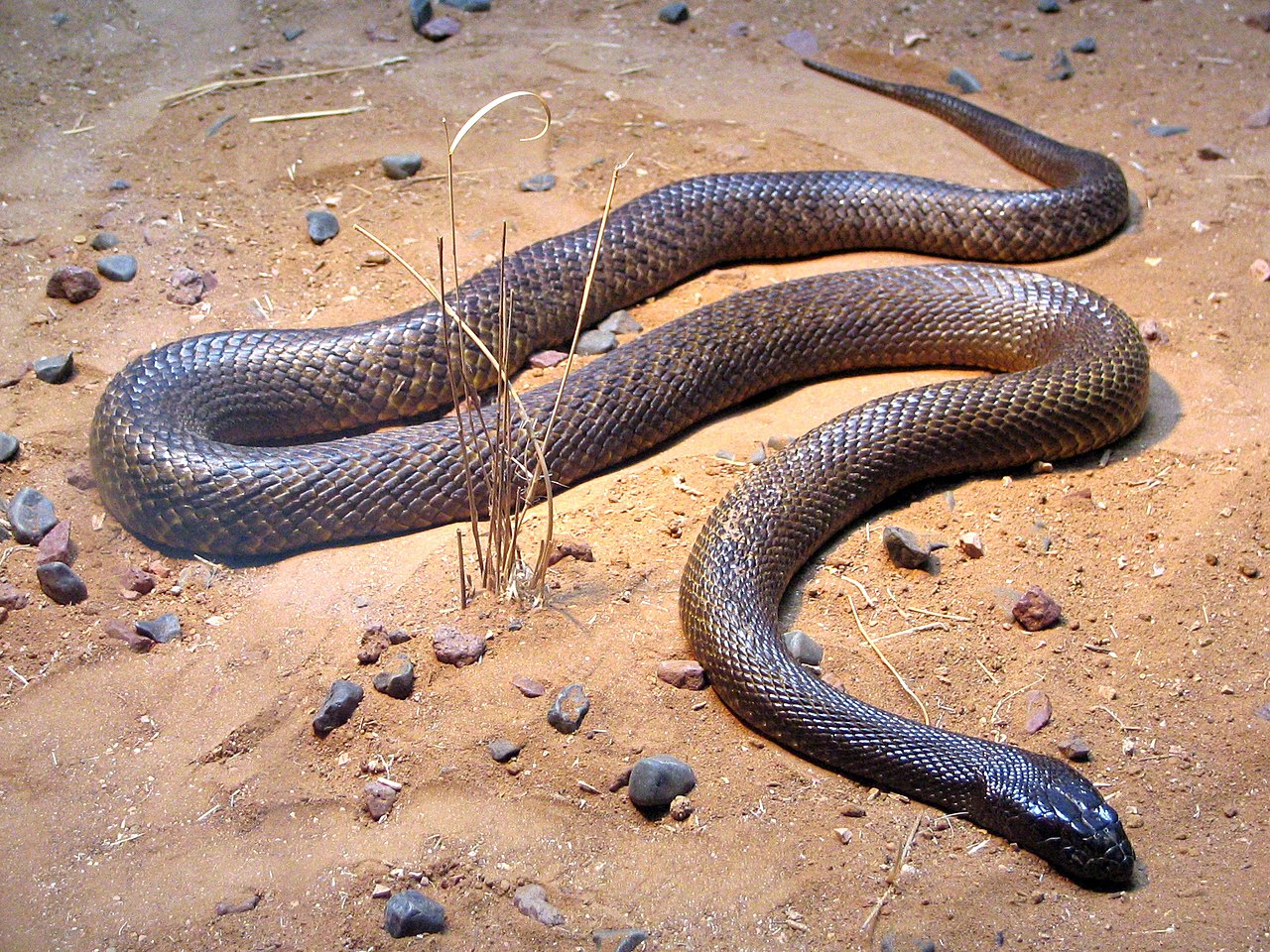
- Specialized Australian genera including taipans and other medically important species.
For further taxonomic details and species lists consult specialist references and databases (family overview, genera index, species list).
Questions and answers
Q: What is an Elapid?
A: An Elapid is a family of venomous snakes characterized by a set of hollow, fixed fangs through which they inject venom.
Q: Where can Elapids be found?
A: Elapids can be found in tropical and subtropical regions around the world, as well as in the Indian Ocean and the Pacific.
Q: How do Elapids inject venom?
A: Elapids inject venom through a set of hollow, fixed fangs.
Q: What is the size range of Elapids?
A: Elapids can be of different sizes, ranging from only 18 cm (Drysdalia) up to 6 m in length (King Cobra).
Q: How many species of Elapids are currently known?
A: Currently, 61 genera with 231 species of Elapids are known.
Q: Are Elapids harmless snakes?
A: No, Elapids are venomous snakes.
Q: What is the most well-known Elapid species?
A: The most well-known Elapid species is the King Cobra, which can grow up to 6 meters in length.
Related articles
Author
AlegsaOnline.com Elapids (Elapidae): venomous snakes of cobras, kraits, mambas, and sea snakes Leandro Alegsa
URL: https://en.alegsaonline.com/art/30597
Sources
- species.wikimedia.org : Elapidae
- itis.gov : "Elapidae"