
Electric eel (Electrophorus): biology, behavior, and ecology
A South American knifefish known for powerful electric discharges used for hunting, defense and electrolocation; an obligate air-breathing predator of the Amazon–Orinoco region.
Overview
The electric eel (genus Electrophorus) is a freshwater fish native to tropical South America. Although commonly called an "eel," it is not a true eel but a type of knifefish in the order Gymnotiformes (knifefish), and differs anatomically from true eels (true eels). Electric eels occur in slow-moving, often oxygen-poor waters such as the Orinoco River and the Amazon basin, and are characteristic predators in parts of South America. For genus- and species-level summaries see authoritative taxonomic sources (Electrophorus overview).
Image gallery
4 Images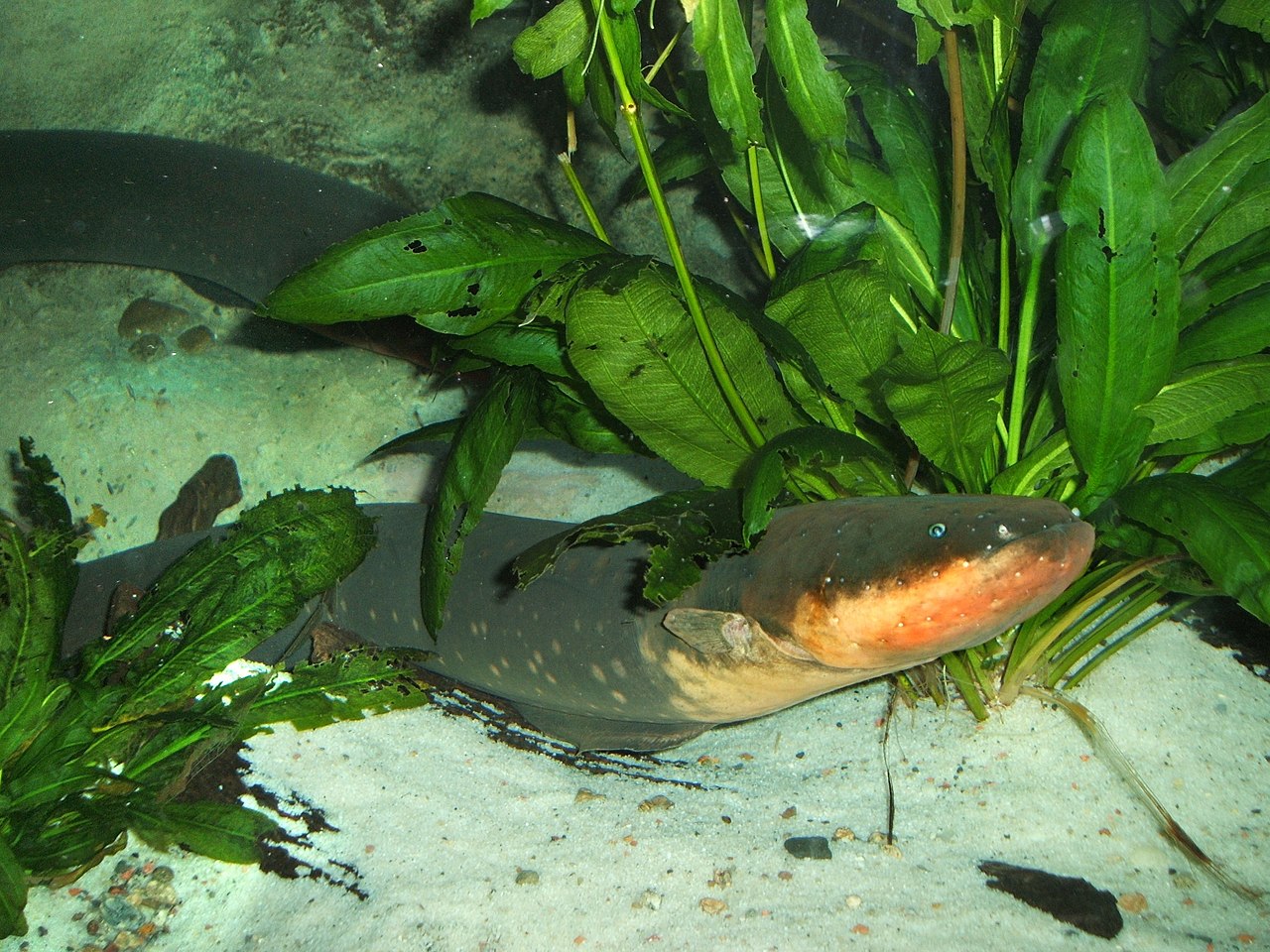


Anatomy and electric organs
Most of an electric eel's body is occupied by specialized electric organs that evolved from muscle tissue. In Electrophorus these organs are traditionally described in three main components (often referred to in the literature as the main organ, Hunter's organ and Sachs' organ) and together they form the fish's primary means of producing electrical discharges. The organs generate both low-voltage signals used for sensing and communication and high-voltage discharges used to stun or deter animals. Field and laboratory reports describe high-voltage pulses of several hundred volts in large individuals; for technical summaries and measurements see electrical output studies (electrical output).
Electrolocation and signalling
Electric eels use weak, low-voltage discharges to probe their environment and detect nearby animals, a process called electrolocation. These low-voltage signals allow the eel to navigate and locate prey in turbid water where vision is limited. The eel can also use modulated electric patterns in social interactions and to coordinate behavior; introductions to electrolocation and sensory biology summarize these roles (electrolocation resources).
Respiration and adaptations to habitat
Electric eels are obligate air breathers: they must surface regularly to take in atmospheric oxygen. This adaptation is suited to the hypoxic, stagnant or muddy waters they often inhabit. The buccal cavity and vascular structures support air breathing and help meet the metabolic cost of powering the electric organs. These physiological traits make the species well adapted to floodplain lakes, slow channels and flooded forest habitats found in parts of the Amazon–Orinoco region.
Feeding, hunting and ecological role
Electric eels are primarily piscivorous and carnivorous. Hunting behavior frequently involves active searching using electrolocation followed by short bursts of high-voltage discharges that can stun, immobilize or disorient prey. They feed on fish and other aquatic animals and are able, on occasion, to subdue animals larger than themselves by delivering repeated shocks. In many parts of their range they function as top or apex predators, influencing local prey communities and contributing to ecosystem dynamics.
Taxonomy and species limits
Electrophorus has been treated historically as a single species, but taxonomic research in recent years has revised species limits within the genus. Readers seeking the most current classification should consult recent taxonomic reviews and databases (taxonomic summary) for updated species names and distributions.
Human interactions and conservation
Local people living near electric eel habitats are well aware of the species' ability to deliver powerful shocks and typically avoid handling large individuals. Because of their size, specialized care requirements and electrical capability, electric eels are seldom kept by casual aquarists. Repeated discharge can temporarily reduce an eel's immediate ability to generate strong pulses until it recovers. Like many freshwater organisms in the Amazon and Orinoco basins, electric eels face indirect threats from habitat alteration, pollution and hydrological changes; conservation assessments and regional studies provide context for these pressures.
Key facts
- Range: freshwater systems of the Amazon and Orinoco basins (Amazon, Orinoco).
- Respiration: obligate air breather adapted to low-oxygen water.
- Sensory systems: use low-voltage electrolocation (electrolocation).
- Electric output: capable of strong high-voltage discharges; see technical studies (electrical output studies).
- Ecological role: often an apex predator in its habitats (apex predator).
- Taxonomy: a knifefish genus with revised species limits; consult current summaries (genus overview).
For further reading and species accounts consult specialist texts and reviews on electric fishes and South American freshwater ecology. General overviews and accessible introductions are available through regional natural history resources (comparisons with true eels, knifefish family).
Questions and answers
Q: What is the electric eel?
A: The electric eel is a species of fish.
Q: How much can an electric eel weigh?
A: An electric eel can weigh up to six pounds.
Q: How strong are the electric shocks of an electric eel?
A: The electric shocks of an electric eel can be up to six hundred fifty watts of electricity.
Q: What does the electric eel use its electric shocks for?
A: The electric eel uses its electric shocks both for hunting and to defend itself.
Q: Where does the electric eel live?
A: The electric eel lives in the stagnant muddy river bottoms of the Orinoco and the Amazon.
Q: How does the electric eel find its prey?
A: The electric eel uses low-voltage electric fields to find its prey.
Q: What type of animal is the electric eel?
A: The electric eel is a knifefish, despite its name.
Related articles
Author
AlegsaOnline.com Electric eel (Electrophorus): biology, behavior, and ecology Leandro Alegsa
URL: https://en.alegsaonline.com/art/30670
Sources
- fishbase.org : fishbase.org/summary/Electrophorus-electricus.html