
Elasmosaurus: the long‑necked plesiosaur of the Cretaceous
Elasmosaurus was a distinctive long‑necked plesiosaur from the Late Cretaceous Western Interior Seaway. This article covers its anatomy, discovery, ecology, locomotion hypotheses and how it differs from pliosaurs.
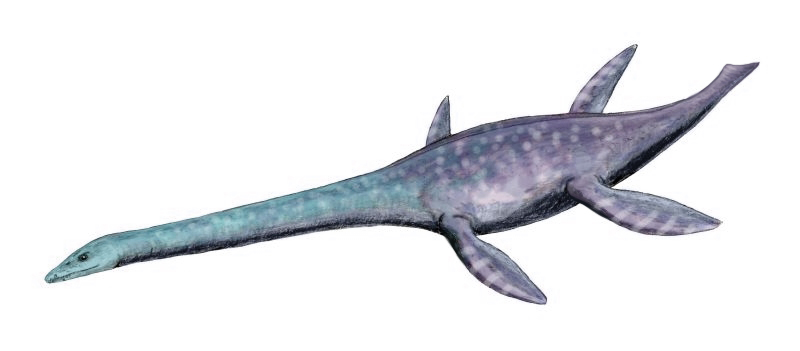
Elasmosaurus was a large marine reptile of the order Plesiosauria characterized by an exceptionally long neck and a relatively small head. Remains are known from the Late Cretaceous seas that once split North America, often called the Western Interior Seaway. Fossils and reconstructions of Elasmosaurus illustrate a body plan specialized for life in open water: a broad, flattened torso, four powerful flippers, a short tail, and dozens of cervical vertebrae supporting the elongated neck.
Image gallery
10 Images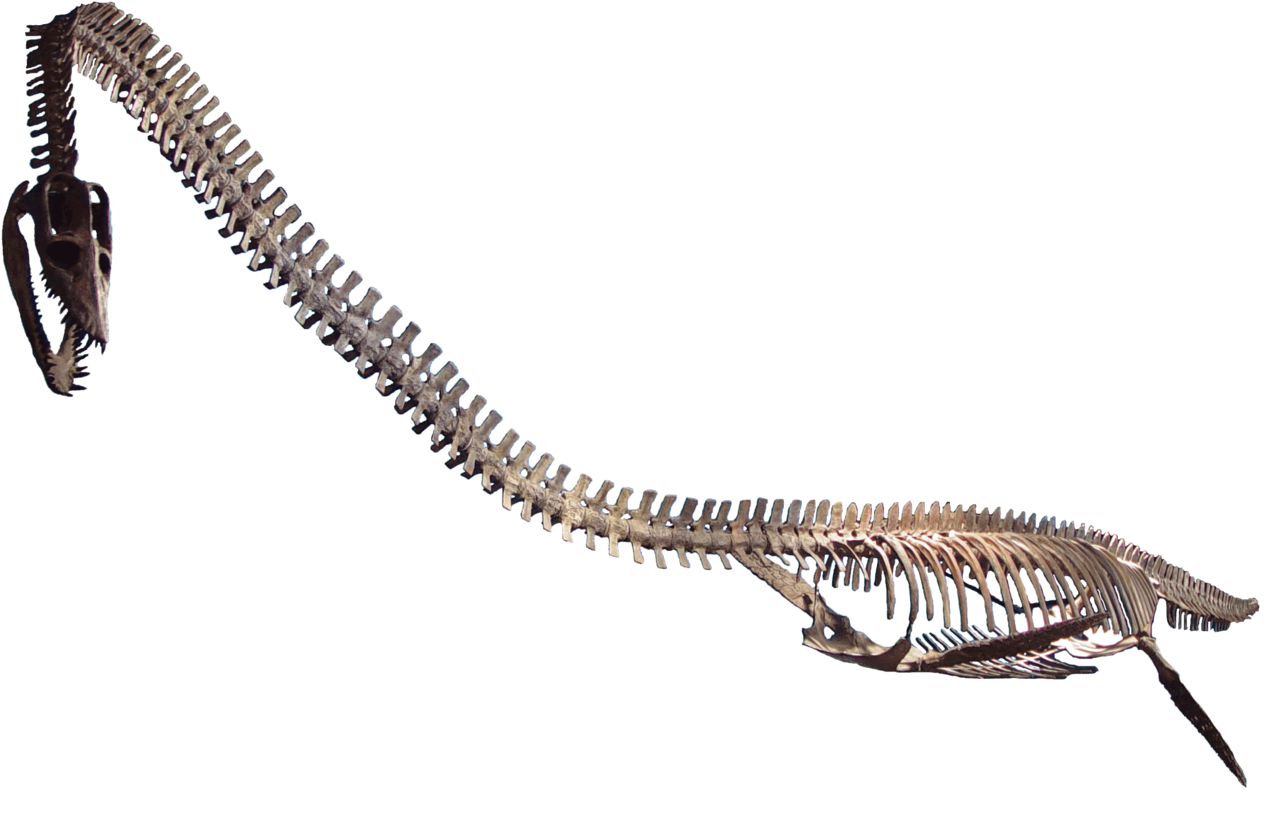


Key characteristics
- Size: adults reached lengths commonly cited around 10–14 m (about 33–46 ft), though estimates vary by specimen.
- Neck vertebrae: one of the defining features is the very high number of cervical vertebrae—famous specimens preserve around 70 vertebrae—creating the long, flexible neck.
- Skull and teeth: the head was relatively small with slender, conical teeth suited for grasping small, slippery prey rather than crushing hard shells.
- Locomotion: four large paddle‑like limbs suggest underwater 'flight' driven by synchronous flipper strokes rather than tail propulsion.
Elasmosaurus is placed in the family Elasmosauridae within Plesiosauria; it contrasts with the pliosaur body plan (short neck, large head) that produced more robust, deep‑bite predators. Paleontologists rely on comparisons of vertebrae, limb bones and cranial elements to assign fragmentary fossil specimens to this group.
Discovery and early history
The genus was named in the late 19th century. The first nearly complete skeleton attracted attention because of an early reconstruction error: the skull was originally placed at the wrong end of the vertebral column, essentially on the tail rather than the neck. That mistake—made during the rush to describe new finds—was later corrected, and the incident remains a famous anecdote in the history of paleontology involving researchers such as Edward Drinker Cope. The corrected arrangement revealed the extreme cervical anatomy that distinguishes elasmosaurids.
Feeding, behavior and functional interpretations
Because of its long neck and small head, scholars have proposed several feeding strategies. Early writers like D.M.S. Watson suggested a mode of surface swimming with the head raised above water to seize prey; other hypotheses emphasize a stealthy approach with the body kept at a distance while the neck reached into schools of fish or into tight spaces to snatch prey. The slender teeth and jaw construction indicate Elasmosaurus fed on small plankton‑eating fish and invertebrates rather than large, hard‑shelled animals. Modern studies note that although the neck had many vertebrae, the flexibility between adjacent centra was limited, producing a long but somewhat stiff structure useful for precise, slow strikes.
Locomotion and hydrodynamics
Elasmosaurids swam using four enlarged flippers and a streamlined torso but lacked the streamlined, fusiform body of some marine reptiles and mammals. Unlike ichthyosaurs or certain marine mammals, which adopted a high‑speed, torpedo‑shaped form, elasmosaurids represent a different ecological solution: maneuverability and reach rather than outright speed. Their dental and jaw anatomy, examined as teeth and jaws in multiple specimens, supports a diet of small prey captured by quick snapping movements rather than forceful biting.
Significance and distinctions
Elasmosaurus illustrates how marine reptiles repeatedly explored contrasting body plans: long‑necked, grasping forms versus short‑necked, heavy‑headed predators. As an iconic member of the elasmosaurids, it helps paleontologists reconstruct Late Cretaceous marine food webs and the variety of adaptations that enabled reptiles to thrive in prehistoric oceans. While popular reconstructions sometimes show extreme neck postures, ongoing biomechanical work aims to clarify realistic ranges of motion and feeding behavior for these unusual animals. For accessible overviews and specimen records see general resources and museum pages linked here: plesiosaur overview, skull studies, aquatic adaptations, and more detailed discussions at historical accounts, comparative anatomy, fossil databases, dental analyses, biographies, diet studies, and hydrodynamic comparisons.
Questions and answers
Q: What is Elasmosaurus?
A: Elasmosaurus was a 46 foot long swimming reptile that lived in the North American Inland Sea. It was a plesiosaur.
Q: Who discovered Elasmosaurus?
A: Edward Drinker Cope discovered Elasmosaurus in 1868.
Q: What mistake did Edward Drinker Cope make while discovering Elasmosaurus?
A: Edward Drinker Cope accidentally put the head on the tail while discovering Elasmosaurus.
Q: How many cervical vertebrae did Elasmosaurus have?
A: Elasmosaurus had 71 cervical vertebrae.
Q: What was the suggested method of surface swimmers by D.M.S. Watson for Elasmosaurus?
A: D.M.S. Watson suggested that the method of surface swimmers for Elasmosaurus was mostly eating with their head above water and darting down to snatch smaller fish which were feeding on plankton.
Q: Why is it hard to see the benefit of a long neck under water for Elasmosaurus?
A: It is hard to see the benefit of a long neck under water for Elasmosaurus because aquatic mammals operating under water all have a streamlined torpedo-shape, as did pliosaurs and ichthyosaurs.
Q: What does the number of neck vertebrae in Elasmosaurus indicate?
A: The large number of neck vertebrae in Elasmosaurus is probably linked to the modest degree of flexibility between adjacent vertebrae.
Related articles
Author
AlegsaOnline.com Elasmosaurus: the long‑necked plesiosaur of the Cretaceous Leandro Alegsa
URL: https://en.alegsaonline.com/art/30600