
Egyptian fruit bat (Rousettus aegyptiacus)
A medium-sized Old World fruit bat found across Africa and the Middle East; frugivorous, cave-roosting, notable for tongue-click echolocation and roles in pollination, seed dispersal, and zoonotic research.

The Egyptian fruit bat (Rousettus aegyptiacus) is a species of Old World fruit bat in the family Pteropodidae. It occurs widely across Africa outside the Sahara and ranges through the Middle East, extending as far east as Pakistan and northern India. It is absent from the hyperarid zones of the Sahara and other true deserts.
Image gallery
10 Images



Physical characteristics and senses
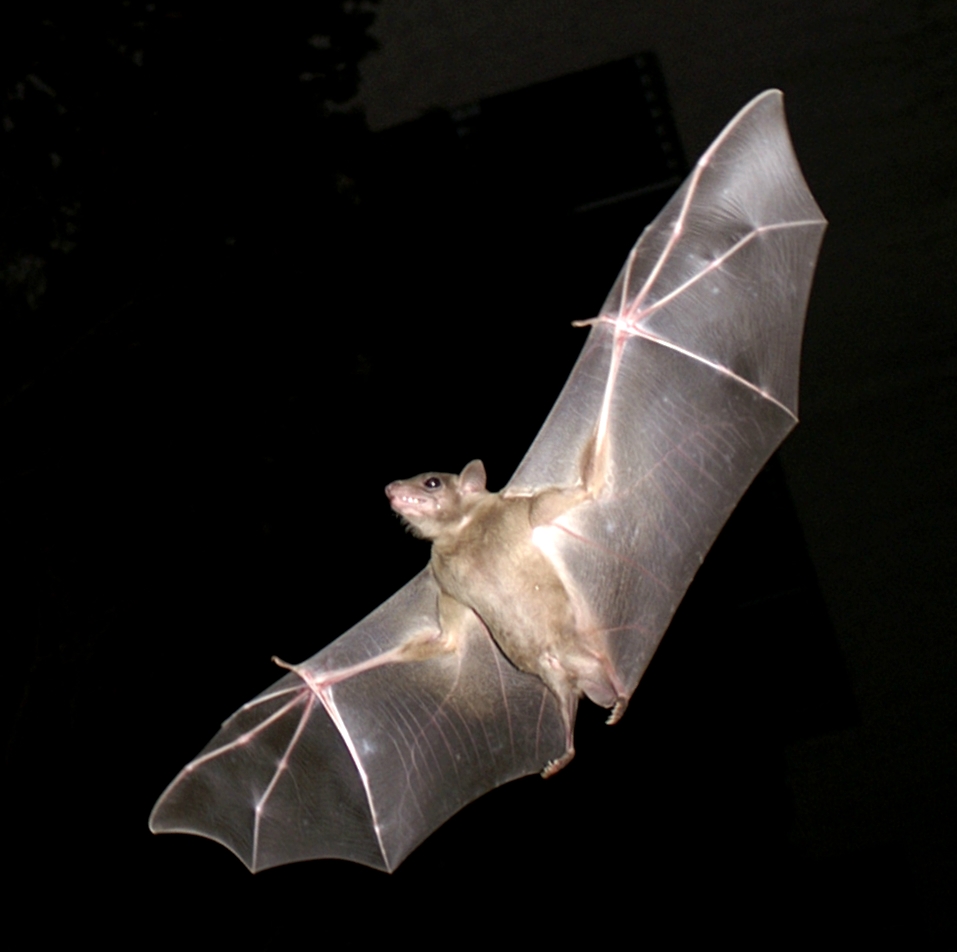
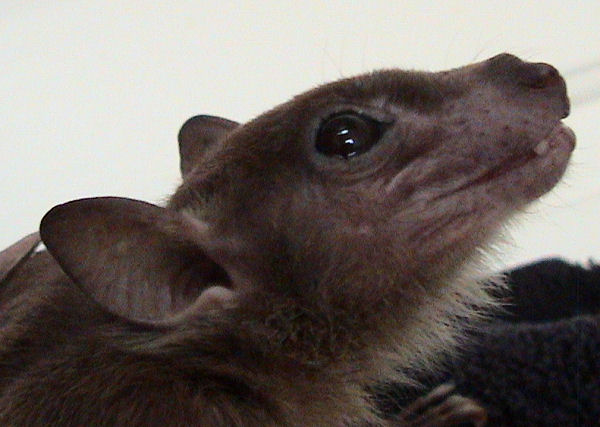
Rousettus aegyptiacus has the robust, fox-like face typical of fruit bats, large eyes adapted for low-light vision, and broad wings for sustained flight while foraging. Unlike most microbats, this species — and a few close relatives — produces rapid tongue-clicks to echolocate in caves and dark roosts, supplementing vision and a keen sense of smell used to find ripe fruit.
Ecology and behavior
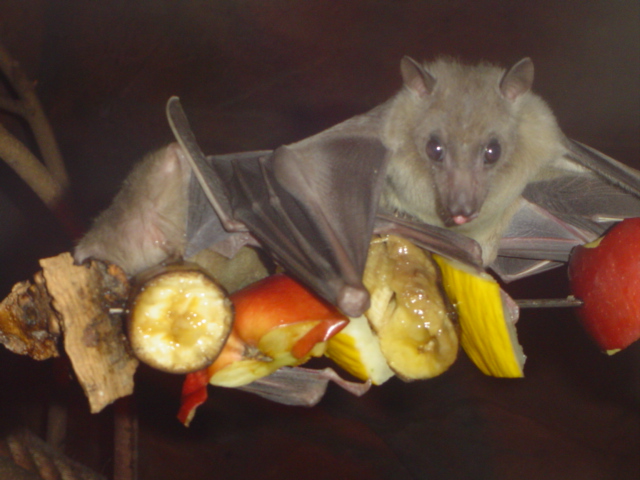
Primarily frugivorous, Egyptian fruit bats feed on a variety of tree fruits, flowers and nectar. They are important pollinators and seed dispersers in many ecosystems, visiting orchards and wild fig, palm, and other fruit-bearing trees during nightly foraging excursions. They roost in colonies in caves, old mines, culverts and sometimes buildings, forming groups that range from small aggregations to large communal colonies.
Reproduction and social life
Colonial and social, the species breeds seasonally in many parts of its range. Females typically give birth to a single pup each reproductive cycle; young are carried by the mother until they are able to fly and forage independently. Lifespan in the wild varies but individuals may survive several years under favorable conditions.
Human interactions and significance
Egyptian fruit bats provide ecological services by dispersing seeds and pollinating plants, which supports habitat regeneration. They may also feed on cultivated fruit, creating occasional conflicts with farmers. In public health research the species has been associated with studies of filoviruses — for example, investigations into reservoirs of Marburg virus — so it features in zoonotic disease surveillance; such links are studied with caution and ongoing research.
Conservation and notable facts
Generally widespread and adaptable, the Egyptian fruit bat is not regarded as globally threatened, though local populations can be affected by roost disturbance, habitat loss, and intentional culling. Conservation measures emphasize protecting important roosting sites and balancing agricultural concerns with the bats' ecological roles. Their combination of visual foraging and tongue-click echolocation makes them an interesting subject in studies of bat sensory evolution and ecosystem services.
- Taxonomy: family Pteropodidae, genus Rousettus.
- Role: pollinator, seed disperser, occasionally considered an agricultural pest.
- Research importance: studied in ecology and zoonotic disease contexts.
Related articles
Author
AlegsaOnline.com Egyptian fruit bat (Rousettus aegyptiacus) Leandro Alegsa
URL: https://en.alegsaonline.com/art/30412