
Egg white (albumen): composition, culinary uses, and functional properties
Egg white (albumen) is the clear, protein-rich portion of an egg. Low in fat, it serves structural and culinary roles—from foams and meringues to clarifying and binding—while also posing safety and allergy considerations.
The egg white, commonly called albumen, is the transparent liquid that surrounds and supports the yolk inside a bird egg. It is mostly water but contains a collection of soluble proteins that give it distinctive physical and functional properties. Because it is low in fat and calories and high in high-quality protein, egg white is widely used in cooking, nutrition, and industry.
Image gallery
3 Images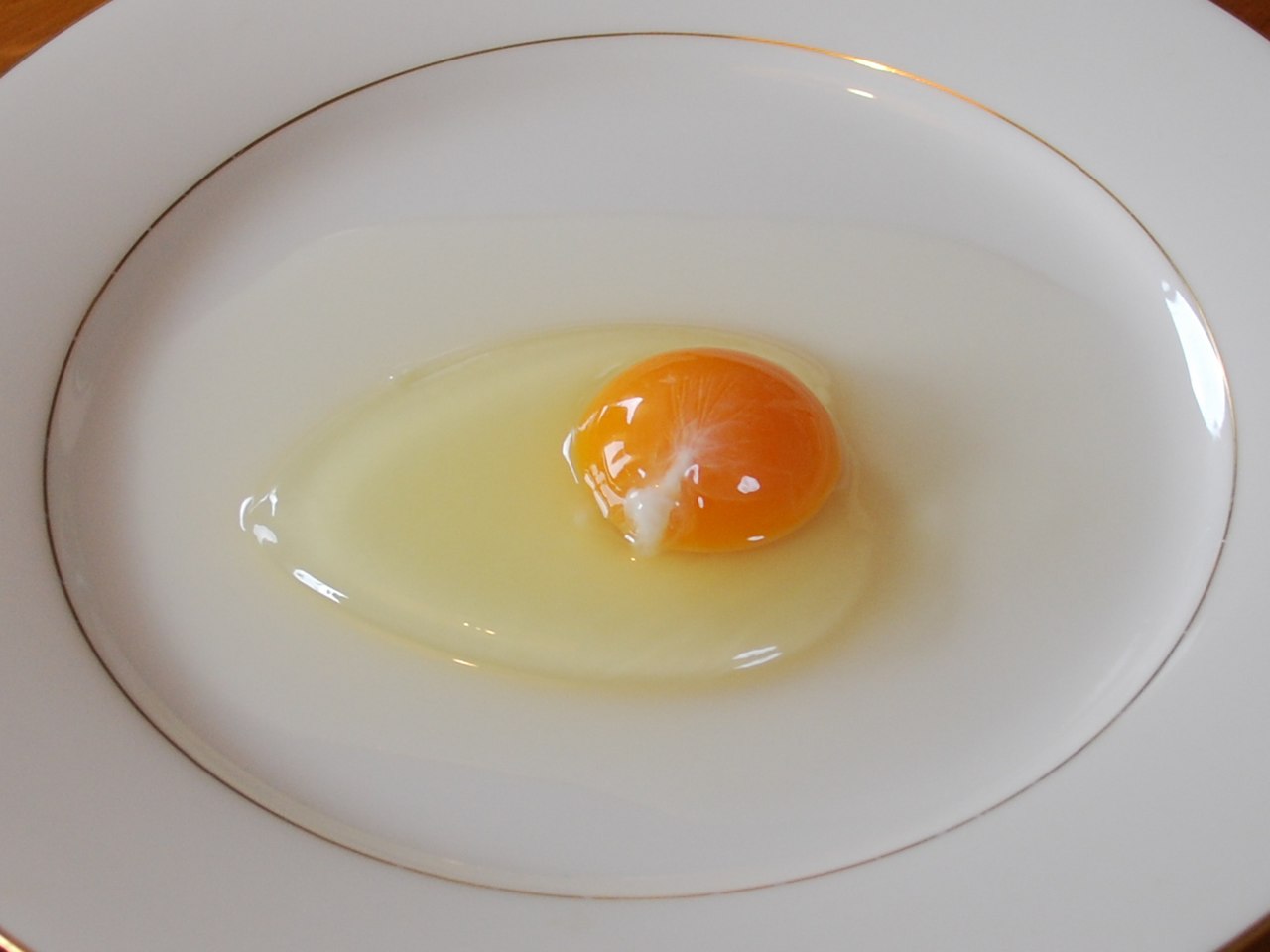


Composition and structure
Egg white consists of several layers and components: an outer watery layer and a thicker gel-like layer near the yolk. Fibrous strands called chalazae anchor the yolk. Major proteins include ovalbumin, ovotransferrin (conalbumin), lysozyme, ovomucin and others; these proteins determine viscosity, foaming and coagulation behavior.
Culinary properties and common uses
When beaten, egg white proteins unfold and trap air, forming a stable whipping foam that increases in volume. This foam is the basis for many light-textured desserts and preparations. Examples include:
- Meringue—sweetened whipped whites used as toppings or cookies
- Soufflés and angel food cake—rely on aerated whites for lift
- Mousses and marshmallows—where whites provide structure and lightness
- Binding and glazing—egg white can bind ingredients or give a shiny crust
- Clarifying liquids—historically used in consommés and wine fining
Functional science and behavior
Heat causes egg white proteins to coagulate and set, changing from clear to opaque and firm. Mechanical action (whisking) denatures proteins and allows them to surround and stabilize air bubbles; sugar and acid modify foam stability. Different preparations use these behaviors—careful folding preserves air, while extended heat yields a firm set.
Safety, storage, and nutritional notes
Raw egg white can carry pathogenic bacteria such as Salmonella; pasteurized egg whites are available for safer raw applications like some cocktails or uncooked dressings. People with egg allergies can react to albumen proteins, so substitutions or avoidance is necessary. Nutritionally, egg whites are praised for their concentrated protein content without the fat and cholesterol found in yolks.
Beyond the kitchen, albumen has been used historically in photography, in laboratory reagents, and in some cosmetic formulations. Its combination of accessibility, versatile chemistry and neutral flavor keeps egg white a fundamental ingredient in both traditional and modern food science and industry.
Related articles
Author
AlegsaOnline.com Egg white (albumen): composition, culinary uses, and functional properties Leandro Alegsa
URL: https://en.alegsaonline.com/art/30365