
Emmental cheese (Emmentaler): Swiss cow‑milk cheese famous for its holes
A mild, nutty Swiss cow's‑milk cheese recognized for its characteristic 'eyes'. Covers production, bacteria and aging, regional varieties, culinary uses and legal protections.
Overview
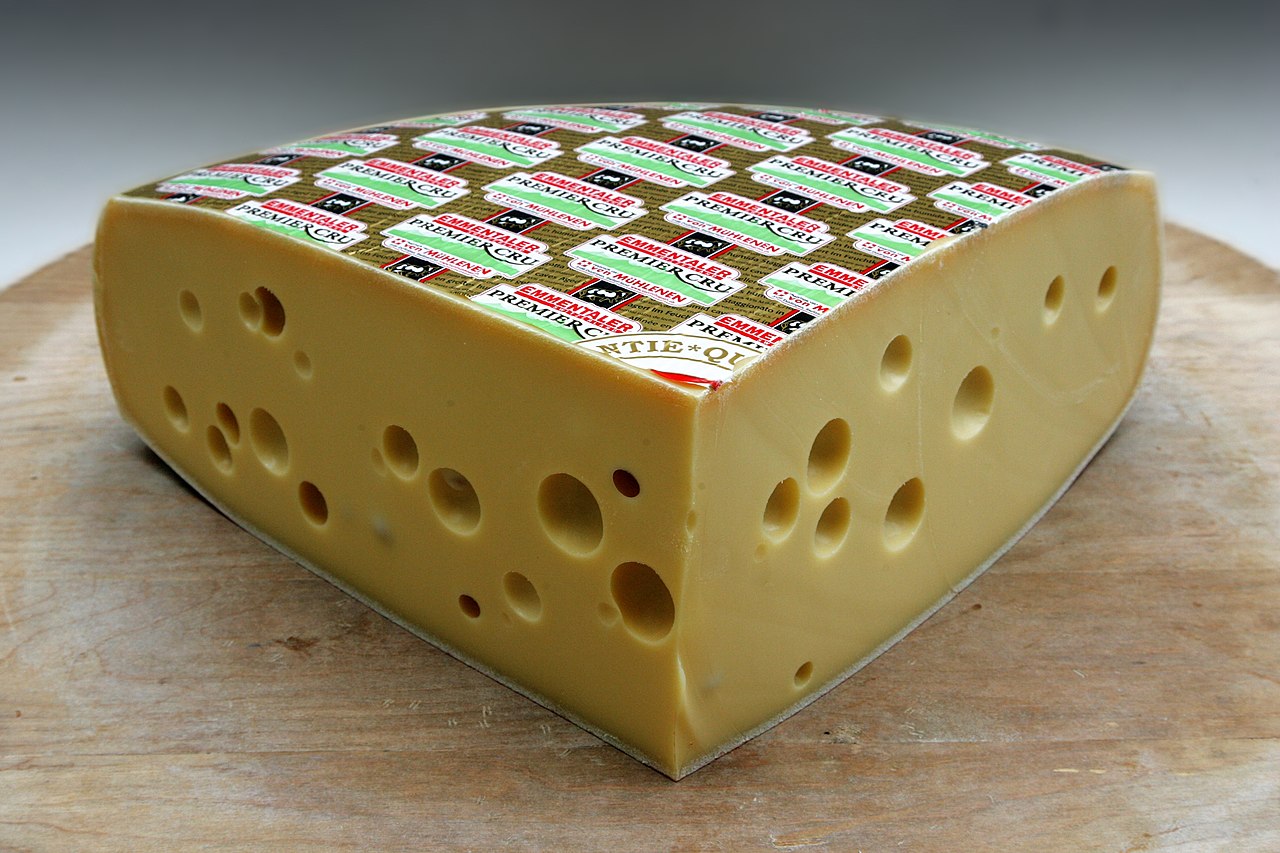
Emmental (also Emmentaler or Emmenthal) is a firm, pale yellow cow's‑milk cheese originally from the Emmental valley near Bern in Switzerland. It is one of the most widely recognized cheeses in the world, largely because of its characteristic round holes or "eyes" and its mild, slightly sweet and nutty flavor. Traditional Emmental is made from whole, and in many cases unpasteurized, cow's milk and is matured for weeks to months to develop its texture and taste. Emmental remains associated with Swiss cheesemaking, though similar styles are produced across Europe and beyond.
Image gallery
8 Images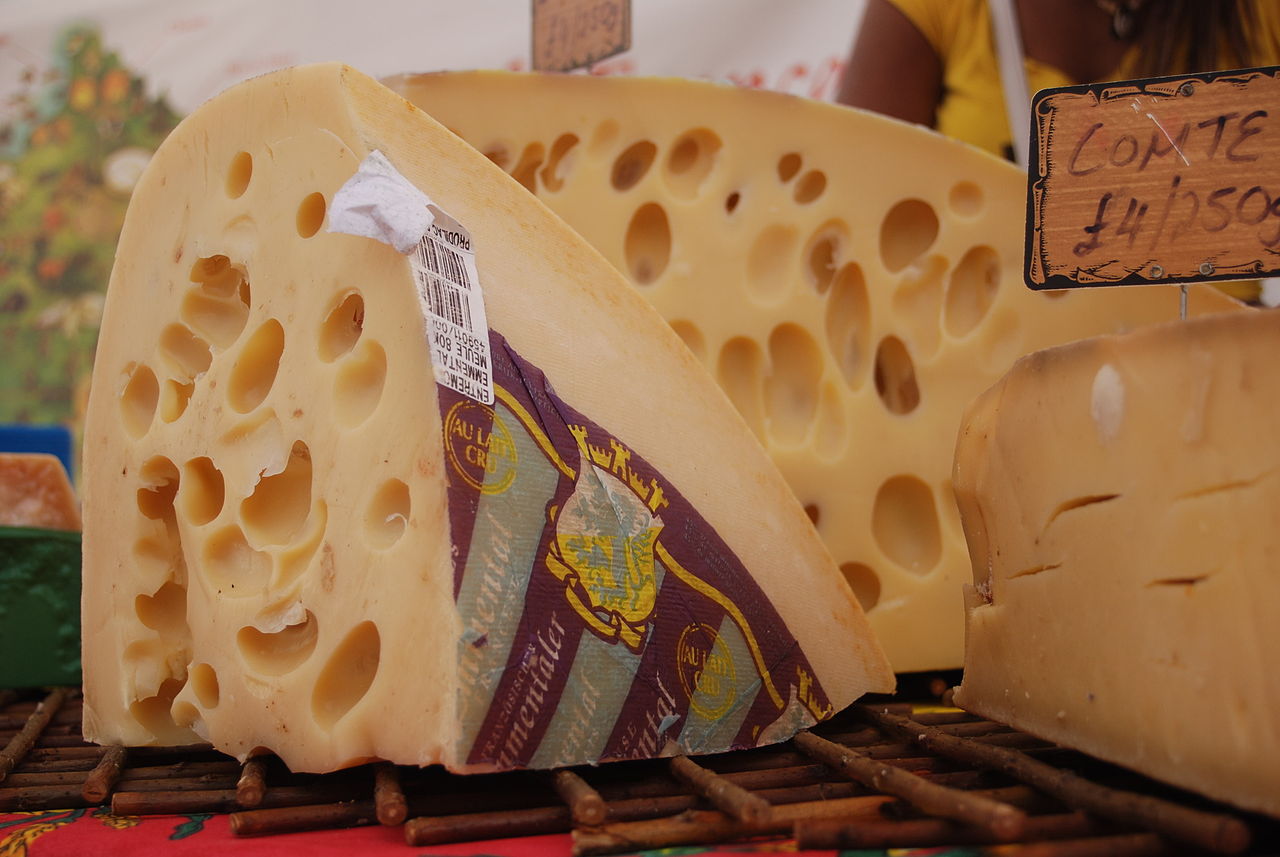




Production and characteristic features
Emmental's appearance and flavour come from a combination of milk, starter cultures and aging. Key features include:
- Eyes: The holes form when propionic acid bacteria in the cheese convert lactic acid into carbon dioxide during the warm stages of ripening; these gas bubbles become the familiar eyes.
- Texture and color: The paste is smooth and elastic, with a glossy, straw‑to‑golden hue.
- Flavor profile: Generally mild and nutty when young, more complex and tangy with extended aging.
- Milk and maturation: Both raw and pasteurized milk are used depending on local regulations and tradition; aging typically ranges from a few weeks to several months to suit different market preferences.
The cheesemaking sequence begins with curd formation, cutting and cooking the curd, pressing into large wheels, and an initial period of warm ripening that allows the propionic bacteria to grow and produce carbon dioxide. Wheels of Emmental are traditionally large; artisanal and industrial producers may use different sizes. The type of starter culture, salt content, temperature, and duration of ripening all influence the size of the eyes and the final taste.
History and names
Emmental originates in the Emmental valley (a river valley in the canton of Bern) and has been produced there since at least the late medieval period. As the style spread, the name Emmentaler or Emmental came to be used in other countries for cheeses made in a similar way. Over time multiple regional names and protected terms developed: some countries and regions grant legal protection to cheeses labelled as Emmental or Emmentaler, while other producers make Emmental‑style cheeses without those designations. For historical context and regional information see Switzerland and Emmental valley.
Varieties, legal protection and regional differences
Several countries produce cheeses called Emmental, but important differences exist. In some areas the cheese carries a protected designation or indication to guarantee origin and method; in others, similar products use pasteurized milk or different aging regimes. Examples of sources of protected Emmental cheeses include Switzerland, France, Austria and Germany, where national or European designations regulate production methods and naming. Producers using raw milk, differing bacterial cultures or longer aging produce variations in intensity and texture. For legal and regional distinctions, consult references in Switzerland (microbiology and ripening), France (French varieties), Austria (Austrian production) and Germany (German variants).
Uses, culinary examples and nutrition
Emmental is versatile in the kitchen. Its melting properties and gentle taste make it a popular choice for fondues and gratins, sandwiches and hot dishes. It is also served as a table cheese with fruit, nuts and wine. Because of its recognizable flavor and reliable melting behavior, Emmental or Emmental‑style cheeses are widely used in convenience foods and prepared meals. For information about milk handling and pasteurization practices used by various producers, see raw milk and pasteurized milk. Food industry applications and product examples may be found via convenience food sources.
Notable facts and practical considerations
Emmental's holes are sometimes smaller or larger depending on production choices; modern cheesemakers may manage eye formation to suit consumer expectations. The amount of milk required for a kilogram of cheese varies with factors such as fat content and processing, but making cheese is milk‑intensive compared with fresh dairy products. Emmental remains a culturally and economically significant cheese in its regions of origin and continues to be adapted worldwide. For further reading about microbiology, regional law and consumption statistics, consult the linked resources above (carbon dioxide and gas formation, Emmental).
Questions and answers
Q: What type of cheese is Emmental?
A: Emmental cheese is a Swiss cheese.
Q: When was Emmental cheese first made?
A: Emmental cheese was first made around 1353 when Bern joined the confederacy.
Q: What are two features that make Emmental distinctive?
A: Two of the features that make Emmental distinctive are its holes and sweetness.
Q: How much milk is needed to make 1 kg of Emmental cheese?
A: About 12 litres of milk are needed to make 1 kg of Emmental cheese.
Q: How long does it take to ripen an Emmental Cheese?
A: Usually, an Emmental Cheese is left to ripen for a period of 6–7 weeks. Ripening it for 8–12 weeks gives a more spicy (salty) cheese.
Q: Which country produces the most amount of this kind of cheese?
A: France is the biggest producer of Emmental, producing 247 069 tons in 2005.
Q: How much do French and Swiss people consume per person per year?
A: French and Swiss people eat about 3.3 kg per person per year, while Germans eat about half that amount, 1.7 kg per person, per year
Related articles
Author
AlegsaOnline.com Emmental cheese (Emmentaler): Swiss cow‑milk cheese famous for its holes Leandro Alegsa
URL: https://en.alegsaonline.com/art/31223
Sources
- homecooking.about.com : "Swiss Cheese Recipes and Cooking Tips"
- hormel.com : "Emmental Cheese"