
English muffin
Small round, flat yeast bread split and toasted for breakfast; noted for a coarse, nooked interior and use in dishes like eggs Benedict.
Overview
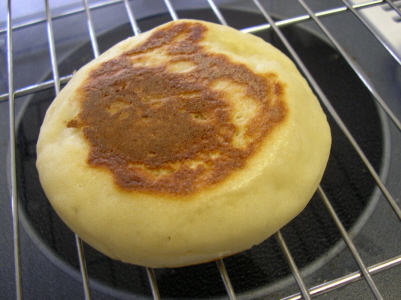
The English muffin is a small, round, flat yeast-leavened bread commonly split horizontally and toasted. In some regions it is simply called a muffin or breakfast muffin. Its shape and function distinguish it from quickbread-style muffins and similar griddle breads. It is commonly eaten at breakfast in the United Kingdom, the United States, Canada and Australia, where it appears in both home cooking and commercial bakeries. Definition and basic form are straightforward: a thin round loaf with a crisp exterior and a soft interior.
Image gallery
10 Images




Characteristics and ingredients
Typical dough includes flour, water or milk, yeast and a source of fat such as butter or oil. Enriched ingredients like yeast, butter and milk make the crumb tender and help develop flavor. The interior is notable for a coarse, open texture with many small holes or "nooks and crannies," which catch melted butter and spreads when toasted.
Preparation and cooking
Dough is mixed, allowed to rise, portioned into rounds and typically cooked on a griddle or heavy skillet rather than baked deeply in an oven. Many recipes call for a brief second rise after shaping. After cooking, the muffin is split with a fork rather than a knife to preserve the interior texture before toasting.
History and development
While small round breads have long existed in the British Isles, the item known today as the English muffin became widely produced and distributed in the 19th century as bakeries and later commercial brands popularized the format. The term and usage vary by country; in Britain it is often just "muffin," while in other nations the qualifier "English" helps distinguish it from other muffins.
Uses, serving and variations
English muffins are served toasted with butter, jam or savory toppings. They are the traditional base for dishes such as eggs Benedict and are used for breakfast sandwiches. Variations include whole-wheat, multi-grain, and sweeter versions with dried fruit. They differ from American-style quickbread muffins, which are baked and cake-like, and from crumpets, which have a spongier texture and different cooking method.
Regional lists and recipes can be found through general culinary resources and national food guides: breakfast traditions, Canadian usage and Australian variants.
Related articles
Author
AlegsaOnline.com English muffin Leandro Alegsa
URL: https://en.alegsaonline.com/art/31486