
Foam: Structure, Formation, Types, and Uses
Foam is a dispersed material of gas bubbles separated by liquid or solid films. This article explains foam structure, formation, stability, types, common applications, and distinctions from related materials.
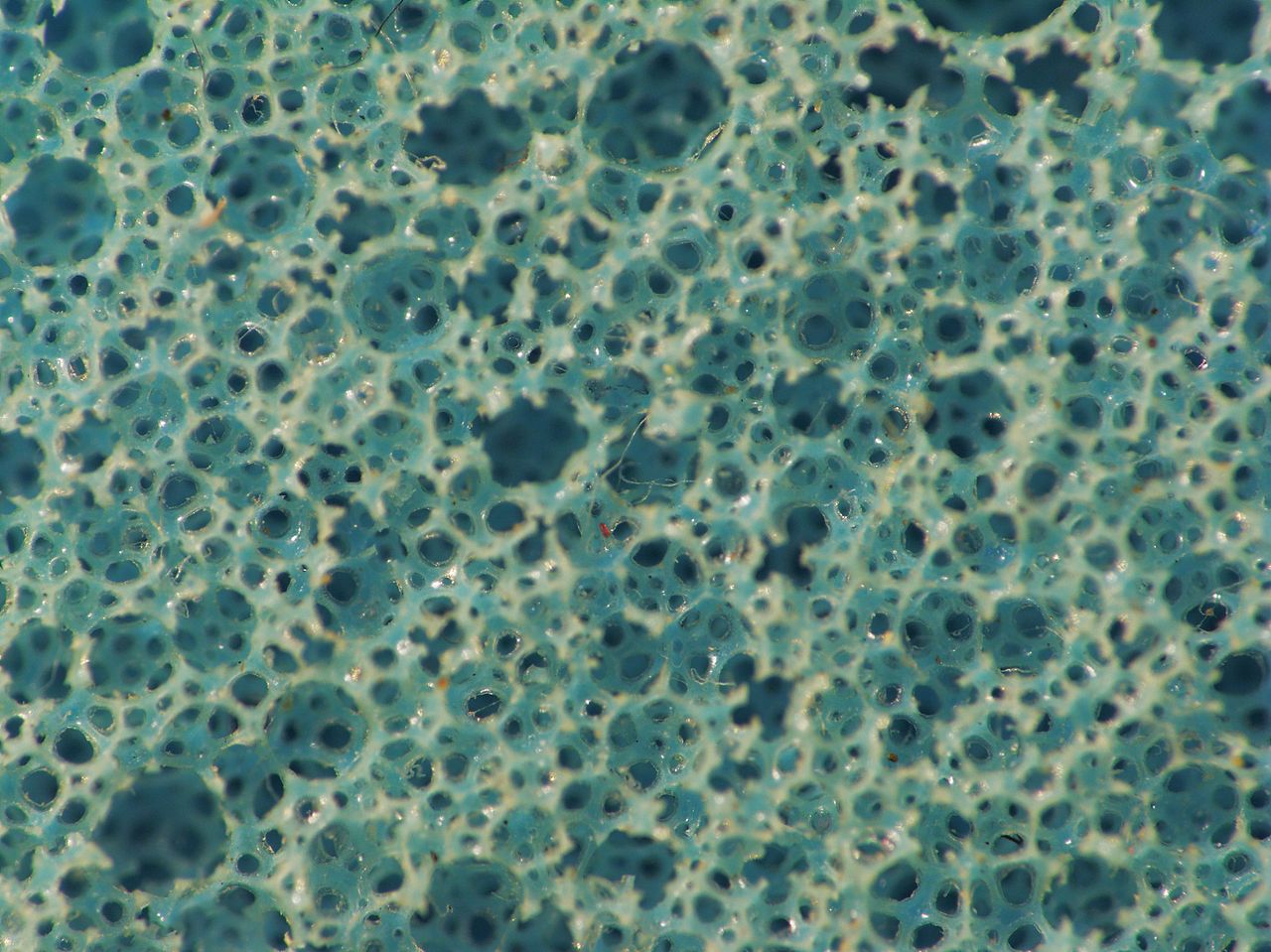
Foam is a heterogeneous material in which gas is trapped in a network of bubbles separated by thin films of liquid or solid. Bubbles may be visible and large, as in soap foam, or microscopic and finely dispersed, as in many industrial foamed plastics. When the liquid fraction is high the material is called a "wet" foam and bubbles are spherical; when most liquid is drained away a "dry" foam forms with polyhedral cells and thin films between them.
Image gallery
10 Images




Structure and physical principles
At the microscopic level foam is governed by surface tension, capillary pressure and the geometry of films and junctions known as Plateau borders. Surface-active molecules (surfactants) accumulate at interfaces and lower surface tension, slowing film rupture and drainage. Over time foams undergo drainage (liquid flows out), coarsening or Ostwald ripening (larger bubbles grow at the expense of smaller ones), and collapse. Fine foams can be treated as a form of colloid where dispersed gas domains interact with the continuous phase.
Types of foam
- Liquid foams: gas in a liquid matrix (soap suds, firefighting foam).
- Solid foams: gas trapped in solid polymers or metals (expanded polystyrene, metal foams).
- Emulsion foams and compound foams: contain multiple continuous phases or additives for specialized properties.
Foams are also classified by stability: transient foams collapse quickly, while stabilized foams—using surfactants, particles (Pickering foams) or polymers—persist. Rheologically, foams often show complex viscoelastic behaviour: they can flow like liquids under sustained stress but support a finite yield stress like solids at low stresses.
Production and common methods
Foams are produced by entraining gas into a liquid or viscous material using mechanical agitation, gas injection, chemical blowing agents that release gas upon reaction or heating, or physical blowing agents like dissolved gases. Control of bubble size, distribution and stabilization chemistry is essential for tailoring mechanical, thermal and acoustic properties.
Applications and notable examples
Foams are widespread in daily life and industry: culinary foams (whipped creams), personal care (shaving foam), firefighting foams, flotation and wastewater treatment, thermal insulation (rigid polymer foams), packaging (expanded polystyrene), lightweight structural components (metal foams) and acoustic dampening. Natural foams occur in seas and rivers where organic material stabilizes bubbles. Environmental concerns include persistence of certain synthetic foam materials and microplastic formation from degraded polymer foams.
Understanding foam stability and dynamics is important across fields from consumer products to materials engineering and geology. Distinctions from related systems—such as emulsions (drops of one liquid in another) or suspensions—rest on the presence of a continuous phase and the relative volumes of dispersed gas. Research continues into greener foaming agents, recyclable solid foams and the fundamental physics of coarsening and collapse.
Related articles
Author
AlegsaOnline.com Foam: Structure, Formation, Types, and Uses Leandro Alegsa
URL: https://en.alegsaonline.com/art/35323