
Eggs Benedict
Classic American breakfast of toasted English muffin topped with cured pork, a poached egg and hollandaise sauce. Popular brunch item with many regional and dietary variations and debated origins.
Overview
Eggs Benedict is a warm breakfast or brunch composed of a split, toasted English muffin topped with a slice of cured pork, a gently poached egg and a drizzle of emulsified butter sauce. It is served immediately so the runny yolk mixes with the sauce and bread, creating a layered combination of textures and rich flavors. The dish is widely associated with American restaurant and hotel cuisine and is a staple on many brunch menus.
Image gallery
8 Images




Ingredients and assembly
The traditional components are straightforward: a toasted English muffin, a slice of Canadian bacon or back bacon (often called Canadian bacon), a poached egg and a coating of hollandaise sauce. The egg is poached to preserve a liquid yolk that will meld with the sauce; cooks typically finish the assembled stack with a spoonful of warm hollandaise and sometimes a pinch of paprika or chopped herbs. The technique balances temperatures and requires timing so that the muffin stays crispish while the egg and sauce remain warm.
Characteristics and culinary notes
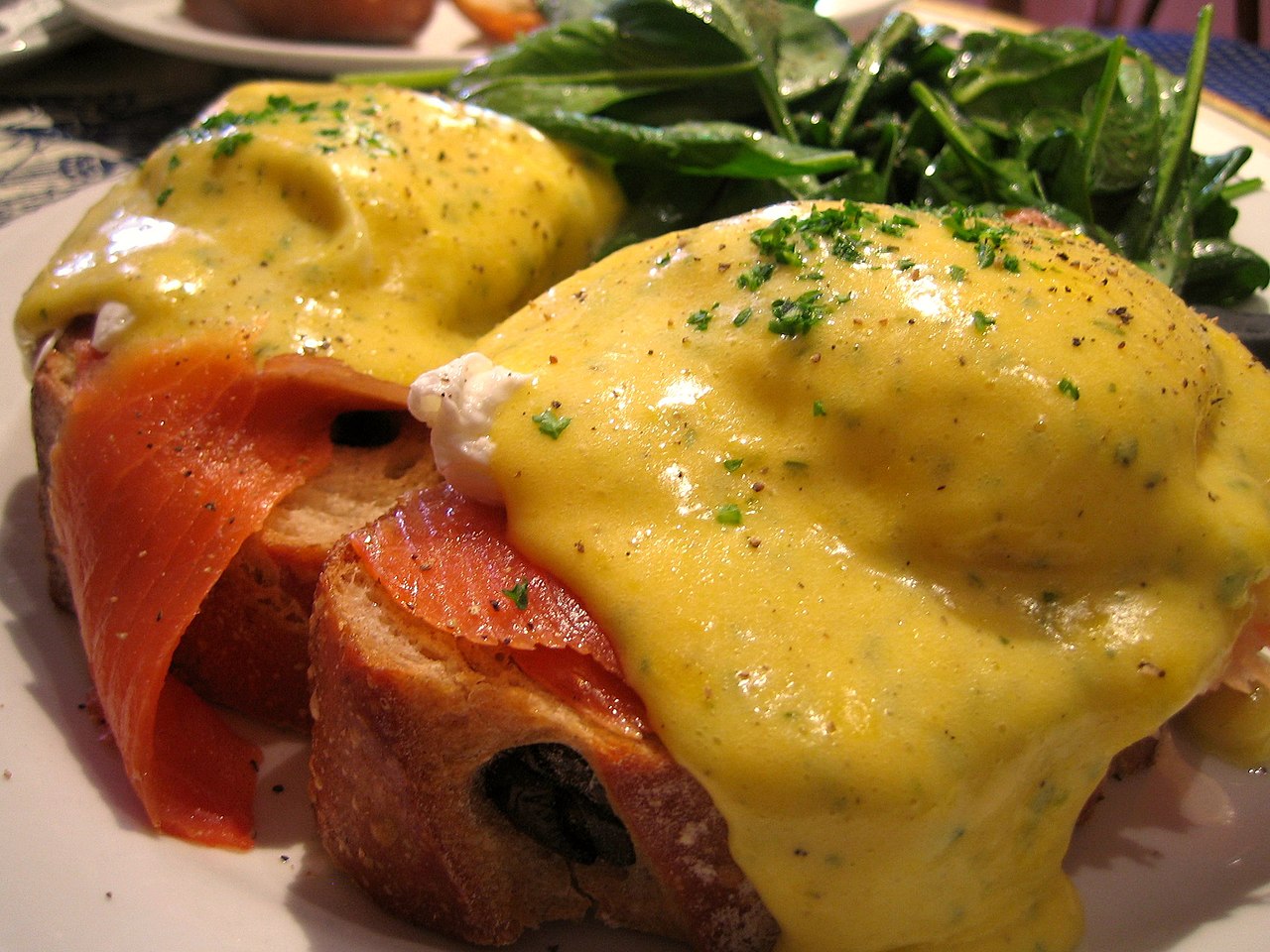
Eggs Benedict is prized for contrast: the firm, lightly toasted base; the savory cured pork; the delicate white of the poached egg; and the glossy, buttery hollandaise. Hollandaise is an emulsion of egg yolks and clarified butter flavored with lemon or vinegar; it is temperature-sensitive and can separate if overheated. Poaching eggs (rather than frying or boiling) keeps yolks intact and yields the classic presentation. Versions may substitute smoked fish, greens or different breads to alter texture and taste.
Origins and history
The exact origin of Eggs Benedict is uncertain and several origin stories circulate. Accounts place its creation in the United States around the turn of the 20th century, often crediting New York dining establishments or individual patrons for popularizing the combination. Regardless of who first assembled these ingredients, the dish became entrenched in North American hotel and restaurant breakfast service and later in casual brunch culture.
Variations, examples and considerations
Many regional and dietary variants exist. Common named variations include:
- Eggs Florentine: replaces the cured pork with sautéed spinach.
- Eggs Royale (or Eggs Benedict Royale): substitutes smoked salmon for the pork and is sometimes called Eggs Atlantic.
- California-style: adds avocado, tomato or other fresh produce.
Contemporary cooks also create vegetarian or vegan versions with plant-based hollandaise or baked poached-egg alternatives. Food-safety advice recommends using properly handled eggs and, for vulnerable diners, fully cooked preparations in place of raw or lightly emulsified sauces. The dish remains a marker of brunch menus and culinary technique because it combines simple elements into a distinctive, timeless presentation. For practical how-to guides and recipes, see resources on preparing poached eggs and emulsified sauces such as poaching technique and classic hollandaise preparation.
Questions and answers
Q: What is Eggs Benedict?
A: Eggs Benedict is a breakfast dish that consists of a lightly toasted English muffin topped with cooked bacon or Canadian bacon, poached eggs, and a small amount of hollandaise sauce.
Q: What is the origin of Eggs Benedict?
A: There are several stories surrounding the origin of Eggs Benedict, but the most popular one is that it was created in the late 1800s by a New York City restaurant named Delmonico's.
Q: What are some of the variations of Eggs Benedict?
A: There are many variations of Eggs Benedict, including substituting the bacon with smoked salmon or spinach and using different types of bread, such as sourdough or bagels.
Q: Is Eggs Benedict a common breakfast dish?
A: Yes, Eggs Benedict is a popular breakfast dish that is often served at restaurants and cafes.
Q: What is hollandaise sauce?
A: Hollandaise sauce is a thick, creamy sauce made from butter, egg yolks, and lemon juice. It is a key component in Eggs Benedict.
Q: Can Eggs Benedict be served for other meals besides breakfast?
A: While Eggs Benedict is typically a breakfast dish, it can also be served for brunch or lunch.
Q: Is Eggs Benedict a healthy dish?
A: Eggs Benedict can be high in calories and fat due to the bacon and hollandaise sauce. However, there are healthier variations that use alternative ingredients, such as turkey bacon and a lighter hollandaise sauce.
Related articles
Author
AlegsaOnline.com Eggs Benedict Leandro Alegsa
URL: https://en.alegsaonline.com/art/30374
Sources
- commons.wikimedia.org : Eggs Benedict and variations
- echonyc.com : "Eggs Benedict New York: Feedback" · web.archive.org
- select.nytimes.com : "American Classic: Eggs Benedict"
- select.nytimes.com : "Letters: Benedicts' Eggs"
- flashnews.com : "Food Historian Honors New Pope With 'Eggs Benedict XVI'"
- heritagehouseinn.com : "The Heritage House - Menu" · web.archive.org
- rulloffs.com : "Rulloff's - Sunday Brunch Menu" · web.archive.org
- eatgoodstuff.com : "Good Stuff Hermosa Beach - Menu"
- buffrestaurant.com : "The Buff Restaurant - Menu" · web.archive.org
- select.nytimes.com : "Maligned Vegetable Has Loyal Fans"