
East Malaysia (Malaysian Borneo)
East Malaysia, also called Malaysian Borneo, comprises the states of Sabah and Sarawak on the island of Borneo; noted for rainforests, cultural diversity, and natural resources.
Overview
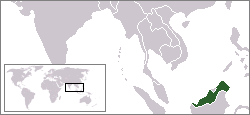
East Malaysia, commonly known as Malaysian Borneo, is the portion of Malaysia located on the island of Borneo. Borneo is one of the largest islands in Southeast Asia, and the Malaysian territory occupies its northern and northwestern sectors. The region consists principally of the two states of Sabah and Sarawak, which are geographically and administratively distinct from Peninsular Malaysia. The small kingdom of Brunei sits between them on the coast and is almost enclosed by Sarawak.
Image gallery
2 Images
Geography and environment
East Malaysia features wide coastal plains, extensive river systems and some of the last large tracts of tropical rainforest in Asia. The landscape includes notable highlands such as Mount Kinabalu in Sabah, large peat swamp forests, and important mangrove and coral habitats along its shores. Rivers like the Rajang and Kinabatangan are central to transport, ecology and local livelihoods. The region borders Indonesian Borneo to the south and lies southwest of the Philippines.
History and governance
Sabah and Sarawak joined the Federation of Malaysia in 1963, along with what was then known as Malaya and Singapore (which later separated). Under the terms of entry, the two states retained particular administrative rights and immigration controls that differ in practice from those on the peninsula. Their political development has been shaped by colonial histories, interactions with indigenous polities, and modern federal relationships with the national government.
People and culture
The population of East Malaysia is ethnically and linguistically diverse. Indigenous groups such as the Iban, Kadazan-Dusun, Bidayuh and numerous smaller communities live alongside settlers of Chinese, Malay and other backgrounds. Languages, traditional crafts, music and festivals vary widely across the states. Many communities maintain close ties to rivers, forests and customary land systems.
Economy and uses
Natural resources have long driven the regional economy. Timber, petroleum and natural gas production, agriculture (including oil palm and rubber) and fisheries are important economic activities. Tourism—centered on wildlife, national parks and cultural heritage—is a growing sector, attracting visitors to places such as rainforest reserves and coastal islands.
Conservation and notable facts
East Malaysia is internationally recognized for its biodiversity and endemic species, but it also faces pressures from deforestation, land conversion and infrastructure development. Efforts to balance development with conservation include protected areas, community forestry initiatives and research on wildlife and ecosystems. While sharing a national identity with Peninsular Malaysia, Sabah and Sarawak remain unique in geography, culture and legal arrangements.
- Major states: Sabah, Sarawak
- Neighboring territories: Indonesian Borneo (Kalimantan), Philippines, Brunei
- Context: part of Malaysia on the island of Borneo, in Southeast Asia
Related articles
Author
AlegsaOnline.com East Malaysia (Malaysian Borneo) Leandro Alegsa
URL: https://en.alegsaonline.com/art/29676
Sources
- pbs.org : "Borneo -- An Awesome Island"