
East Region (Cameroon)
A large, sparsely populated rainforest region in southeastern Cameroon centered on Bertoua, noted for major river systems, rich biodiversity and several important protected reserves.
The East Region is a vast administrative region in southeastern Cameroon, with its administrative capital at Bertoua. It is widely recognised for extensive tracts of tropical rainforest, low population density compared with other parts of the country, and a network of rivers that shape both ecology and human activities.
Image gallery
10 Images


Geography and environment
The landscape is dominated by continuous lowland rainforest of the Guineo‑Congolian block. Much of the lower two-thirds of the territory remain forested, interspersed with swamps, seasonally flooded areas and gallery forests along waterways. Major rivers that cross or drain the region include the Nyong, the Dja, the Lom, the Kadéï, the Boumba, the Sangha and the Ngoko; these waterways are important ecological corridors and have historically provided transport routes into interior areas.
Protected areas and biodiversity
The East Region contains several internationally and nationally important protected areas aimed at conserving forest biodiversity and large mammals. Key sites include:
- Dja Faunal Reserve – a well‑known forest reserve noted for its intact fauna and flora.
- Lobéké National Park – part of a larger transboundary conservation landscape.
- Boumba‑Bek Reserve and Nki Reserve – areas set aside to protect wildlife and forest habitats.
These reserves shelter diverse species, including forest elephants, great apes and many bird and plant species, and they play a central role in regional conservation efforts.
People, economy and land use
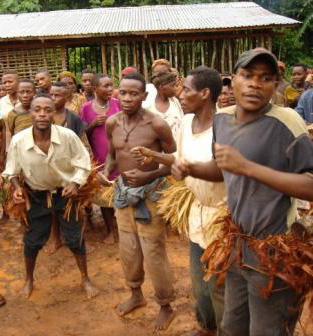
The human population includes a mix of forest‑dwelling indigenous groups and peoples who settled later, living in small towns and villages. Economic activities are generally centred on subsistence agriculture, timber extraction, small‑scale trade and, in places, artisanal mining. Rivers remain important for local transport where road infrastructure is limited. Traditional forest livelihoods coexist with modern pressures from commercial logging and expanding agricultural fronts.
History, challenges and significance
Historically the region has been less accessible than Cameroon's coastal and northern areas, which has helped preserve large tracts of forest. At the same time, that relative isolation presents development challenges: limited roads and public services, and ongoing tensions between conservation and resource use. The East Region is therefore significant both for national biodiversity conservation and for debates about sustainable development in forested tropical landscapes.
Researchers, conservationists and local communities continue to work on balancing protection of the region's ecological values with livelihoods and responsible resource management. For further administrative and travel information consult regional sources linked to Cameroon and local government in Bertoua.
Questions and answers
Q: What is the East Region?
A: The East Region is a region located in Cameroon.
Q: Which city is the capital of the East Region?
A: The capital city of the East Region is Bertoua.
Q: What are the names of the river systems in the East Region?
A: The East Region has several river systems: the Nyong, the Dja, the Lom, the Kadéï, the Boumba, the Sangha, and Ngoko.
Q: What is the amount of rainforest coverage in the region?
A: The lower two-thirds of the East Region is covered in rainforest.
Q: How many forest and game reserves have been established by Cameroon's government in the East Region?
A: The government of Cameroon has established four forest and game reserves in the East: the Dja Reserve, Lobéké Park, the Boumba-Bek Reserve, and the Nki Reserve.
Q: What is the name of the reserve located in the East Region that is home to gorillas?
A: Lobéké Park, one of the reserves established by the government of Cameroon, is home to a population of gorillas.
Q: What are some of the things to see or do in the East Region?
A: Visitors to the East Region can explore the various rainforests, the river systems, and the reserves. Additionally, they can experience the culture and cuisine of the region by visiting local towns and markets.
Related articles
Author
AlegsaOnline.com East Region (Cameroon) Leandro Alegsa
URL: https://en.alegsaonline.com/art/29697