
Eared dove (Zenaida auriculata): overview, behaviour and distribution
A medium-sized New World dove found across much of South America. Coverage includes identification, range, habitat, breeding, ecology and interactions with people.
Overview
The Eared Dove (Zenaida auriculata) is a common New World dove of open and semi-open landscapes. Often compared to the North American mourning dove, it is a medium-sized pigeon-like bird that plays a visible role in rural and peri-urban ecosystems. It feeds mainly on fallen seeds and grains and is noted for its steady, soft cooing.
Image gallery
6 Images


Identification and characteristics
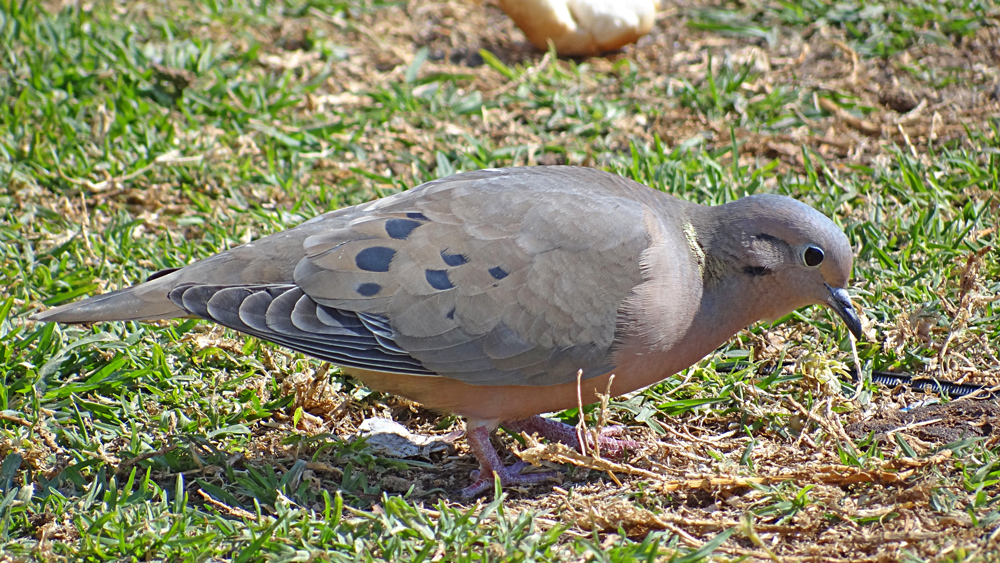
Adults show a plain, warm-brown to gray-brown plumage with subtle patterning and a slightly long, pointed tail. Key field marks include a pale face, a faint darker patch behind the eye that gives the species its common name, and a relatively slim profile. Its flight is quick and direct.
- Size: medium-sized, similar in bulk to other Zenaida doves.
- Plumage: generally muted browns and grays with modest markings.
- Voice: soft repetitive coos used in contact and courtship.
Range and habitat
The species is widespread through much of South America, occurring from northern countries such as Colombia to southern areas including Argentina and Chile, and on many nearby islands. It occupies farmland, grassland, parks and the edges of forests, and tolerates human-altered environments. Local and seasonal movements are common; some populations appear partly migratory or nomadic in response to food availability.
Breeding and behaviour
Eared Doves nest on simple twig platforms placed several metres above ground in trees, shrubs or in man-made structures. Pairs may raise multiple broods in a year where conditions permit. Their diet is predominantly seeds, which they pick from the ground or glean from plants; they often feed in flocks in harvested fields.
Ecological and human interactions
Ecologically, the Eared Dove acts as a seed predator and occasional disperser and is prey for raptors and other predators. Because it can reach high densities near crops, it is regarded in some regions as an agricultural pest; in other places it is appreciated for sport hunting or as a familiar wild bird in towns. It is closely related to the North American mourning dove and belongs to the same genus, Zenaida.
Notable facts and distinctions
This species is adaptable and widespread, with populations that can expand rapidly when food is abundant. Its common name derives from the subtle dark marking near the ear region, not from external ears. For further general information and regional accounts see specialized field guides and conservation resources provided by ornithological organizations.
More on New World doves • Tropical dove references • Colombian records • Argentine studies • Chilean observations • South American distribution • Seasonal movements
Related articles
Author
AlegsaOnline.com Eared dove (Zenaida auriculata): overview, behaviour and distribution Leandro Alegsa
URL: https://en.alegsaonline.com/art/29523