
Eastern cottontail (Sylvilagus floridanus)
Common North American rabbit species noted for its white tail, adaptable habitat, prolific breeding, and role as an important prey species in many ecosystems.
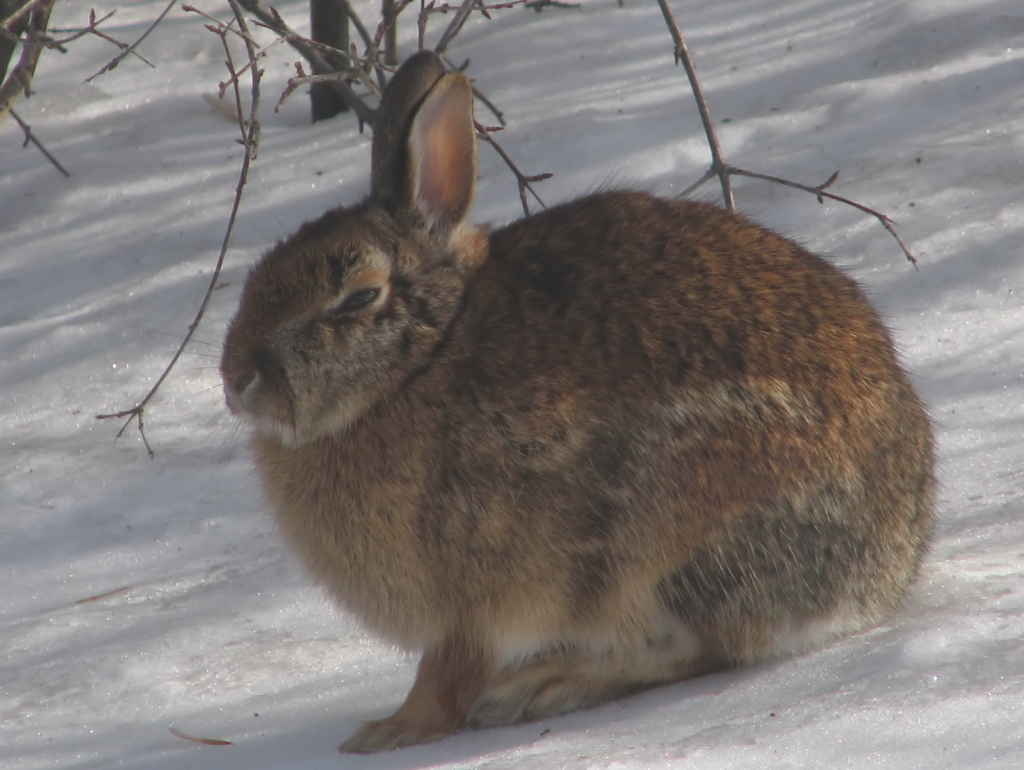
The Eastern cottontail (Sylvilagus floridanus) is a small rabbit native to much of eastern and central North America. It belongs to the group of New World cottontails and is a member of the family Leporidae. Recognized by its round, white tail and brownish-gray fur, the species is the most frequently encountered wild rabbit across its range and thrives in disturbed, edge, and grassy habitats.
Physical characteristics include a compact body, relatively short ears compared with hares, and strong hind legs for rapid, zigzag escape. Adults typically measure around 30–45 cm in length and weigh roughly 1–2 kg. Fur coloration varies with season and locale but generally provides camouflage among grasses and brush.
Eastern cottontails occupy a mix of meadows, pastures, woodland edges, roadsides and suburban gardens. They feed primarily on grasses, herbs, buds and bark, shifting to woody twigs in winter. Unlike European rabbits, cottontails usually do not dig extensive burrows; they rest and hide in shallow depressions called "forms".
Reproduction is rapid: females produce multiple litters each year, each with several altricial young born in lined nests. This high reproductive rate helps maintain populations despite predation by foxes, coyotes, raptors and snakes. Human activities — agriculture, suburban development and introductions for hunting — have altered and often expanded their local ranges.
Image gallery
8 Images



Notable facts and distinctions
- Ecological role: a key prey species that influences predator populations and vegetation dynamics.
- Behavioral notes: crepuscular to nocturnal activity, solitary except during mating.
- Differences: smaller and shorter-eared than hares; uses surface nests rather than extensive warrens like some European rabbits (cottontail rabbit comparisons).
- Conservation: generally common and not globally threatened, though local declines can occur from habitat loss.
For further reading on taxonomy and range, see general references on lagomorphs and regional wildlife guides (New World species overview, North American distribution, Leporidae family accounts).
Related articles
Author
AlegsaOnline.com Eastern cottontail (Sylvilagus floridanus) Leandro Alegsa
URL: https://en.alegsaonline.com/art/29747
Sources
- departments.bucknell.edu : departments.bucknell.edu/biology/resources/msw3/browse.asp?id=13500332
- departments.bucknell.edu : departments.bucknell.edu/biology/resources/msw3/browse.asp?id=13500333