
Dove: natural history, biology, and relationship with humans
Doves and pigeons (family Columbidae) are stout-bodied birds known for seed-based diets, unique crop milk, wide distribution, domestication history, cultural symbolism, and varying conservation status.
Doves and pigeons belong to the bird family Columbidae, a widespread and diverse group found on most continents and many islands. The common names "dove" and "pigeon" are often used interchangeably in everyday language; in ornithological contexts ornithology a loose convention treats smaller species as "doves" and larger ones as "pigeons", but this is not a strict taxonomic rule. The wild ancestor of many domestic varieties is the rock dove, and the domesticated form is commonly referred to as the domestic pigeon. There are more than 300 species in the family, showing a wide range of sizes, colors and ecological roles.
Image gallery
10 Images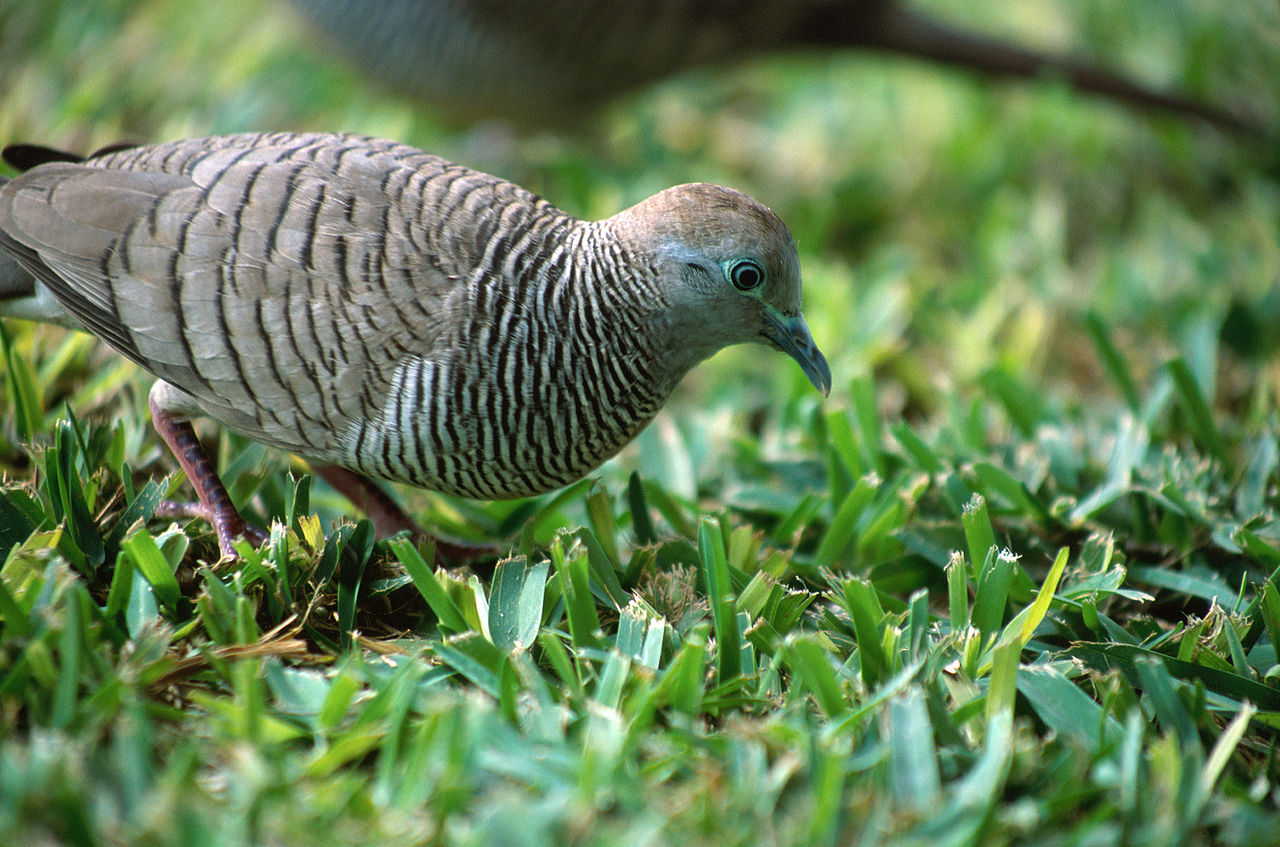


Appearance and flight
Members of Columbidae are generally compact birds with short necks, small heads, and stout bodies. Bills are typically short and slender, adapted for pecking at seeds and fruits. Wing shapes vary by lifestyle: many species have broad, rounded wings for short bursts and maneuvering in woodlands, while others possess long wings for fast, sustained flight. Plumage ranges from drab greys and browns to striking iridescence and patterned markings used in species recognition and courtship displays.
Feeding and ecology
Most doves and pigeons are granivores or frugivores: they feed primarily on seeds, fruit and other plant parts such as buds and shoots (plants). Some species supplement their diet with invertebrates or take advantage of anthropogenic food sources in urban settings. By consuming and dispersing seeds, many species play roles in plant community dynamics and forest regeneration. Habitat preferences vary widely—some are forest specialists, others inhabit scrub, grassland, desert or urban environments.
Reproduction and crop milk
Breeding strategies among Columbidae typically involve small clutches (one or two eggs) laid in simple nests of sticks or vegetation. Both parents usually share incubation and care of the young. A distinctive physiological adaptation in this family is the production of a nutrient-rich secretion known as crop milk. Produced in the lining of the crop, this substance—also called pigeon milk—is secreted by both males and females and is remarkably nutritious. It provides fats, proteins and immune factors that support rapid growth in hatchlings during their first days or weeks of life.
Domestication, behavior and human use
Humans have long maintained close relationships with several pigeon species, especially the rock dove. Domestication produced varieties used for food, message-carrying (homing pigeons), competitive sport (racing), and ornamental purposes. Feral populations derived from domestic stock are now common in many cities, where they exploit food availability and sheltered nesting sites. Pigeons show remarkable homing abilities and social behavior, forming flocks that communicate through vocalizations and displays.
Cultural significance and symbolism
Doves have rich symbolic roles in many cultures and religions. They are commonly associated with peace and love, and white doves are frequently released in ceremonies as symbols of goodwill. Artistic, literary and religious traditions have drawn on pigeon and dove imagery to convey ideas ranging from devotion and loyalty to sacrifice and purity.
Conservation and management
Conservation status among Columbidae varies. While adaptable species like the feral pigeon are abundant and sometimes conflict with humans over droppings, noise and nesting in buildings, other species are threatened by habitat loss, introduced predators, hunting and the pet trade. Island endemics are particularly vulnerable. Conservation measures include habitat protection, legal safeguards, predator control on islands, and public education. Where urban populations create nuisance concerns, humane management and deterrence measures are recommended over lethal control when possible.
Identification and notable species
- General appearance: stout body, short legs, rounded tail and a characteristic head-on-chest posture.
- Vocalizations: cooing calls are typical, with notable variation among species.
- Notable examples: the rock dove (and its feral derivatives), various fruit doves and imperial pigeons in tropical forests, and small ground-dwelling species adapted to dry habitats.
- Study resources: field guides and regional checklists compiled by ornithological groups provide identification keys, range maps and conservation status.
For introductory information, entries titled pigeon and domestic pigeon are useful starting points; specialist literature and regional accounts give more detailed treatment of the Columbidae's taxonomy, behavior and conservation. Readers seeking practical advice on living with urban pigeons or participating in citizen science can consult wildlife-management resources and local birding organizations for guidance. More comprehensive treatments of the family and their role in ecosystems can be found in ornithological texts and review articles in ornithology collections.
Questions and answers
Q: What is the bird family Columbidae?
A: Columbidae is the bird family that includes pigeons and doves.
Q: Are the terms "pigeon" and "dove" interchangeable?
A: Yes, the terms "pigeon" and "dove" are often used interchangeably.
Q: How is the term "dove" used in ornithology?
A: In ornithology, "dove" is typically used for smaller species of Columbidae.
Q: What is the wild ancestor of the domestic pigeon?
A: The rock dove is the wild ancestor of the domestic pigeon.
Q: Are feral pigeons common in many cities?
A: Yes, feral pigeons are common in many cities.
Q: How do doves usually make their nests?
A: Doves usually make their nests of sticks.
Q: What do doves feed on?
A: Doves feed on seeds, fruit, and plants.
Related articles
Author
AlegsaOnline.com Dove: natural history, biology, and relationship with humans Leandro Alegsa
URL: https://en.alegsaonline.com/art/28737
Sources
- commons.wikimedia.org : Pigeons
- britannica.com : "dove (bird) -- Britannica Online Encyclopedia"
- doi.org : 10.1016/j.annpal.2004.12.002
- bib-arch.org : The enduring symbolism of doves, from ancient icon to biblical mainstay by Dorothy D. Resig BAR Magazine
- books.google.com : The epic of Gilgamesh
- mrsbeeton.com : CHAPTER 40 – DINNERS AND DINING Mrs Beeton's Book of Household Management