
Eastern black-and-white colobus (mantled guereza)
A medium-sized, arboreal African monkey (Colobus guereza) known for its black-and-white mantle, folivorous diet aided by a complex stomach, social groups, and wide but patchy forest distribution.
Overview
The eastern black-and-white colobus, commonly called the mantled guereza (Colobus guereza), is a visually striking Old World monkey of African forests. Recognized for its contrasting black coat plus long white mantle and tail fringe, this species is mainly arboreal and active by day. It is one of several colobus species and is often studied for its leaf-eating adaptations and social behaviour. See eastern black-and-white colobus for general references.
Image gallery
10 Images


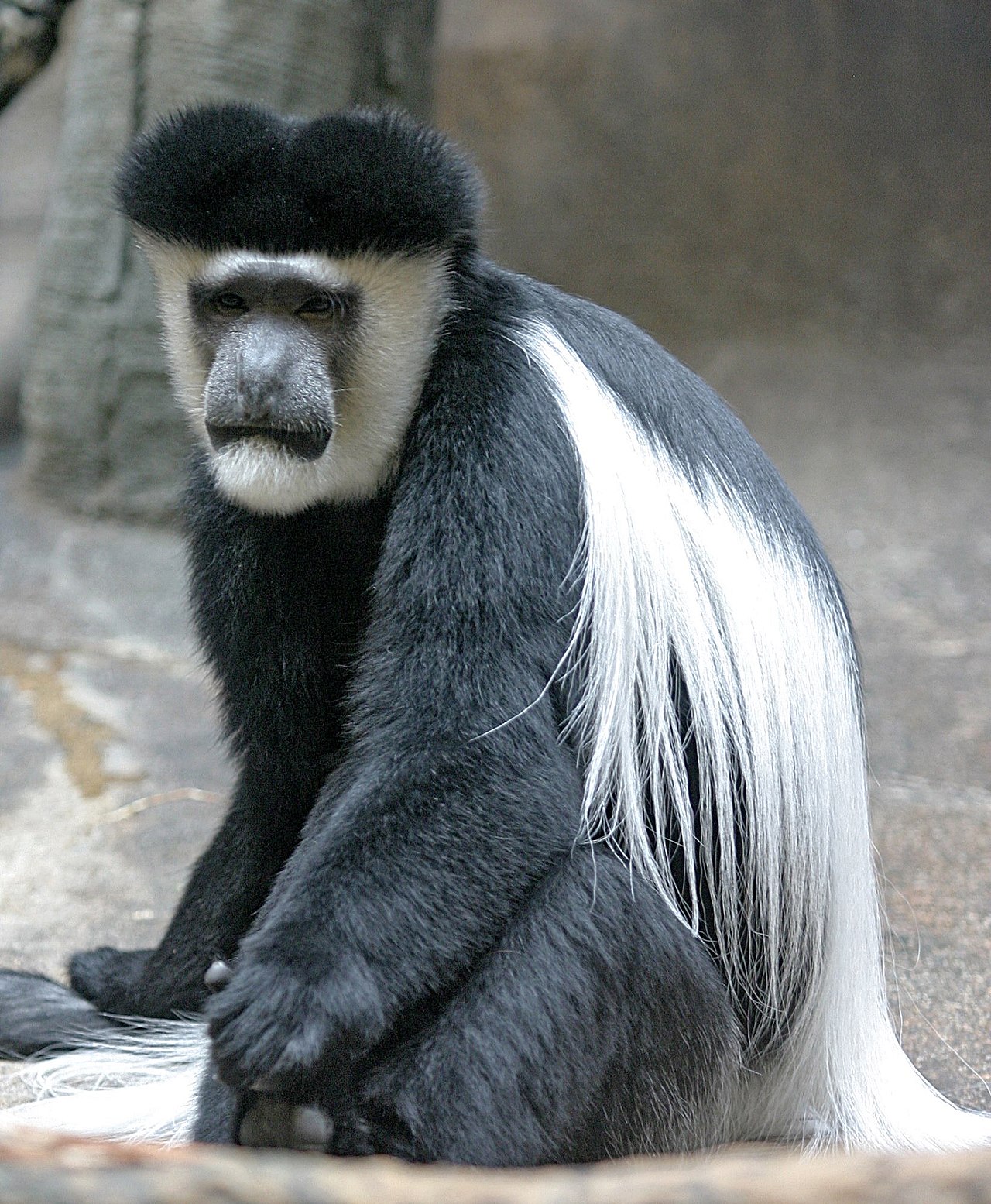


Physical characteristics
Adults typically have a compact body with a long, often bushy tail used for balance. Body length (excluding tail) commonly reaches around 0.5–0.7 m, and individuals may weigh up to roughly 10–15 kg. Key features include a dense black coat contrasted with white side panels and a white tail tip or mantle. Colobus monkeys also have a reduced or absent thumb, an adaptation that facilitates a hook-like grip when moving among branches.
Diet and digestive adaptations
Colobus monkeys are primarily folivores: leaves form the bulk of their diet, supplemented seasonally by fruits, flowers, and buds. To extract nutrients from tough, fibrous foliage they possess an enlarged, multi-chambered stomach that hosts symbiotic microbes to ferment cellulose and break down plant material more efficiently than a simple stomach would.
Behaviour, social structure and reproduction
They live in social groups that often consist of one adult male, several adult females and their offspring, though group size and composition vary. Groups defend home ranges and communicate with vocalizations, scent marking and visual displays. Females give birth to a single infant after a gestation of several months; newborns are often lighter in colour and darken with age. Lifespan in the wild can reach around two decades.
Habitat, distribution and conservation
The species occupies a range of forested habitats in eastern and parts of central Africa, including montane, riverine and gallery forests as well as secondary woodlands. Conservation status varies locally: many populations remain relatively stable, but habitat loss, fragmentation and hunting pressure threaten some local populations. Conservation measures include habitat protection, anti-poaching efforts and research on population trends.
Notable facts
- Young are often born with pale or white fur that changes as they mature.
- Reduced thumbs and a specialized stomach are characteristic adaptations for an arboreal, leaf-based lifestyle.
- They play an important ecological role in forest dynamics through seed dispersal and foliar processing.
Related articles
Author
AlegsaOnline.com Eastern black-and-white colobus (mantled guereza) Leandro Alegsa
URL: https://en.alegsaonline.com/art/29736
Sources
- bucknell.edu : Mammal Species of the World
- iucnredlist.org : "Colobus guereza"