
Duttaphrynus olivaceus — the olive (Baluchistan) toad
A medium-sized toad of the family Bufonidae native to Iran, Pakistan and possibly Afghanistan; inhabits dry woodlands, shrubland and human-altered wetlands and breeds in standing water.
Duttaphrynus olivaceus, commonly called the olive toad or Baluchistan coastal toad, is a species of true toad in the family Bufonidae. It is known from southern Iran and Pakistan and may occur in neighboring Afghanistan. Like other bufonids, it is adapted to arid and semi-arid landscapes but uses freshwater for breeding.
Image gallery
3 Images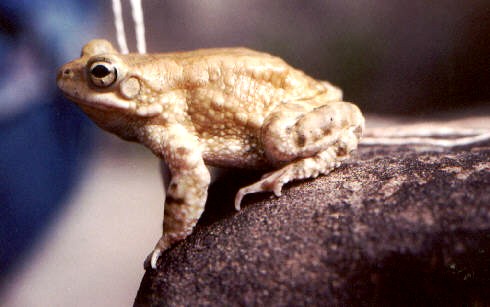


Identification and characteristics
Members of this species show the typical toad body plan: stout build, dry and granular ("warty") skin, short limbs and prominent parotoid glands behind the eyes that can secrete defensive substances. Colouration tends to be olive-brown to greyish, providing camouflage among stones and sparse vegetation. Diet is primarily insectivorous, consisting of beetles, ants, and other invertebrates captured at night.
Distribution and habitat
This toad is recorded from coastal and inland areas of Iran and Pakistan and is potentially present in adjacent parts of Afghanistan. It occupies a broad range of habitats including:
- Dry forests and scrubland
- Riparian areas, springs and small rivers
- Artificial and human-modified sites such as ponds, irrigation channels, plantations and gardens
Behavior, reproduction and ecology
The species is generally nocturnal and may be most active after rains or near reliable water. Reproduction follows the general pattern of bufonids: adults congregate at standing water to mate, females lay eggs in strings, and larvae (tadpoles) develop in aquatic habitats before metamorphosing to terrestrial juveniles. Their presence in agricultural and peri-urban environments shows some tolerance of disturbance.
Conservation and notable facts
Local populations can be affected by habitat alteration, water pollution, and drainage of breeding sites. Because amphibians have permeable skin and depend on aquatic environments for reproduction, they are sensitive to environmental change. Reliable range and population data are limited; further surveys across Iran, Pakistan and possible Afghan localities would improve understanding of the species' status and needs.
Taxonomy and naming: The scientific name Duttaphrynus olivaceus reflects placement in the Asian toad genus Duttaphrynus. Common names include olive toad, Baluchistan coastal toad and Makran toad. For regional records see sources for Iran, Pakistan and potential occurrences in Afghanistan.
Related articles
Author
AlegsaOnline.com Duttaphrynus olivaceus — the olive (Baluchistan) toad Leandro Alegsa
URL: https://en.alegsaonline.com/art/29364
Sources
- iucnredlist.org : "Duttaphrynus olivaceus"
- doi.org : 10.2305/IUCN.UK.2009.RLTS.T54721A11193040.en
- iucnredlist.org : Bufo olivaceus
- iucnredlist.org : 2006 IUCN Red List of Threatened Species.
- commons.wikimedia.org : Bufo olivaceus
- species.wikimedia.org : Bufo olivaceus