
Dow Jones Industrial Average
A major U.S. stock market index of 30 large publicly traded companies, often used as a barometer of the American economy and financial markets.
Overview
The Dow Jones Industrial Average (commonly the DJIA, the Dow 30 or simply the Dow) is one of the oldest and most widely cited stock market indexes in the United States. Created in the late 19th century by Charles Dow, a co-founder of Dow Jones & Company and a writer for the Wall Street Journal, the DJIA aims to provide a quick snapshot of trends among large, publicly traded American firms. The index is composed of 30 companies whose shares trade on U.S. exchanges such as the NYSE and the Nasdaq.
Image gallery
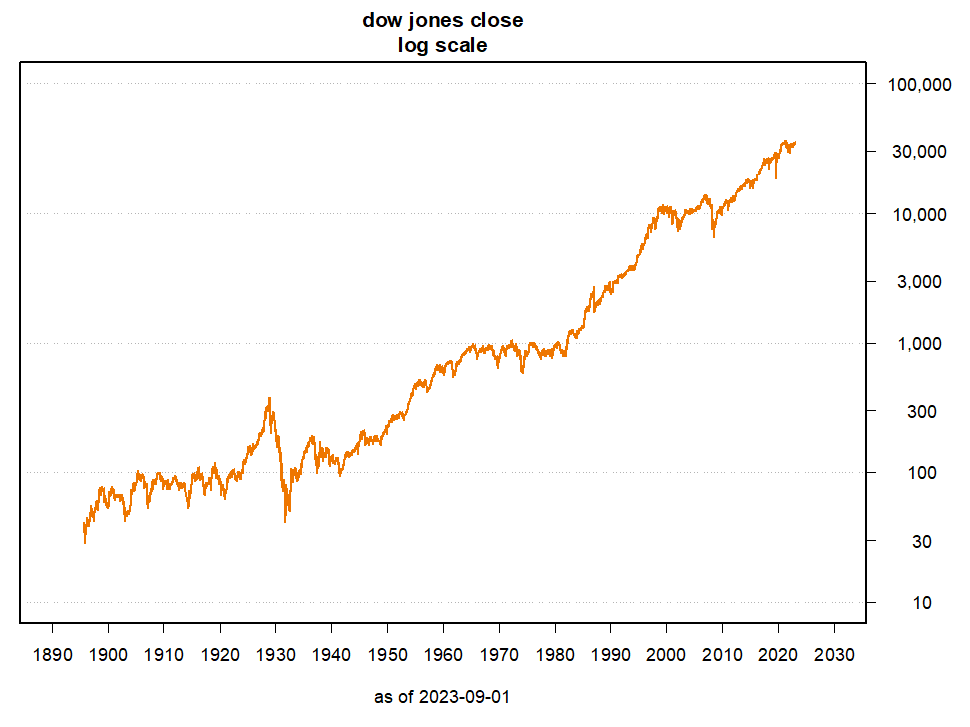
3 Images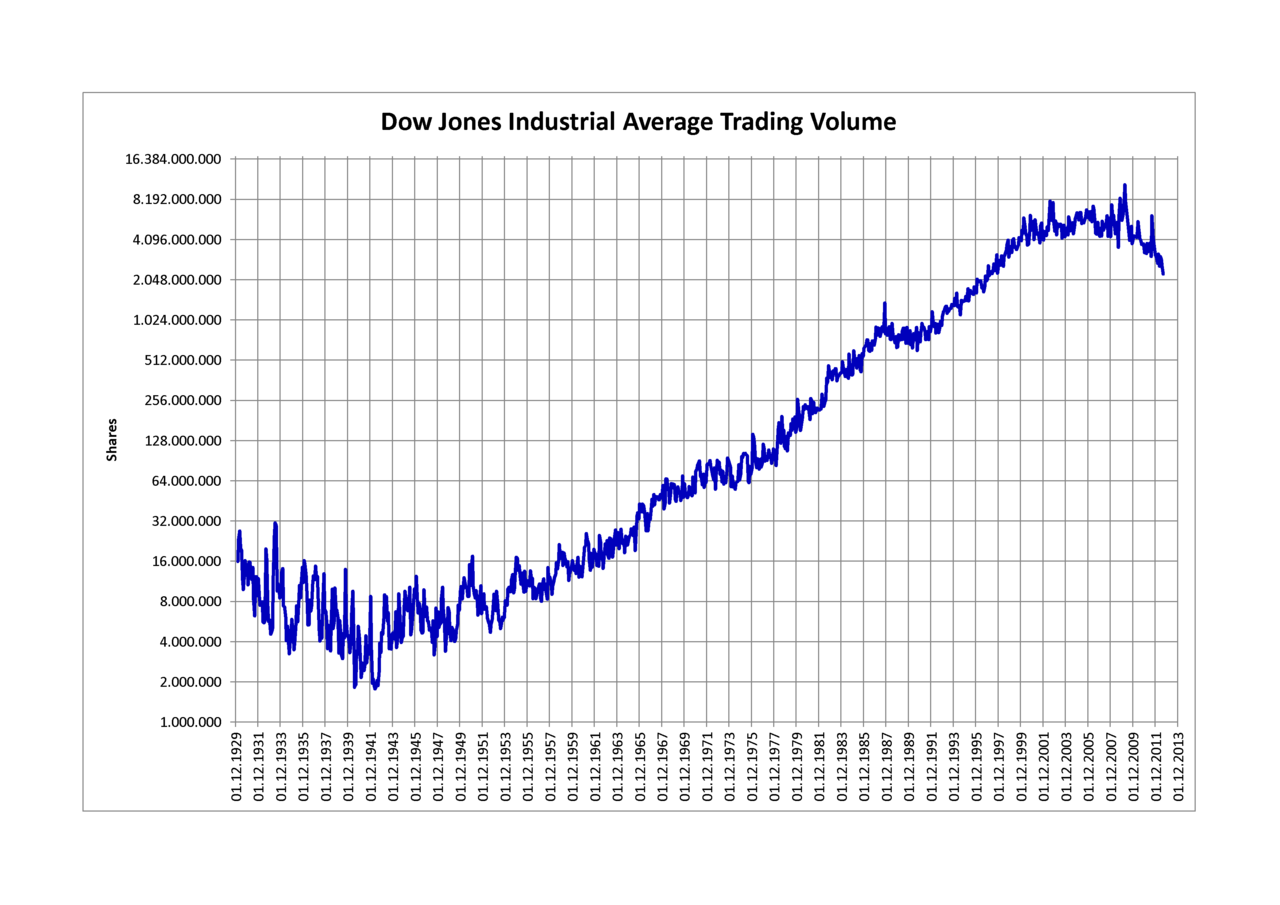

Characteristics and calculation
Unlike many modern benchmarks, the DJIA is a price-weighted index: individual stock prices, not company market capitalizations, determine the index value. To keep the measure consistent through stock splits, special dividends and other corporate actions, a changed divisor is applied to the sum of component share prices. Because of this price-weighting, a relatively small change in a high-priced component can move the index more than a larger percentage change in a lower-priced component.
Components and selection
Thirty firms represent a cross-section of leading industries rather than the full market. The companies are chosen by the editors of Dow Jones & Company and are expected to reflect the broader economy. Selection criteria emphasize large, established U.S. businesses with significant investor interest and sustained financial performance. Historically, the lineup shifted from predominantly heavy industries—such as steel, oil, auto manufacturers and consumer appliance makers—to include finance, healthcare, technology and services as the economy evolved.
History and development
The index first appeared in the 1890s and originally tracked a smaller group of industrial companies. Over decades it has been revised to reflect economic change: components are periodically replaced, and the calculation methodology has been adjusted to maintain continuity despite corporate reorganizations. These updates are intended to keep the DJIA relevant, though the process is discretionary and managed by Dow Jones editors rather than by a formulaic committee.
Uses, importance and criticism
Investors, journalists and policymakers use the Dow as a quick barometer of market sentiment and media headlines often highlight its daily moves. It also serves as a benchmark for some funds and investment products. Critics point to its small sample size and price-weighted design, which can distort the picture compared with broader measures like market-cap-weighted indexes. Others note that a 30-stock sampling cannot capture the diversity of the entire U.S. market.
Notable facts and context
- The DJIA is one of several widely followed U.S. indexes; comparisons with broader indexes help place its signals in context.
- Component changes aim to reflect long-term economic shifts rather than short-term trends.
- Because of its history and visibility, movements in the Dow often influence public perception of financial market health.
For more technical details and current component lists consult primary financial publications and index resources. For primer-level definitions, see linked resources above for terms like stock and for broader historical coverage consult well-established financial histories and archives.
Questions and answers
Q: What is the Dow Jones Industrial Average?
A: The Dow Jones Industrial Average is a stock market index that represents the general economy of the United States.
Q: Who created the Dow Jones Industrial Average?
A: The Dow Jones Industrial Average was created by Charles Dow.
Q: How many companies are used to calculate the Dow Jones Industrial Average?
A: The stock prices of 30 companies are used to calculate the Dow Jones Industrial Average.
Q: Who picks the companies used to calculate the Dow Jones Industrial Average?
A: Experts who work for Dow Jones pick the companies used to calculate the Dow Jones Industrial Average.
Q: What are the rules for picking companies for the Dow Jones Industrial Average?
A: The rules for picking companies for the Dow Jones Industrial Average say that all the companies must be from the USA and their stocks must be traded on either the NYSE or the Nasdaq Exchange.
Q: What kinds of companies are included in the Dow Jones Industrial Average?
A: The Dow Jones Industrial Average includes many different kinds of companies, including some that offer products and services like medicine or software.
Q: Can you find a list of companies that have once been a part of the Dow Jones Industrial Average but are no longer part of it today?
A: Yes, a list of companies that have once been a part of the Dow Jones Industrial Average but are no longer part of it today can be found by following the link provided in the text.
Related articles
Author
AlegsaOnline.com Dow Jones Industrial Average Leandro Alegsa
URL: https://en.alegsaonline.com/art/28758