
Döbeln (district)
Former rural district (Landkreis) in the Free State of Saxony, Germany, centred on the town of Döbeln; abolished in 2008 and merged into a larger Saxon district.
Overview
Döbeln was a rural district (Landkreis) in the Free State of Saxony in eastern Germany, with its administrative centre in the town of Döbeln. The name contains the umlaut character "ö"; where that character is not available the district name is sometimes rendered as Doebeln (alternative spelling).
Image gallery
2 Images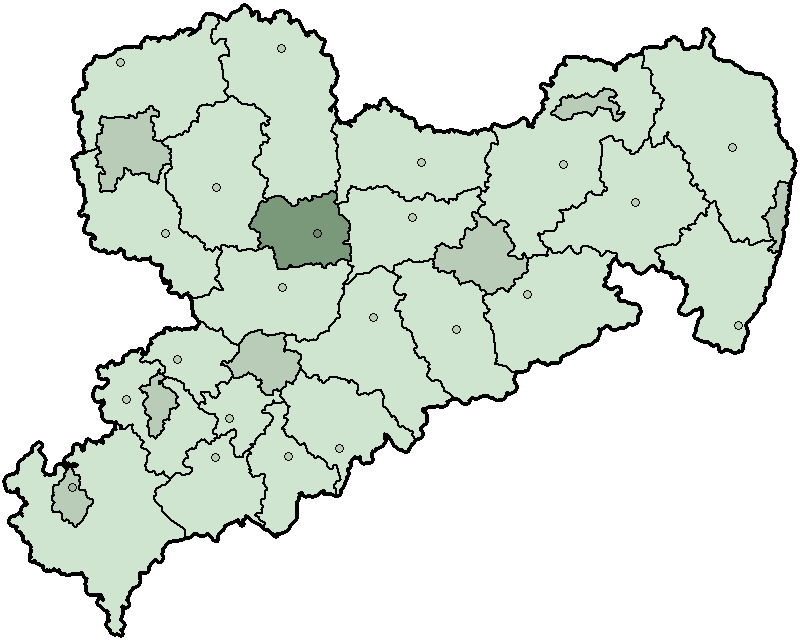

Geography and character
The district lay in central Saxony amid a mixed landscape of low hills, river valleys and agricultural land. Small towns and villages, local forests and river corridors shaped both settlement and local economy. Transport links connected the area with larger Saxon cities and industrial centres, supporting commuting and regional trade.
History and administrative changes
In the decades following German reunification the internal boundaries of Saxony were reorganised. Döbeln existed as a distinct administrative unit through the late 20th and early 21st centuries. As part of a broader state-level reform of districts, Döbeln was abolished in 2008 and incorporated into a newly formed larger district, changing the region's administrative structures and local government arrangements (administrative reform).
Economy and settlements
The district's economy combined agriculture, small and medium-sized enterprises, local services and some light industry, with many residents also commuting to work in nearby urban centres. The town of Döbeln served as the principal local service and administrative hub, offering schools, municipal services and cultural institutions for the surrounding communities.
Notable facts and legacy
- Döbeln functioned as a typical Saxon rural district, balancing small-town centres and countryside.
- The spelling variation Doebeln is commonly used where diacritics are impractical.
- Its abolition and merger into a larger district in 2008 reflect broader trends in municipal consolidation in Germany during that period.
Today the former district is remembered in regional histories and administrative records. Its towns and landscapes continue to be part of the successor district, while local identities and traditions associated with Döbeln persist among residents and cultural institutions.
Related articles
Author
AlegsaOnline.com Döbeln (district) Leandro Alegsa
URL: https://en.alegsaonline.com/art/28096